

7 Foods You Should Order And 4 To Avoid At An Irish Pub
We may receive a commission on purchases made from links.
Travelers know that no matter where you go in the world, there's a decent chance you'll still be able to find an Irish pub to post up at for a pint or two. In many ways, some would argue that the best of these establishments are the ones where things feel more relaxed, comfortable, and inviting compared to the average bar. A pub should live up to its name as a welcoming public gathering space after all. But while much of the focus on these places typically rests on the convivial atmosphere and quality Guinness or comparable stout pours, patrons on this side of the Atlantic may not realize they're selling themselves short when it comes to the food they order between rounds.
As someone who has been fortunate enough to travel extensively through Ireland, I've discovered some of the very best establishments in the Emerald Isle that serve comforting dishes worth taking a detour for in and of themselves. Unfortunately, even some of the most popular Irish-themed pubs stateside tend to make their menus a lower priority, often throwing both quality and authenticity out the window in a way that would make a Dubliner blush.
To help potential patrons everywhere avoid a serious mistake, I've used my experiences on the road and reached out to bona fide Irish food experts – including Irish food tourism specialist Santina Kennedy – to compile the do's and don'ts of pub grub. From avoiding green dye to seeking out lamb, here's what you should consider before you order.
Avoid ordering: Irish nachos
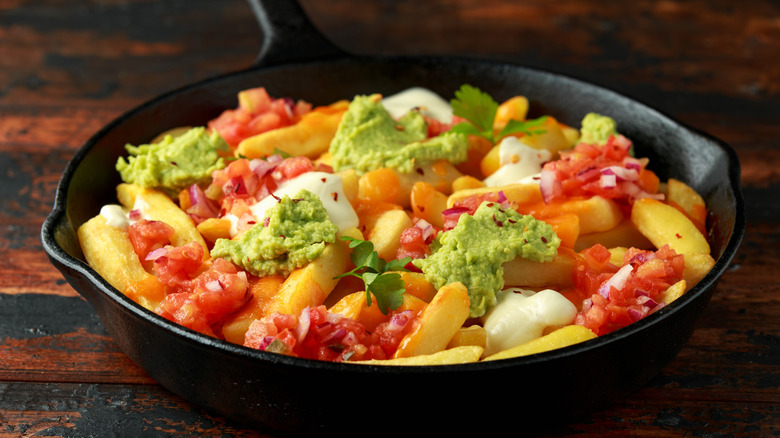
It's not exactly a secret that many pubs abroad are Irish in name only. That's why it's not at all uncommon in the United States to see a completely Americanized bar pouring Guinness and touting strange foods whose origin story dates only as far back as the freezer and fryer they came from. One of these dishes includes Irish nachos, which takes the ever-popular bar snack and swaps in tater tots or fries for chips.
But even if the idea of potatoes smothered in cheese and assorted toppings sounds appealing, you may not be surprised to learn that there is nothing authentically Irish whatsoever about this dish. In fact, the dish started at J. Gilligan's Bar and Grill in Arlington, Texas, in the 1980s, when the popular bar ran out of fry baskets and was forced to serve the finger food in skillets topped with cheese and toppings.
Some "pubs" will even go the extra mile on their menus, adding corned beef to the mash-up — which itself isn't actually an Irish food either! Whether you're taking creative culinary liberties or not, there's not a chance you'll ever find anything like this gimmicky sports bar-level item at a proper pub in Ireland (unless they're catering to American tourists, of course).
Order: Taytos
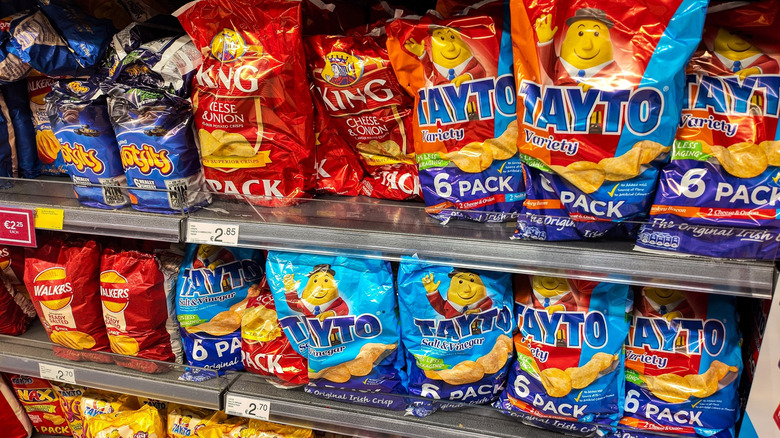
No matter where you are in the world, salty snacks and barstools have long gone hand in hand. But now, this beloved Irish brand is starting to have a moment stateside, with a devoted die-hard fanbase building around these delicious crisps. Popular flavors like Cheese & Onion are a mainstay of pubs in the Emerald Isle and are as authentically Irish as they are satisfying alongside a pint. If you see these hanging behind a bar in the United States, congratulations: You've found a good pub!
According to Santina Kennedy, the brand is so beloved back home that it's actually become synonymous with crisps in general across Ireland. "Nearly every Irish childhood introduction to pub grub was being perched at a pub table with a bottle of red lemonade and a bag of Taytos — a distinctly Irish soda drink and cultural reference!" she says.
Kennedy adds that if you really want to sound like a local, make sure you add an "s" to the end of the brand's name. And as is the case with most bar snacks, it's not at all uncommon to see patrons adding these crisps to other dishes, including stuffing them inside sandwiches or dusting their soups.
Avoid ordering: Beef stew
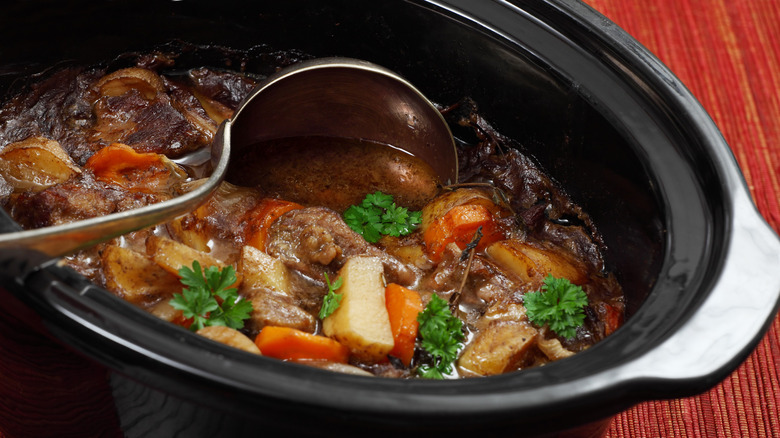
Let's get one thing clear: Ireland is a country that knows how to get all kinds of fantastic iterations of beef and potatoes onto the table. The country's embrace of high-quality homegrown ingredients helped propel it into the culinary limelight, spawning plenty of Michelin-starred restaurants that have risen to fame by focusing on local strong points. For that reason, many might assume a classic dish like beef stew would be a shoo-in at a bar claiming to be Irish.
But as comforting as it may be, this staple soup isn't technically an Irish creation. As is the case with many other Americanized dishes, it only came about when Irish immigrants arrived in the United States. Beef stew specifically finds its roots during the great exodus that took place during the Potato Famine of the mid-19th century, when the recent arrivals suddenly had access to affordable beef. Still, this hasn't stopped pubs stateside from showcasing it on their menus, often adding ingredients like Guinness in an attempt to "Emerald-wash" the dish. Any non-conventional vegetables in the mix, including bell peppers or leafy greens, are another major red flag to look out for.
Order: Irish stew
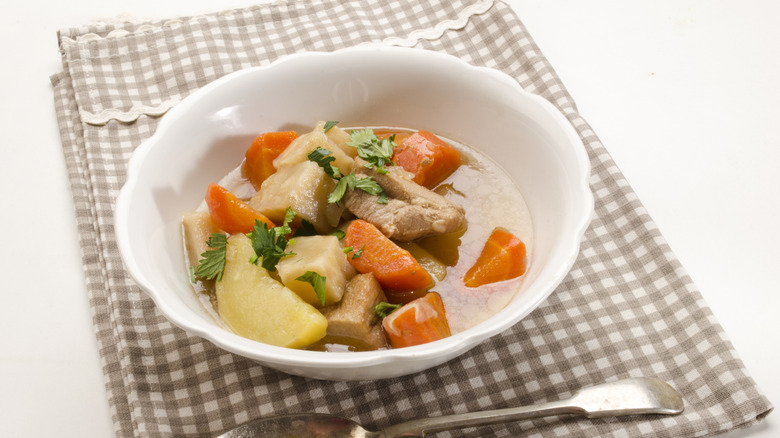
For those looking for the real thing, the true base of an authentic Irish stew is actually lamb or mutton! While it might not be as popular a protein choice for the American market, this is the classic preparation, along with potatoes, onions, stock, and herbs (and sometimes carrots). As noted, beef simply wasn't regularly on the menu outside of the societal elites, with cows historically being used for labor and dairy production. Besides lamb, pork and fish made up much more of the diet of the average Irish person up through the dawn of the 20th century, with some regionality playing a factor in what was most common.
But even if mutton and lamb are widely accepted as the truly authentic base for this classic dish, there's still some contention about other ingredients. According to Kennedy, there's a nationwide debate about whether or not to include carrots, with most stew purists arguing that they should be left out of the recipe entirely. However, she adds that no matter which side you fall on for that argument, traditionalists all agree that using the best lamb available is vital to ensuring the best finished results. If you're traveling through Ireland, Kennedy cites producers such as Achill Lamb in Achill, Connemara Lamb in Connemara, and Keadeen Mountain Lamb in Wicklow among the very best.
Order: Seafood chowder
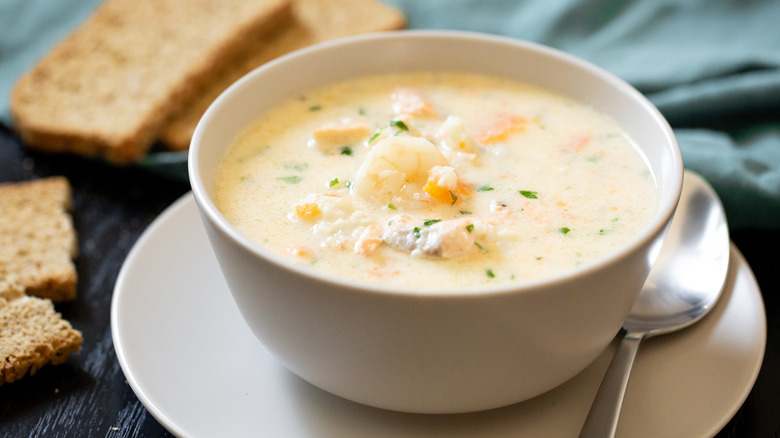
Of course, Irish stew isn't the only stick-to-your-ribs classic dish worth diving into. One of the very best soups to order at the pub is Irish seafood chowder (or fish chowder). This has long been a classic in pubs along the Wild Atlantic Way, where visitors today come from all over the world to take in the utterly stunning coastline and natural beauty. To this day, one of the best meals I've ever had while traveling was a bowl of seafood chowder I ordered in a small pub steps from the ocean on the Dingle Peninsula. And this isn't just a touristic fascination; the Irish themselves take this classic dish very seriously, with some journalists traveling the country to seek out the quintessential versions of what Kennedy calls "one of our favorite comfort bar foods."
As with many seafood-based dishes, the ingredients in Irish seafood chowder tend to change slightly depending on what's been reeled in that day. But for most preparations, you can expect chunks of white fish such as cod, haddock, or hake (or a combination thereof, some of which might be smoked); shellfish such as prawns and mussels (a relatively modern addition); vegetables like potatoes, onions, leeks, and parsley; fish stock; and plenty of cream and butter. If you're ordering this stateside and looking for an authentic version, keep in mind that some Irish culinary purists say that clams are a no-go, but even this remains up for debate.
Avoid ordering: Corned beef and cabbage
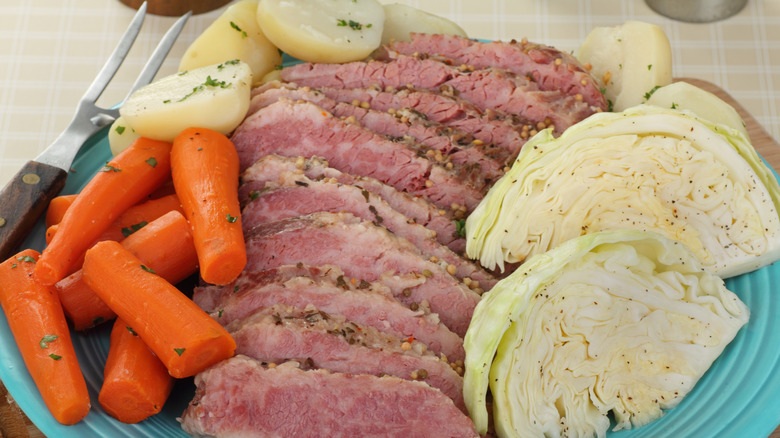
In many ways, this cured and boiled meat dish has become synonymous with Irish culture within the United States. Just take a walk into any pub, tavern-style restaurant, or supermarket come mid-March and you're sure to find this dish making its way onto menus and shelves as people begin to celebrate St. Patrick's Day. And if we're being completely honest, it's a genuinely delicious meal to tuck into at a pub – although it won't give you the authentic Irish experience you're probably after.
However, this is where things get complicated. It's true that the Irish famously produced high-quality corned beef throughout the 16th century, getting its name from the large, corn-kernel-size salt crystals used to preserve it. But despite becoming a hub for corned beef, the salted meat was almost exclusively an export product whose production was fueled by a repressive feudal system and taxes set in place by the British.
Overall, this centuries-old product didn't resemble the version you'll see on the table today very closely at all. It wasn't until droves of Irish immigrants escaping the Great Famine arrived in the United States, where beef was ubiquitous, that the dish came about. In a truly American fashion, these recent arrivals living next to Jewish communities began buying beef from kosher butchers, choosing to salt and boil the tougher brisket cuts to get them tender. So yes, it's fair to say this dish may not be native to the Emerald Isle — but it's still a beautiful example of a domestic creation.
Order: Bacon and cabbage
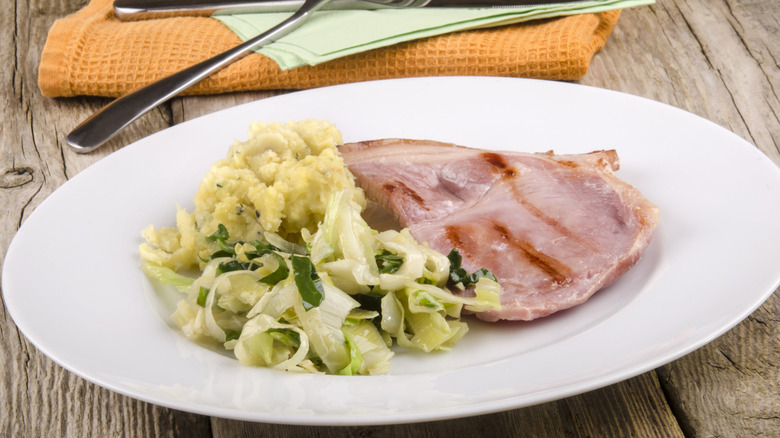
While we won't truly side-eye any corned beef cravings, there is a way to get a perfectly authentic Irish dish that runs fairly parallel to the Americanized classic. As noted earlier, the historically pork-focused diet in Ireland centuries ago is one that continues to shine in the modern era as bacon and cabbage. This simple yet truly satisfying dish is a pub mainstay, especially on weekends in places like the iconic Stag's Head pub in Dublin.
Kennedy has no qualms about calling this simple meal "one of Ireland's finest dishes." With equal parts savory, meaty, lightly salty bacon and plenty of leafy cabbage (which most traditional Irish households cook right in the water bacon was boiled in) served alongside a mound of floury mashed potatoes with plenty of melted butter and a side of parsley sauce, she calls it "the perfect Irish savory comfort dish." Its pub-classic status is cemented by the fact that it pairs perfectly with a pint of stout. Just keep in mind that this isn't your typical crispy American bacon; the Irish version is chewier, leaner, and more subtly flavored, usually boiled, fried, or grilled before serving.
Order: Cheese toasties
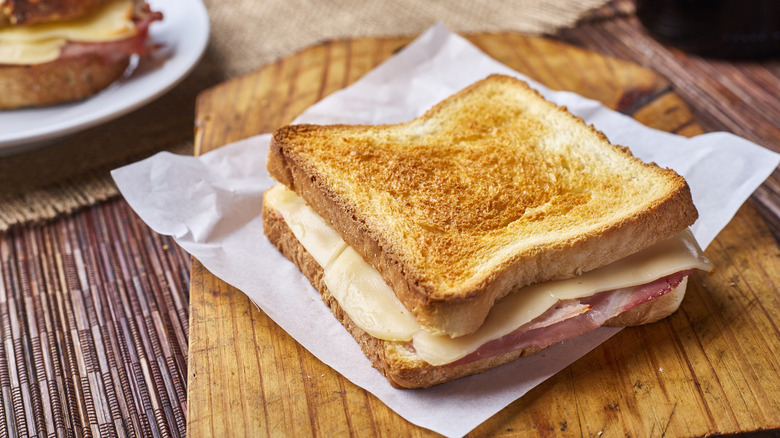
If you've been to a true pub anywhere in Ireland (or ever watched an episode of "Love Island"), there's a decent chance you've seen the locals snacking on this between pints. Don't confuse it with an American grilled cheese or English toastie – this open-faced grilled cheese incorporates Irish white bread, butter, Irish cheddar, seasonings, and the occasional addition of tomato, onion, or ham to make a delectable bar snack. Of course, many pubs have turned these into proper sandwiches for convenience's sake, which doesn't make them any less authentic!
Kennedy points out that as a true barstool comfort food, there really is no wrong way to serve up a toastie. Often, they're served alongside chips (usually Taytos) on a classic Irish white pan loaf with a jar of super spicy Coleman's Mustard on the side for those looking for a little kick. But these days, some pubs have taken it upon themselves to elevate the dish, using higher quality ingredients like artisan sourdough and Irish farmhouse cheese.
If you're looking to really experience the best toasties out there, Kennedy suggests looking for the menus that name their cheese's provenance. "I'll do a detour for anyone putting Coolattin Cheddar on the menu," she adds.
Avoid ordering: Shamrock anything
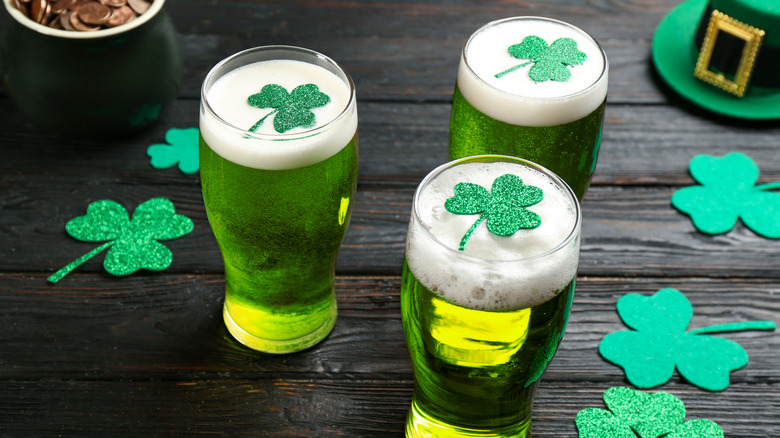
Corned beef and cabbage isn't the only item that seems to come out of the woodwork every March. Whether it's beer, milkshakes, or sometimes even potatoes, the St. Patrick's Day tradition of dyeing items green is one that you'll find pretty much anywhere in America. But if you're traveling through Ireland and expect to get handed an emerald-hued brew, you're in for a surprise: This is absolutely not the kind of thing you'll ever find in an authentic pub, with Kennedy saying that the act itself is "looked upon with complete disdain" by locals.
Perhaps unsurprisingly, the tradition was yet another American invention that took hold in the early 20th century, with many accounts pointing towards bars in New York among the first to experiment with dying their beers. But even if the practice itself is still inauthentic, it's at least a much safer experience than it used to be. While today's bars are likely using typical green food coloring to turn drafts green, the creators of this trend originally used some pretty bizarre and potentially unsafe ingredients like laundry detergent and coal tar dye to get the look they wanted. Yum!
Order: Colcannon
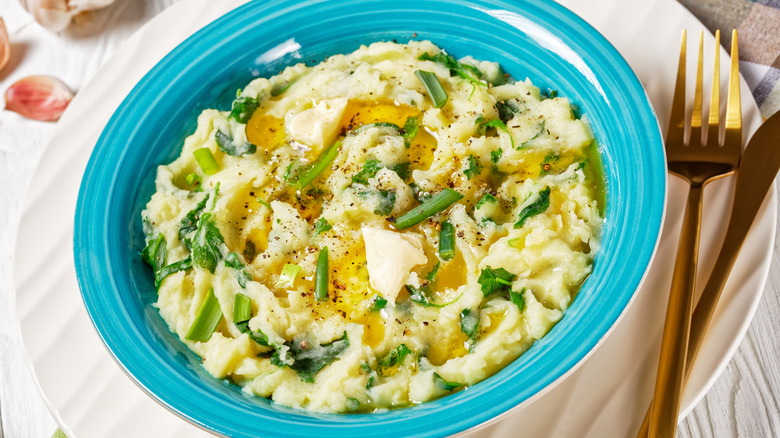
Just because you don't have anything green in your glass doesn't mean you can't have something authentically green on your plate. One of the most typical dishes on St. Patrick's Day across Ireland is colcannon, which adds kale or cabbage and leeks to traditional mashed potatoes. This authentic dish is more of a restaurant mainstay, but Kennedy explains it's not uncommon to find it as a side at gastropubs across the country on select holidays.
She says that this hearty dish traditionally hits the table on major feast days in Ireland, including St. Brigid's Day and Halloween (which is known as Samhain, or the celebration of the end of the harvest and beginning of winter). She adds that the beloved dish is best served in a family-style mound with a pool of Irish butter that trickles down from the top, glazing the spuds in the process. Traditionally, the dish was also served with charms wrapped in paper that were supposed to predict the future of recipients. Finding a coin meant incoming wealth, getting a ring meant imminent marriage, and finding a pea meant money problems ahead.
Order: Brown bread, Guinness bread, or brambrack
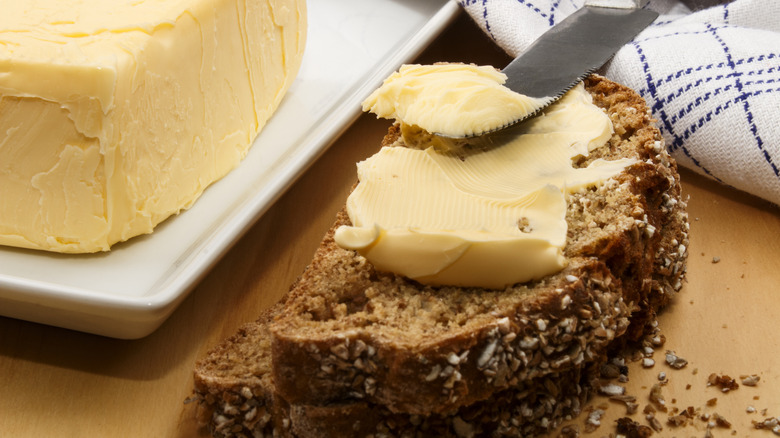
When it comes down to it, this truly simple table staple is a popular order at pubs across Ireland. In some cases, you'll receive brown bread as a side to soups and stews, but it's just as common to order it on its own served with plenty of Irish butter or slices of Irish cheddar. The trademark twist that differentiates brown bread from the soda bread we know in the United States is that it uses Irish whole wheat flour and buttermilk for a richer flavor and denser texture. And this isn't something you can exclusively find acrosst he pond; pubs like the Irish-owned Banshee in New York City's East Village have made it a hallmark of their menu, served with Kerrygold butter and even some caviar.
Kennedy points out that even though Irish brown soda bread is another food that's now synonymous with Ireland, it was yet another mid-1800s addition to diets that only came about after "bread soda" (otherwise known as baking soda or "bi-carb") became available. Notably, all traditional loaves are baked with a cross cut into the top "to let the fairies out," and is best served smeared with butter "so thick you can see your teeth marks."
But that's not the only baked good you might come across. There's also barmbrack, which is a sweet, fruit-studded bread that has fortune-telling elements of its own. Historically, this was served with tea during Samhain celebrations, but Kennedy says it's become common to see it yearround in modern Ireland.