

The Difference Between Irish Butter And American Butter
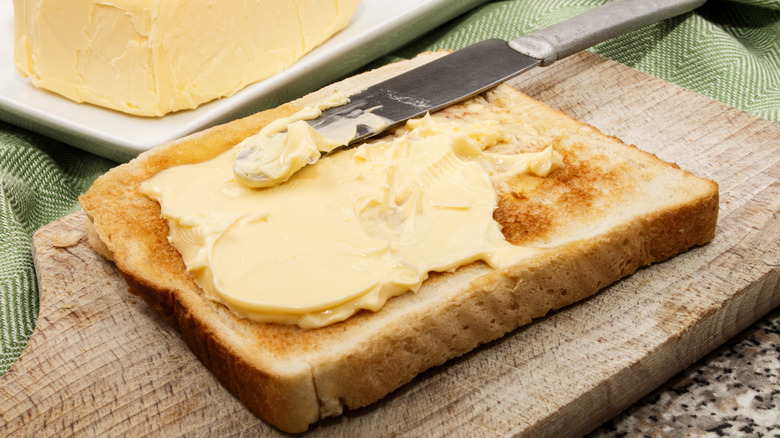
Butter, the fatty dairy product that adds deliciousness to any dish, is a staple of the kitchen. But is all butter basically the same, or are there differences between American butter and Irish butter? As it turns out, there are a few key differences.
One difference that's often discussed is the butterfat content of the two. European butters typically have a higher butterfat content than their American counterparts, though in the case of Irish butter the difference isn't as pronounced as it is with other European styles. Kerrygold is the most famous Irish butter brand (although there are some Kerrygold alternatives worth exploring), and its unsalted butter has a butterfat content of 82% while a standard American butter typically has around 80%. That small, 2% difference becomes even less pronounced when you consider that Kerrygold's salted butter sits at 80% butterfat, the same as most American versions. Countryside Creamery Salted Irish Butter is also only at 80%.
So, fat content may not always be a huge differentiator between these two dairy products, yet many people still cite the richness and good flavor of Irish butter in particular. What sets it apart? Another difference is that Irish butter is sourced from grass-fed cows which often graze freely in pastures outside. That's not necessarily the case for American butter, where feeding cows a diet of mostly grain is more common. Because of the Irish cows' grassy diet, these cows get a regular supply of a naturally occurring, fat-soluble pigment called carotene, and the resulting butter takes on a distinctive yellow hue (or golden, if we're being poetic).
Is Irish butter more nutritious?
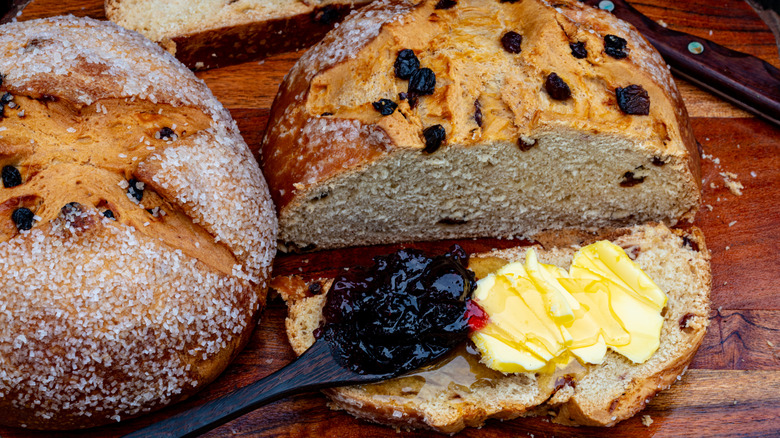
Another differentiator is that Irish butter may have some positive health effects which American butter doesn't due to the grass-heavy diet. Butter from grass-fed cows contains 26% more omega-3 fatty acids than conventional butter, and as much as 500% more conjugated linoleic acid (CLA). Omega-3 acids play a crucial role in heart and brain health, while studies have suggested that high CLA levels might be linked to cancer-fighting abilities.
In addition to giving butter its unique color, the carotene in the grass also contains beneficial fatty acids. In the human body, carotene can convert into Vitamin A, a nutrient that is tied to vision and immune function. Keep in mind that, as with all butter, the Irish version is high in calories and cholesterol.
Of course, Irish butter isn't just nutritious — it's delicious. You can use it in recipes where you'd use normal butter, but it's especially recommended for when you really want the buttery flavor to shine. For example, why not try this Celtic apple crumble with Irish whiskey cream sauce? It calls for six tablespoons of Irish butter to add to the dish's rich creaminess.