

This Iconic Store-Bought Cookie Has Been Around Since The 1800s
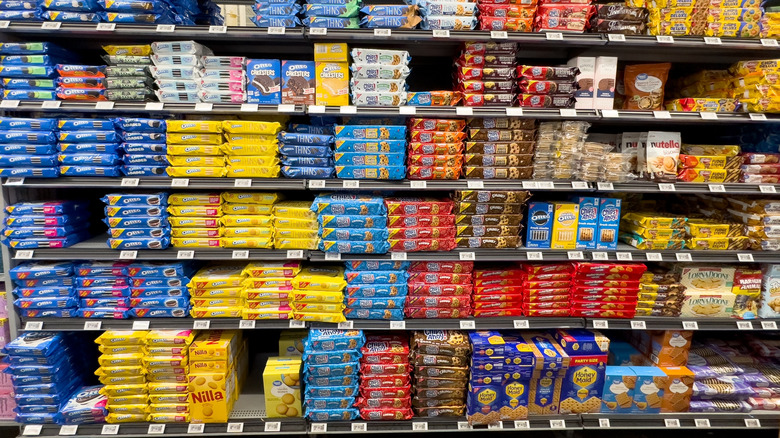
Anyone who grew up helping grandma make the vintage no-bake dessert that is banana pudding knows the Southern icon calls for a big yellow box of Nilla Wafers. An older version of the brightly colored box has been available in the cookie aisle since 1898, but back then, the cookies were known as Nabisco Vanilla Wafers.
The recipe behind the thin, vanilla-flavored cookies was developed by Gustav A. Mayer, a German-American confectioner who sold it to the National Biscuit Company, the baking conglomerate formed in 1898 through the merger of several smaller baking businesses and later known as Nabisco. That same year, the company began selling the cookies as Nabisco Vanilla Wafers.
The original name was less catchy than today's familiar Nilla Wafers, but the little cookies were on their way to becoming an American pantry staple. It all boils down to a match made in marketing heaven: A popular dessert called for vanilla wafers, and Nabisco saw an opportunity.
How Nilla Wafers became a banana pudding staple
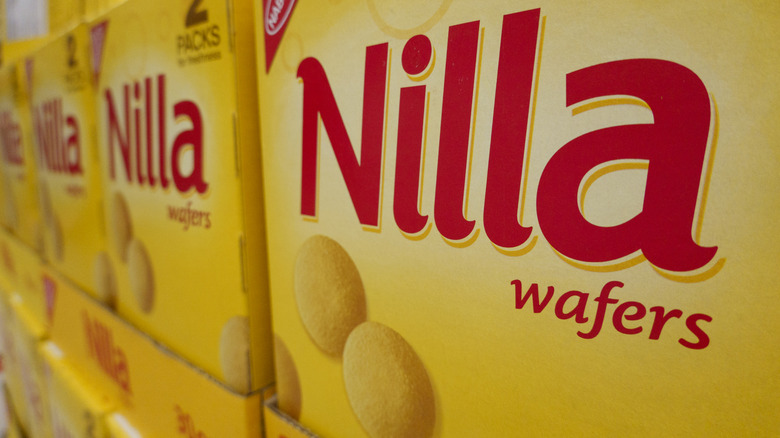
Banana pudding and vanilla wafers existed separately on the American food scene around the same time. But they weren't paired together until a lot later because the banana pudding recipes that started appearing in cookbooks in the early 20th century called for sponge cake rather than wafer cookies. It wasn't until around the 1920s that home cooks began swapping sponge cake for the more convenient wafers.
In 1921, a Laura Kerley submitted a banana pudding recipe to the Illinois newspaper, The Pantagraph, that called for custard, half a dozen sliced bananas, and vanilla wafers. Nabisco naturally jumped on the opportunity for some free marketing and, by the 1940s, had started printing banana pudding recipes on its vanilla wafer boxes. The cookies were still called Vanilla Wafers until 1967, when Nabisco changed the name to the catchier Nilla Wafers.
Today, Nilla Wafers remain a go-to for traditional banana pudding, but their uses don't stop at the dessert bowl. The cookies can also stand in for graham crackers in pie crusts or replace chocolate wafers in an icebox cake. Nilla Wafers' popularity extends beyond nostalgic family recipes.