

The Difference Between Beef Tenderloin And Prime Rib
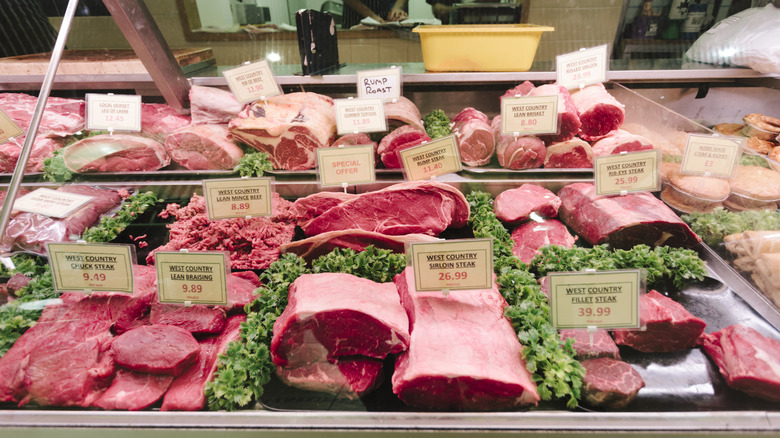
If you're planning your menu for a holiday dinner or special occasion, a beautifully roasted piece of beef can easily become the centerpiece of the table. Two popular options among both home cooks and professional chefs are beef tenderloin and prime rib. Both are considered premium cuts of beef, and although they can look similar once sliced and served, there are a few differences to know before heading to the butcher counter.
The biggest differences between beef tenderloin and prime rib are their texture, flavor, and fat content. Beef tenderloin is a lean cut known for its tenderness and delicate flavor, while prime rib has more fat marbling and a richer, beefier taste. These two cuts also come from different parts of a cow: Tenderloin comes from the loin section in the upper back, while prime rib comes from the rib section.
Both cuts are suitable for roasting and make an impressive main course, but the better choice depends on what you — and your menu — are going for. If tenderness is your priority, beef tenderloin may be worth the splurge. If you're looking for a juicy, flavorful roast with plenty of marbling throughout, prime rib is sure to satisfy.
Beef tenderloin is known for its melt-in-your-mouth texture
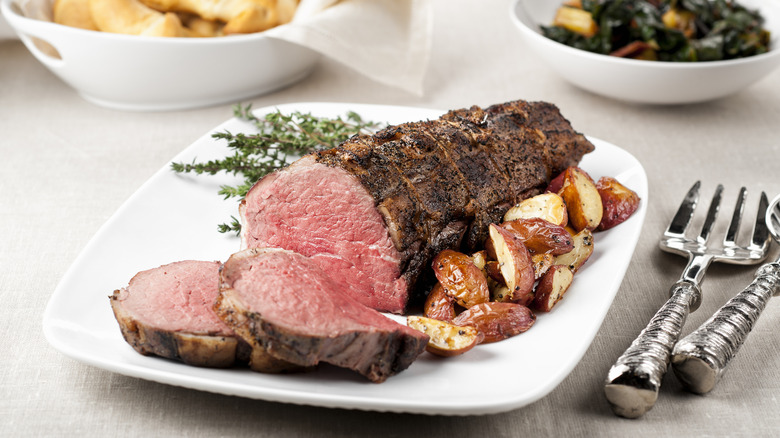
Beef tenderloin is considered the most tender cut of beef, and there's a good reason why. Located along the backbone in the loin section of a cow, this long, narrow muscle does little work, resulting in a buttery, soft mouthfeel. It's also where filet mignon steaks come from.
Beef tenderloin has relatively little fat within the muscle, known as marbling. It's a leaner cut with a milder flavor, but there's less fat to keep it moist during cooking. Since overcooking can dry it out, use a meat thermometer to monitor its internal temperature. Seasoning the exterior well and searing it before roasting can help develop a flavorful crust and enhance the meat's flavor.
At the butcher counter, you might see trimmed or untrimmed tenderloins. Buying an untrimmed tenderloin can save you money per pound and allows you to cut your own filet mignon steaks while saving smaller pieces for other dishes. However, you'll need to remove the tough connective tissue, called silver skin, and excess fat, so some of the weight you pay for will be discarded. A trimmed tenderloin has much of this removed, saving you preparation time but typically costing more per pound. Tenderloin is typically sold boneless, making it easy to carve it into uniform slices. Its mild flavor pairs well with mushrooms and sauces like a red wine reduction. If you want to impress with a lean, tender cut of beef, tenderloin is a delicious choice.
Prime rib's marbling gives it a richer, beefier flavor
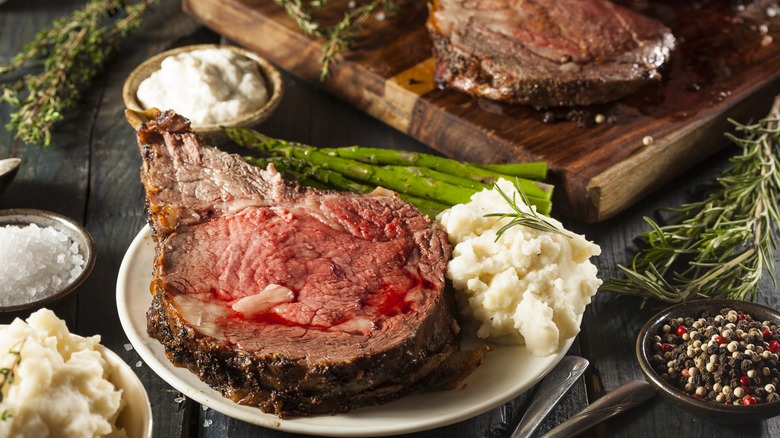
While beef tenderloin is known for its tenderness, prime rib is prized for its rich flavor and juiciness. This cut comes from the rib section of the cow, the same area that produces ribeye steaks. One of its defining characteristics is its generous marbling, or the small streaks of fat distributed throughout the muscle. As the roast cooks, this fat contributes to its flavor, giving prime rib a more pronounced beefy taste than tenderloin.
When buying prime rib, you'll see both bone-in and boneless. A bone-in prime rib makes for an impressive centerpiece on the dinner table. The bones provide some insulation during roasting, but they make carving more challenging. When shopping, you can ask for the bones to be detached and tied back on to make carving the finished roast easier. A boneless prime rib is easier to cook evenly and slice into individual ribeye steaks. It provides more edible meat per pound since you're not paying for the weight of the bones — although you can save them to make a hearty beef stock.
Despite its name, prime rib doesn't necessarily mean you're purchasing USDA Prime-grade beef. The term refers to the cut rather than its quality grade. According to the USDA's beef grading standards, Prime beef has more marbling than Choice, but a prime rib roast can be either grade. Regardless of which you choose, serving prime rib makes for a memorable dinner.