

8 Celebrity Chef Tips For Cooking The Best Prime Rib
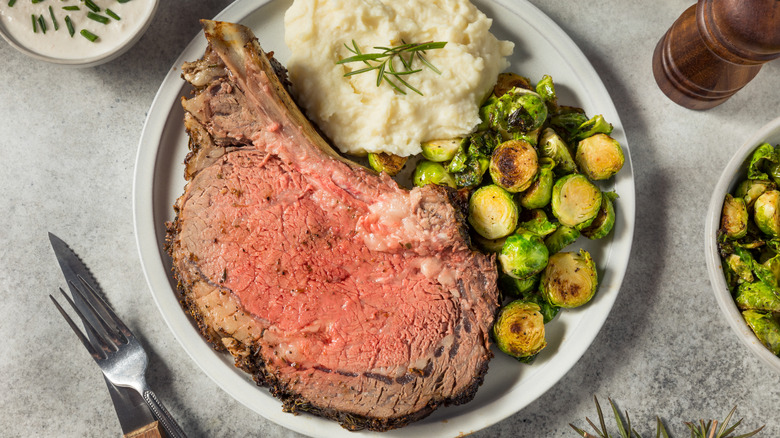
Prime rib, also called standing rib roast, is a classic celebratory or special occasion meal that has become a staple for the holidays. While you can certainly go out to a restaurant to enjoy prime rib, you can also make it at home. To help, we've gathered tips from celebrity chefs on how to prepare and season the meat and, of course, how to cook a juicy, medium-rare prime rib.
We pulled tips from chef Thomas Keller from the legendary The French Laundry, chef Curtis Stone who's appeared on "Top Chef Masters" and "Iron Chef: Quest for an Iron Legend," chef Bobby Flay, chef Tom Colicchio, "Good Eats" creator chef Alton Brown, chef Nigella Lawson, and chef Jean-Pierre Bréhier whose YouTube cooking channel has more than 2.4 million subscribers. Chef Guy Fieri also has some advice for those who want to smoke their prime rib on a grill. These tips will get you cooking prime rib without being too intimidated. In the words of chef Bréhier on his YouTube channel, "Everybody can do this, I promise you."
Dry brine the meat overnight
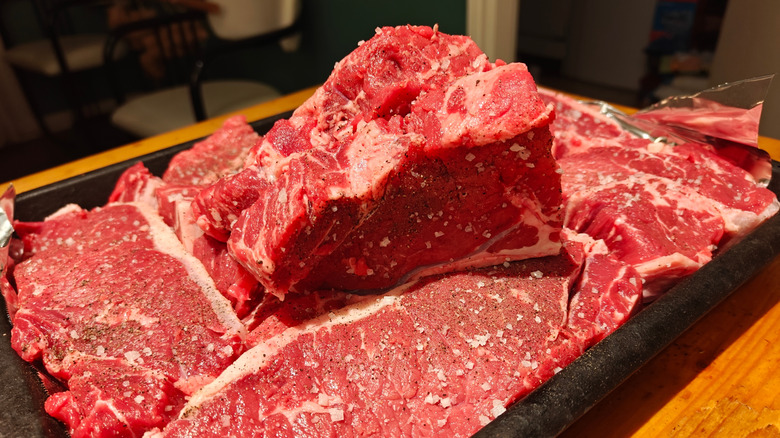
Dry brining involves salting the meat and leaving it in the refrigerator overnight. Chef Jean-Pierre Bréhier recommends dry brining the prime rib before cooking it so that it dries out the meat which then creates a better crust. It also makes sure the salt is absorbed all the way through so the meat is seasoned. Dry brining for 24 hours is best, but if you don't have time to let it sit overnight, Bréhier says you should at least do so for three to four hours.
In the dry brining process, the salt on the surface draws out the liquid inside the meat, which will then mix with the salt. As the process continues, the liquid and salt will be reabsorbed into the meat. That absorbed salt helps dissolve muscle proteins, resulting in a more tender meat, as well as seasoning the meat beyond the surface. Dry brining is easier for home cooks since wet brining requires putting the meat in a giant pot of saltwater.
Bring the meat to room temperature before cooking
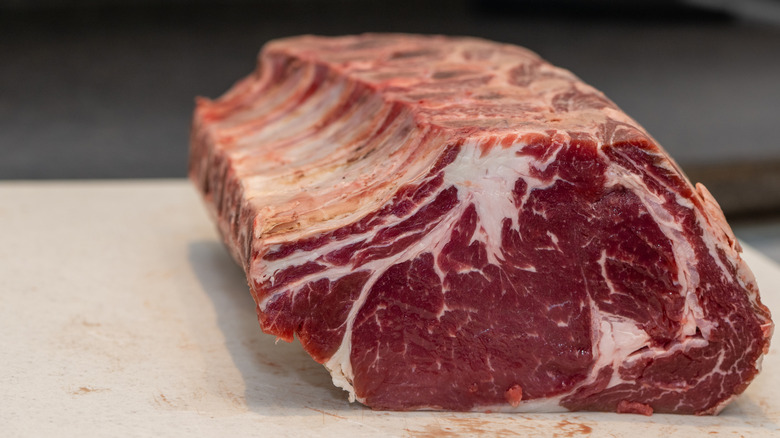
Many chefs agree that you should bring prime rib up to room temperature before you start cooking it. Chef Alton Brown recommends leaving the meat uncovered at room temperature for an hour. And chef Nigella Lawson's roast rib recipe calls for taking the beef out of the fridge to bring it to room temperature, which she says might take longer than 60 minutes.
Chefs also generally recommend this when you're cooking steak. The idea is that getting the meat to room temperature would let it cook more evenly as the muscle tissues contract when it's cold. That said, you want to be careful and not let it sit out for too long. For food safety reasons, USDA guidelines report that you should not let meat sit out in the "danger zone" which is between 40-140 F more than two hours.
Make small slits in the prime rib and stuff it
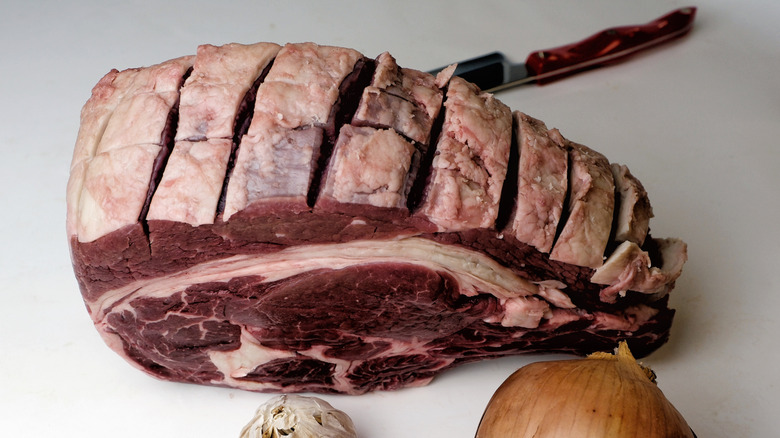
For his prime rib roast, chef Bobby Flay likes to make small slits on the surface of the prime rib and then he stuffs it with garlic. There are different reasons why you would do this, and it's usually done for tougher cuts of meat. For one, the slits create a greater surface area that is exposed to the heat, so it helps with cooking and generating the Maillard reaction. Inserting garlic into these slits is called garlic-studding and it helps infuse the meat with garlic flavor and aroma.
You don't necessarily have to stuff it with garlic, however. Making slits on the surface of a piece of meat is a culinary technique called "scoring." Chef Thomas Keller scores his meat for the aesthetics, but he also says on Instagram, "Those little score marks also will help that salt penetrate into the meat and help cure it a little better."
Rub the meat with beef tallow
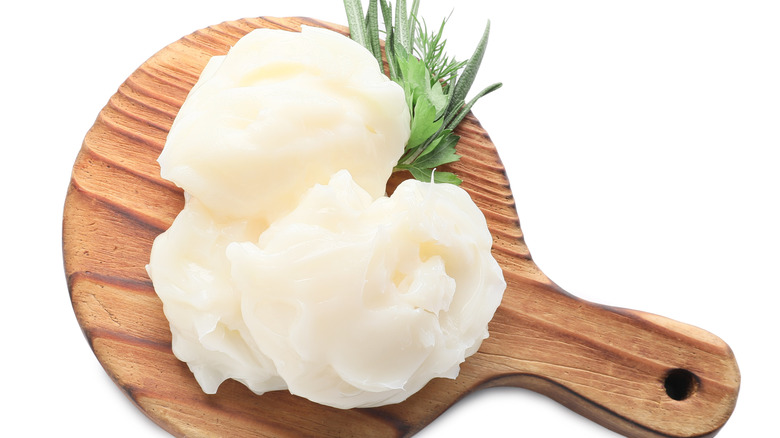
Chef Alton Brown rubs his prime rib with beef tallow before he puts any seasoning on. If you're cooking a three- or four-bone rib roast, Brown recommends using 2 tablespoons of beef fat or tallow. Massage the beef tallow into the meat. "You really want work it in there," says Brown on his YouTube channel, "Don't be too gentle."
Once you've rubbed the prime rib with beef tallow, you can pack the spices on top. Brown suggests to really pat the spices on so they don't fall off — the beef tallow helps those spices stick. He also says the tallow gives it a wonderful beefy flavor, and it's great for keeping salt and pepper in place. That's not all the tallow is doing, though. Because beef tallow has a high smoke point, it also helps you achieve a nice crust as you sear the meat at high heat.
If you don't have beef tallow, you can use oil. Chef Nigella Lawson recommends putting olive oil on the rib's white fat before sprinkling on the seasonings.
Season liberally
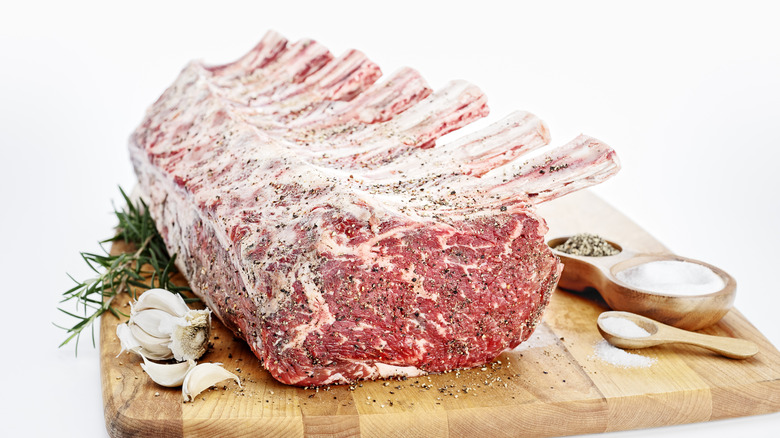
All the chefs pretty much say to season the meat liberally. Not under seasoning your food is actually one of the top cooking tips from chef Bobby Flay. One of the main things to use as seasoning is salt, of course. There's good reason why you need a lot of salt to cook meat like steak. "It's going to look like a lot, but keep in mind, it's not really going to permeate into the meat," says chef Tom Colicchio on his YouTube channel. While recipes vary, most people recommend between ½ to 1 teaspoon of salt per pound of meat.
One thing to keep in mind is if you're already applying the dry brining or salt crust method recommended here, you should adjust the salt seasoning accordingly. On the other hand, you can still be liberal with other seasonings you plan to use like pepper. Aromatic herbs such as rosemary or thyme are commonly used for prime rib seasoning.
Add plenty of salt to form a crust
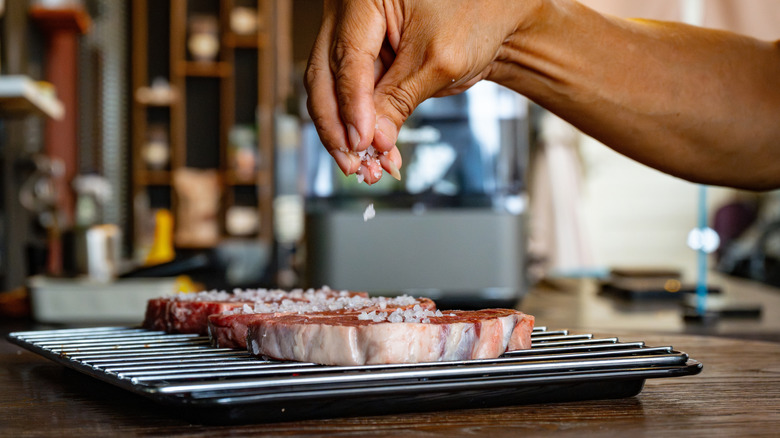
In this method recommended by chef Bobby Flay, salt is used more than just for seasoning. To make a really juicy prime rib, Flay recommends putting enough salt to form a crust around the prime rib before cooking it. "You might be alarmed at how much salt I put on here," Flay says in his demonstration on Facebook, "but we're not actually going to eat all this salt. That's going to form a crust and it's going to keep the prime rib incredibly juicy."
Once the prime rib is cooked and rested, remove the salt crust. Salt crust works as a barrier, keeping the juices inside as the meat cooks. Salt is also a mineral with thermal properties that helps cook the meat evenly as it radiates the heat inward. It's great for cooking meat, but the salt crust method also works well for fish.
Cook low and slow
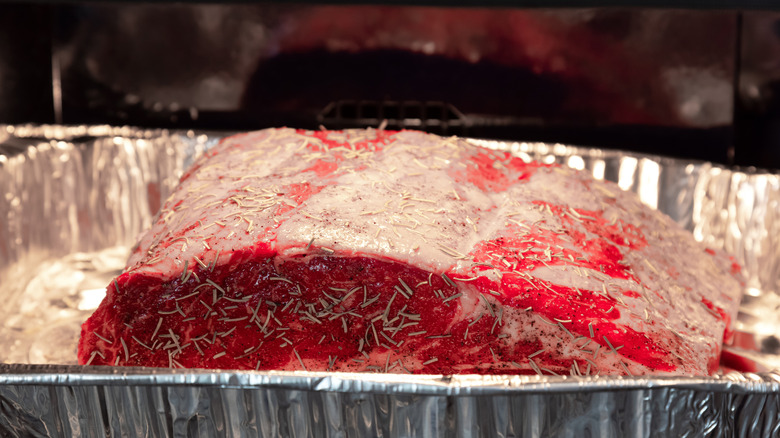
According to chef Thomas Keller, slow cooking makes it so we lose less of the natural juices of the meat. Keller recommends cooking the meat at 275 F until the internal temperature reaches 128 F. "Traditionally when we roast at a higher temperature, you see a varying degree of doneness," says Keller on Instagram. When you cook it low and slow, however, "you see medium rare from edge to edge."
Keller says the low and slow cooking method became popular with the sous vide cooking method. "Not necessarily the most convenient way to cook ... but [the meat] loses less of the natural juices," he says. Chef Tom Colicchio recommends cooking rib roast at 300-325 F. "We want to go really really slow with this," says Colicchio on his YouTube channel. Even if you're smoking the prime rib on a grill instead of cooking it in the oven, you can still do this. Chef Guy Fieri smokes his prime rib at 225 F for about 2.5 hours. One thing to keep in mind if you're smoking it on a grill, Fieri says it's important to put the bone side closer to where the main heat source is.
Also, a meat thermometer is important for this type of cooking, as all the chefs recommend pulling the meat out of the oven not based on timing but when the meat reaches a certain temperature.
Pull the meat out early
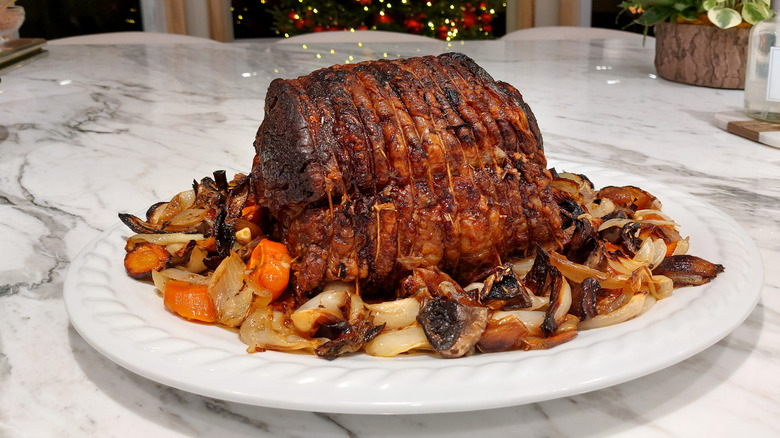
One thing to remember about cooking meat is to let the meat rest after cooking before cutting it. When you cut meat too soon after cooking, you'll lose a lot of the juices on the cutting board. Letting the meat rest a bit allows the juices to cool and become more viscous, so more of it stays between the muscle fibers even when the meat is cut, making it juicier. Chef Tom Colicchio says the bigger the piece of meat, the longer you have to let it rest.
The meat is still quite hot when you start letting it rest, and so it will continue to cook. If you pull the meat out of the oven at the exact temperature you desire, the temperature will keep increasing as it rests and this can overcook the meat. Chef Thomas Keller suggests pulling the meat out when the internal temperature hits 128 F, and it will go up to 130-132 F after resting. Chef Colicchio, on the other hand, pulls his prime rib out at 119 F, which he says should reach his desired temperature of 130 F after resting.
Reverse sear the meat
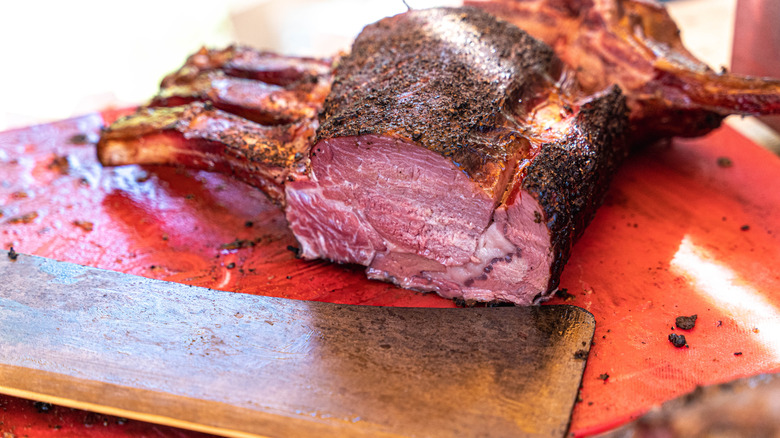
A lot of people love a good sear on their meat, which is something that you can't get from low and slow cooking alone. That's why while chef Curtis Stone cooks his prime rib at an even lower temperature of 225 F, he cranks up the heat at the very end.
Chef Jean-Pierre Bréhier also recommends doing a reverse sear. "It means we're gonna sear at the end instead of the beginning," Bréhier explains on his YouTube channel, "So then we will have an even medium rare all the way from one end to the next without having that gray sear line that we normally get." According to Bréhier, when you're cooking a big piece of meat like prime rib, you need to do reverse sear, "It's really the only way to do it."
If you're curious about applying this method on other types of meat, read our guide on how to properly reverse sear meat in an oven. You can still cook low and slow without doing the reverse sear, if you really want to. Chef Guy Fieri sears his prime rib beforehand, then cooks it at 225 F in a smoker.