

Don't Even Think About Using This Beef Cut For Pot Roast
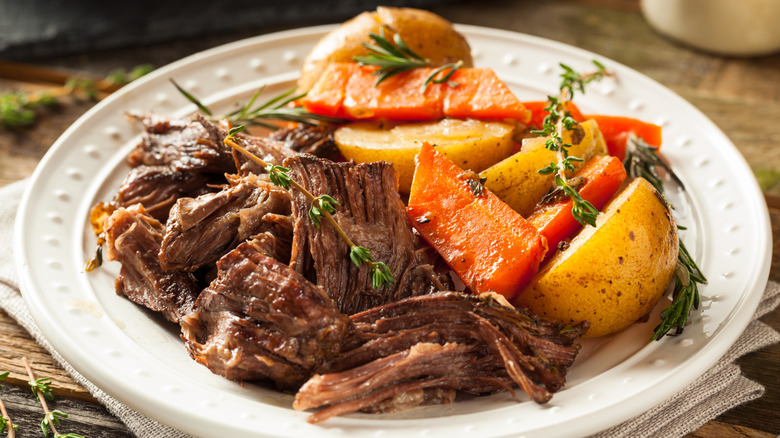
Pot roast is a delicious dish with a major upside — it doesn't require you to keep much of an eye on it, especially if you use a pressure cooker. There are a lot of pot roast recipes out there that call for slightly different ingredients to boost flavor, such as a pinch of ranch seasoning. However, one ingredient you definitely want to avoid in your pot roast is a rib roast cut.
While there are plenty of cuts of meat that are perfect for pot roast, rib roast is not one of them. Rib roast is also known as prime rib if it comes from the center ribs of the cow, specifically ribs 6-12. As it turns out, this name has nothing to do with the USDA quality but rather because it's one of the first, or "primal," cuts that happen to a cow at a butcher (to make things just a little more confusing, a ribeye roast is basically the same thing, but with the bones removed). Whatever you call it, this cut, located under the front section of the cow's backbone, should be avoided when slow cooking in general. The main reason for this is that meat from this area of the steer is quite tender. If it is overcooked, it can become chewy and dry, and that's not the consistency you want for your pot roast.
How to use rib roast
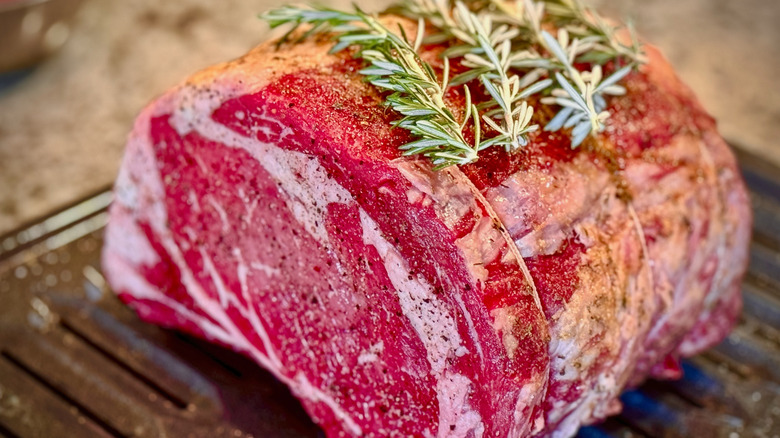
If you have rib roast on hand and you're trying to decide what to do with it, you would be better served roasting or grilling it at a low heat. Another excellent choice is using a smoker to cook prime rib — be sure to use less wood and plenty of charcoal so the meat's natural flavors don't get lost in the smoky taste. The large amount of fat content in this cut (particularly from the ribs closest to the shoulder) keeps it moist and flavorful when cooked slowly and served at medium-rare.
As to which meat cuts are better for pot roast, there are, in fact, several that work quite well. One great cut is brisket. Brisket, which comes from the lower chest region of the cow, is a classic for slow-cooking. It's full of fat and sinew that break down over hours in the crock pot. Once it's cooked long enough for the collagen to soften up, the resulting meat is flavorful with a melt-in-your-mouth texture ideal for pot roast.