

Dutch Oven Vs Saucepan: Which Is Best For Sticky Sauces?
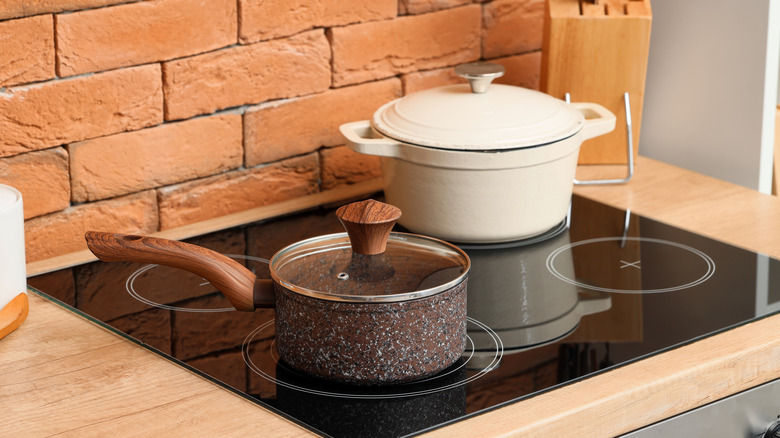
A Dutch oven is one of the more versatile pieces of cookware to have in your kitchen, whether you're simmering a stew or baking a loaf of homemade bread. But if you're preparing a sticky sauce, such as caramel or a honey-based glaze, you're better off using a saucepan instead. Both a Dutch oven and a saucepan can cook various sauces, but the difference has to do with how quickly each responds to changes in temperature.
Dutch ovens are typically made from cast iron, a material that retains heat long after the burner has been turned down. This is ideal for a stew that needs to simmer for hours, but isn't necessarily ideal when working with sticky sauces that are made from sugar or honey. Even after a Dutch oven is removed from a burner, its retained heat can continue cooking the sauce, taking it from golden brown to burnt in a matter of seconds.
A stainless steel saucepan, specifically one with an aluminum core, responds more quickly to temperature changes. A saucepan will cool more quickly when you lower the heat once the sauce thickens, reducing the risk of burning it. A saucepan is also lighter and easier to swirl, which helps distribute the sauce as it cooks. While using too much heat with a Dutch oven can cause food to burn or stick, a saucepan gives you more control over a sauce that needs close attention.
A saucepan is best for sticky, sugary sauces
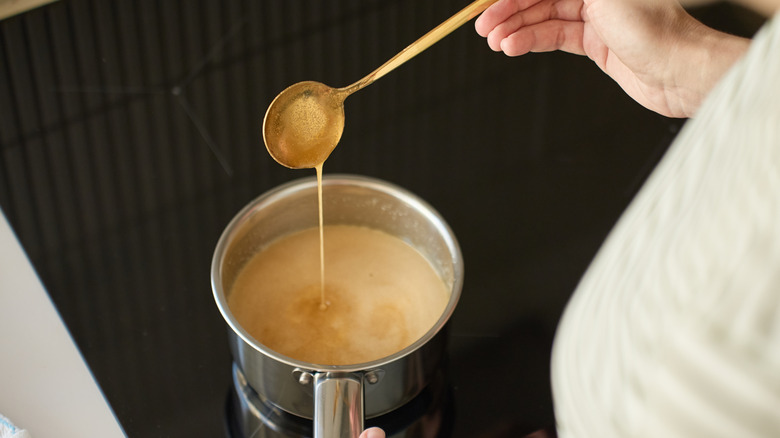
Beyond temperature control, a saucepan has other advantages for making sticky sauces. Its smaller cooking surface is often a better fit for small batches of caramel, teriyaki sauce, or honey-based glazes. In a large Dutch oven, a small amount of sauce can spread into a too-thin layer across the bottom, allowing liquid to evaporate quickly and leaving concentrated sugars at risk of burning before you've had a chance to turn down the heat.
However, not every saucepan in your cabinet is the best choice. A heavy-bottomed pan distributes heat more evenly, helping reduce hot spots that can burn sugars. A light-colored interior can be helpful when making sauces like caramel, whose color can tell you when it's finished cooking — or if it's cooking too quickly. The right cookware can make the process easier, but it won't necessarily prevent overcooking. If you end up with burnt sugar stuck to the bottom of your pan, boiling water in the pan can help loosen the residue and save you from scraping.
Your Dutch oven isn't completely off-limits for every sauce. For larger batches of sauces that need a longer simmer, like this plum bourbon barbecue sauce, a Dutch oven's high sides can contain splatters and leave room to stir as the mixture reduces. But for a small batch of caramel or a glaze, there's little reason to haul out a heavy pot when a saucepan can do a better job.