

The Difference Between Irish Butter And Amish Butter
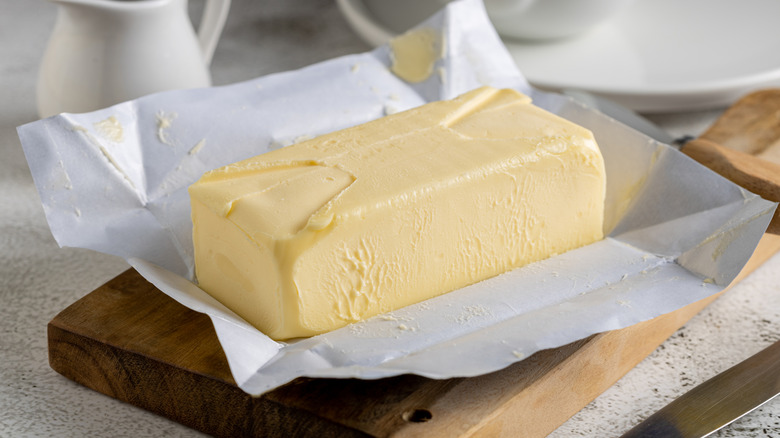
Confused by the varieties of butter at the grocery store? You'll find everything from flavored compound butters, butter-like spreads, fancy artisanal butters, and even clarified butter on supermarket shelves. Each of these dairy products has its place in the modern kitchen, however there are a couple of butters that some would argue are the best of the bunch: Irish and Amish butter.
Both of these butters are made with the same ingredients, but they do have a few differences that set them apart from each other when it comes to the way they're produced and packaged. Irish butter comes in sticks or blocks and can be stacked neatly, while Amish butter comes in rolls that are hand-wrapped and have more of a rough and ready appeal. The flavor and texture of these butters also diverges, which can affect their uses, too, depending on whether you want to use them for baking, cooking, or stirring into a hearty serving of mashed potatoes. If you're unsure which variety to purchase for making your next batch of homemade croissants or spreading on a slice of sourdough toast, here's the lowdown on the difference between Irish butter and Amish butter.
Irish butter has a grassy flavor, rich texture, and yellow color
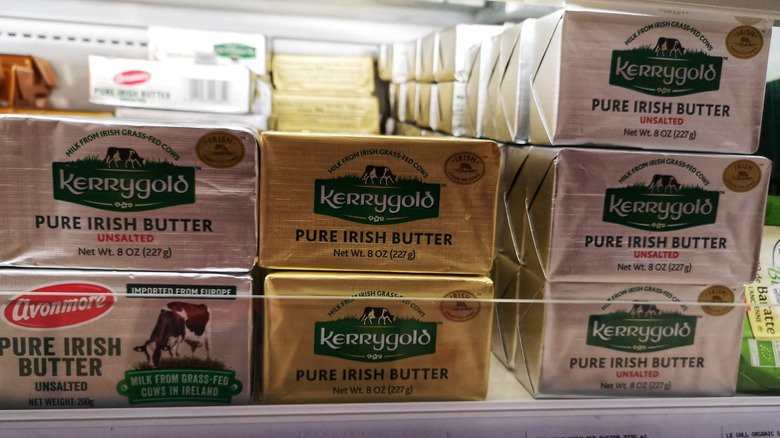
Irish butter is made with pasteurized cream that has an 80 to 90% butterfat content, in contrast to American butter that has a slightly lower percentage. This feature is one of the key properties that makes Kerrygold butter so good; the finished product is softer in consistency, rich in mouthfeel, and easier to spread at room temperature.
Perhaps more importantly, the dairy cows that provide the cream for Irish butter graze on lush green pastures, which affects its final taste and color. As the cows ingest the vegetation and flowers growing in the vicinity, the butter is imbued with a grassy sweetness and tang. Irish butter also contains lots of omega-3 fatty acids, antioxidants, and vitamin K2 that come from the same grass. Meanwhile, the presence of beta-carotene gives the butter a deeper yellow appearance and saturated hue.
Using a high-fat European butter in baking can affect the texture of your cookies, croissants, and cinnamon rolls because it has a lower water content. This balance of moisture is super important when making pastries, like croissants, that require steam to lift their laminated layers. Having said that, Irish butter does give baked goods a richer flavor and is incredible for lending sauces a velvety consistency and preparing frostings with a dreamy texture. In this case, unsalted Irish butter is ideal. While Kerrygold is a popular brand of Irish butter, you might be able to get your hands on other brands like Connacht Gold or Abernethy butter.
Amish butter has more butterfat and is hand-rolled
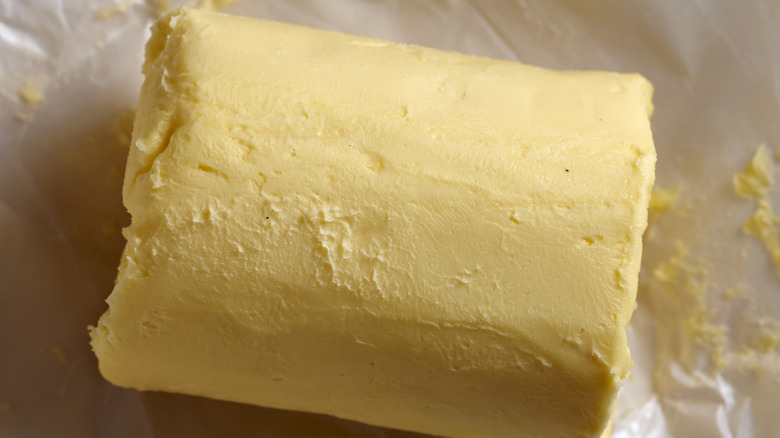
The two components of Irish and Amish butter are simply pasteurized cream and salt, so they do bear some similarities at a core ingredient level, unlike compound butters made with additional aromatics or cultured butters that are pumped with live bacterial cultures for tang. However, the quality of the milk used to prepare the cream for Amish butter can differ, depending on where the dairy cows are put out to pasture. This in turn affects the flavor and appearance of the finished product, which isn't always guaranteed to be as sweet and grassy as Irish butter. That said, Amish butter has a butterfat content of 84 to 85%, which lends it an ultra-creamy texture and milkier taste than Irish butters that fall on the lower end of the butterfat spectrum.
The other difference between the two butters relates to the way they're prepared. Ordinarily, regular butter made in a commercial factory is packaged by machines after the cream is churned, which can break down the butter fat. In contrast, Amish butter is slow churned and packaged by hand. This allows the butterfat to stay intact, resulting in a superior flavor and texture. Finally, the shape of the butter is also different. Amish butter is a form of hand-rolled butter, which means it's manually rolled into cylinders or wheels weighing one or two pounds each. This technique again helps to maintain and protect its consistency.