

The Spot Paul Hollywood Stores His Eggs Would Seem Wild To Americans

Those Brits have some fancy ideas when it comes to egg storage, including the "Great British Bake Off" judge, Paul Hollywood. British eggs bearing the iconic lion stamp have a different storage process than those in the U.S., and Hollywood's go-to method reflects this. The blue-eyed baker stores his eggs outside at room temperature. In an Instagram post, Hollywood revealed, "Room temperature eggs will always go into a mixture much better and not sting it by being too cold."
Depending on which side of the pond you reside, cue the momentary cultural confusion. This is a tale of different yolks for different folks, and it all comes down to how two countries approach egg safety. British eggs are sold unrefrigerated, while commercial eggs in the U.S. go through a sanitizing process that speaks to why you have to refrigerate eggs.
American eggs are regulated by the United States Department of Agriculture as well as the Food and Drug Administration, and commercial farmers are required to wash and sanitize eggs before they reach grocery store shelves and are sold to consumers. However, in washing the eggs, the protective coating known as the bloom is removed. They are then sprayed with warm water that contains a chemical to guard against bacteria. Next, the eggs are dried to get rid of any moisture. Moisture is the great nemesis and can cause bacteria to grow.
Why room temp eggs are better for baking
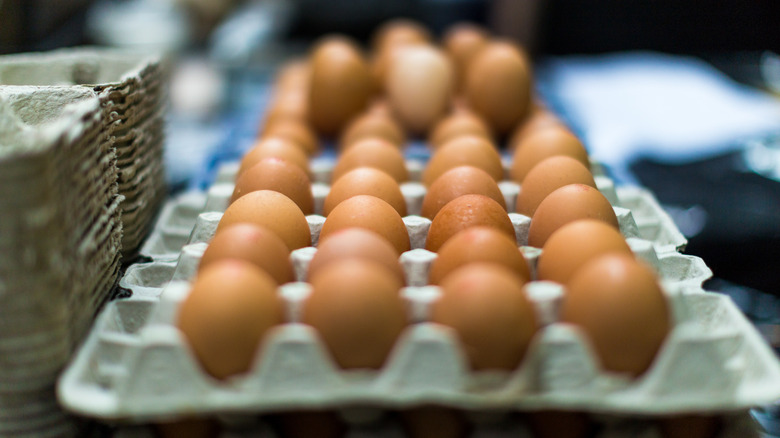
Eggs sold in the U.K. are a little different. No washing or cleaning is allowed for British farm-fresh eggs, but they aren't dirty. No cleaning allows them to keep the bloom or cuticle coating undisturbed, which keeps bacteria at bay. The Brits also vaccinate their chicks against Salmonella before they start laying eggs. So, when you are in the UK, you should do as they do when it comes to egg storage, but stick to the refrigerator if you are in America.
While it is unsafe to store American eggs the way Paul Hollywood stores his, you may wonder if it is safe to allow eggs to warm to room temperature when baking. The answer is yes, but you should only take out those you plan on using. This is especially important if you are making a classic baked cheesecake or yeast breads. This is because room temperature eggs are the key to the fluffiest cakes or any baked good that needs some soft volume. When eggs are warm, they can trap lots of little bubbles as they are mixed with other ingredients. As cakes, cookies, and muffins bake in the oven, those bubbles expand, producing a light and fluffy texture.