

Don't Skip This Tangy Condiment When Making Beef Wellington
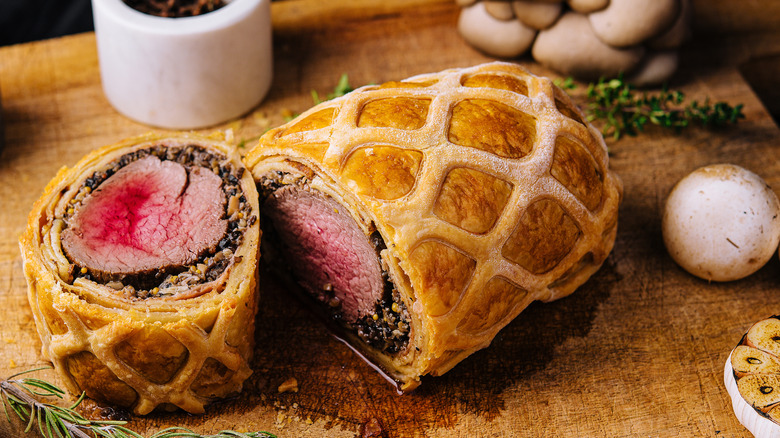
Beef Wellington is one of those fancy dishes that truly makes a visual impact and tastes as good as it looks. A combo of golden puff pastry, savory mushrooms, and buttery-soft beef, this British dish makes an impressive centerpiece at a dinner party but does take effort to prepare. That said, if you've got the time and the culinary know-how, all the heavy lifting is worth it when you slice into it to show off those considered layers. Just one word of advice is to make sure you don't skip the Dijon mustard.
There are plenty of recipes for Beef Wellington, but not all include this mustard. However, this sharp condiment can truly lend your finished dish another dimension of tangy flavor, which is why chefs like Gordon Ramsay use it in their signature versions of this iconic specialty. Firstly, the spiciness of the Dijon counters the rich fattiness of the beef with its slight acidity, heat, and brightness. This gives each bite a balanced quality that also provides contrast against the butteriness of the crisp pastry.
Without any mustard, the classic elements in a Beef Wellington can taste heavy and one-note; the Dijon brings sharpness and welcome piquancy that lifts each layer. Secondly, mustard happens to be a natural tenderizer because it contains vinegar, which means it can break down some of the tough muscle fibers in the beef after it's encased in the pastry and baked. Among the many types of mustard out there, Dijon is a smooth variety, providing flavor without affecting the textural balance of the Beef Wellington.
How to add mustard to Beef Wellington
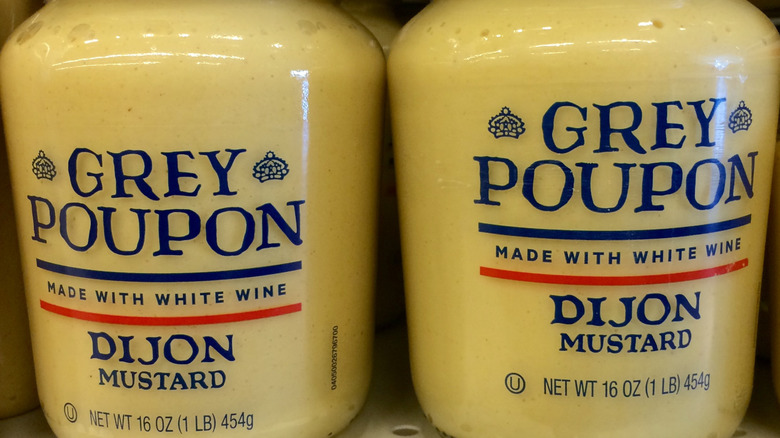
In a recipe for classic beef Wellington, you first need to stir the Dijon mustard into a mixture of sautéed mushrooms and shallots (known as a duxelles), along with thyme and pepper. Then, spread the duxelles over the pastry before using it to wrap the beef tenderloin. This technique guarantees that the beef is surrounded by all that mustardy flavor once the puff pastry has baked through.
However, if you're subbing the duxelles for a different variety of veggies or a chicken mousse, you can brush the Dijon mustard directly over the beef immediately after it's been seared instead, so it's completely coated in an unadulterated layer of tangy, peppery heat and pungency. Meanwhile, the spreadable texture of the mustard also encourages any other layers, like prosciutto or crepes, to cling better to the meat, acting like an edible glue. This produces a beef Wellington with a uniform, log-like shape and distinct layers that look stunning once the dish is portioned into slices.
If you're making bite-sized portions of vegetarian Wellington, you can also spread the mustard directly onto the pastry. This method is the preferred option in this recipe for mini mushroom Wellington bites, which can also be served with a mustard dipping sauce to double down on that tangy and spicy flavor.