

9 Breakfast Cereals Americans Ate In The '60s
We may receive a commission on purchases made from links.
The 1960s was an epic decade for breakfast cereals. Iconic brands were born during the era of hippies and the Space Race — brands that are still favorites on the grocery shelves today, like Cap'n Crunch, Froot Loops, and Lucky Charms. Americans were certainly gobbling these brands up, but we found plenty of others born in the '60s that you may not be familiar with. In fact, we selected nine swinging cereals that kids (and surely adults as well) fueled up on before the school bus arrived.
You'll see some very popular cereals here that are still on store shelves today, but we also wanted to save plenty of room for brands that you may have never heard of, or haven't thought of in a long time. The '60s had cereal companies shamelessly boast about how sweet and sugary its products were, and they definitely made kids their target market, with in-box toys and prizes, as well as entertaining boxes and catchy commercials. Among the cereals we featured are an ice cream-inspired cereal and, interestingly, one that even has the word "diet" in its name — which was no doubt aimed at adults.
Super Sugar Crisp
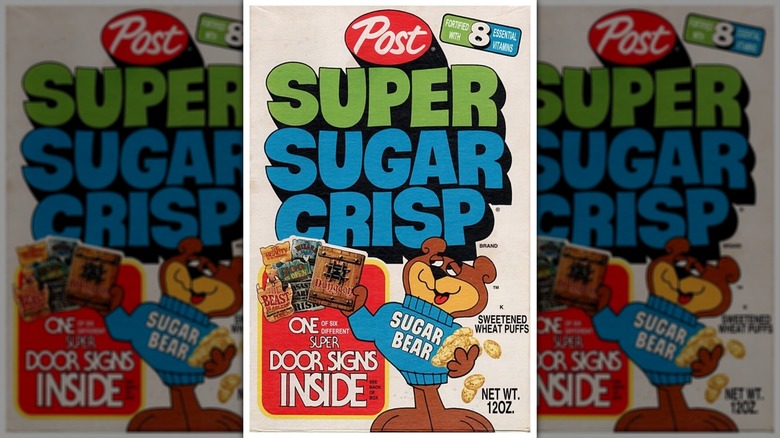
Never heard of Super Sugar Crisp? What about Sugar Crisp? How about Super Golden Crisp, or Golden Crisp? These are, in fact, all the same cereal, renamed over time. Sugar Crisp debuted in 1949, but by the late 1960s, it was Super Sugar Crisp. The cereal consisted of puffed wheat sweetened with honey. By the 1980s, the company removed the word "sugar" and revamped the cereal as "Super Golden Crisp." We suppose, at that point, parents weren't too keen on sugar being such a blatant part of their kids' breakfast cereal.
Corn Flakes & Strawberries
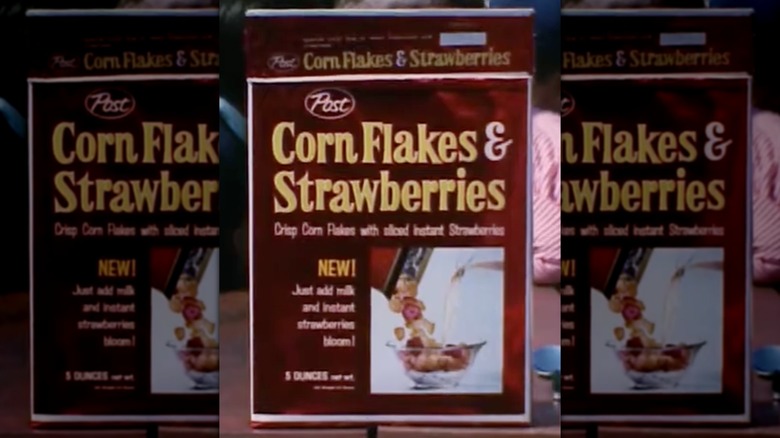
Freeze-dried fruit (not dehydrated fruit) in breakfast cereal isn't what you'd call an anomaly; but, in 1963, it was. That was the year that Post introduced Corn Flakes & Strawberries, which was the first cereal to have such fruit in it. The company made a big to-do about the freeze-drying process to show consumers that there was actual fruit in its new cereal. During the decade, Post also offered the cereal with dried peaches and blueberries, but none of them lasted particularly long, with all three going off the market after only a few years.
Kellogg's Kream Krunch
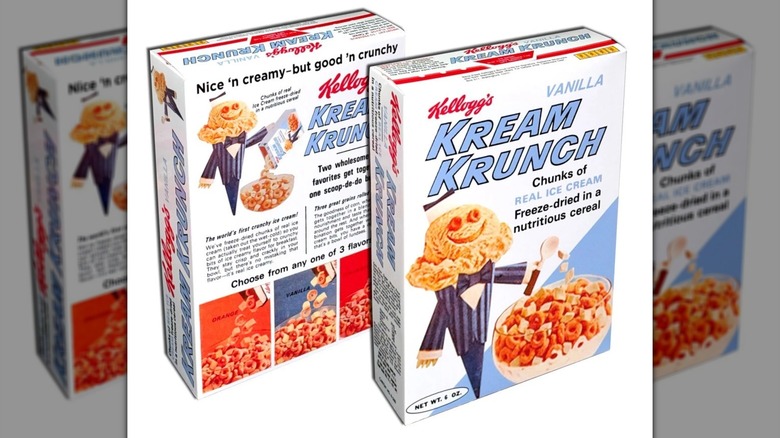
Freeze-dried fruit is one thing to include in cereal, but Kellogg's opted for freeze-dried ice cream in its Kream Krunch in 1965. Along with the corn, wheat, and an oat cereal base, there were chunks of freeze-dried ice cream in orange, strawberry, and vanilla flavors, making it a treat for kids while parents appreciated the nutritious grains.
Diet Frosted Rice Puffs
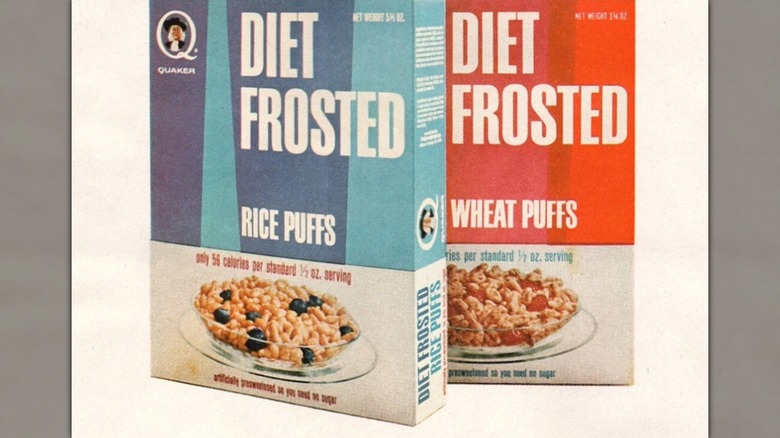
It's one thing to call a soda "diet," but we think it's quite another to give the title to a breakfast cereal. Quaker decided to give the idea a try in 1967, but the cereal ended up getting discontinued the same year, suggesting it wasn't a hit. Advertisements claimed it was "the breakfast of losers" because of its low calorie count per serving (just 56 calories), making promises of shrinking your waistline. Apparently, it was sweetened, but not with sugar. We're glad food companies figured out that most of us don't like mystery behind what we eat.
Kellogg's Triple Snack
Kellogg's Triple Snack cereal debuted in 1963 and was the type of cereal you could eat with milk and a spoon, or just treat it as a poppable snack. It consisted of sugar puffed corn, sugar puffed wheat, and roasted peanuts. The commercials for this cereal included a pretty cryptic jingle, telling potential customers that "Triple Snack will get you if you don't watch out." We still don't know what Kellogg's meant by that, but we'll probably never be able to find out, as Triple Snack was discontinued in 1965.
Twinkles
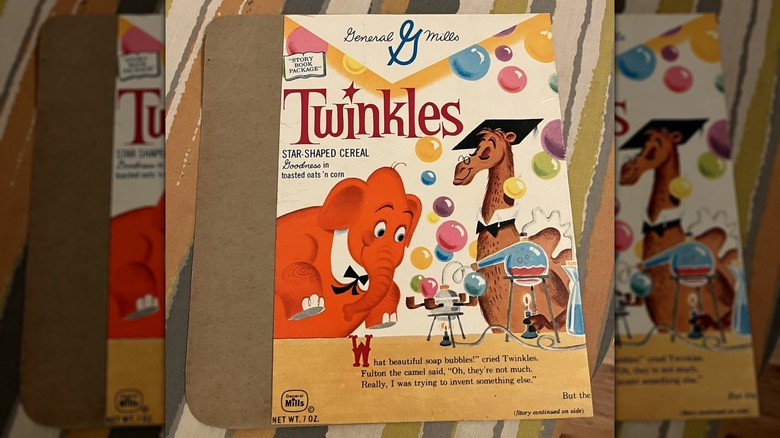
This cereal, which came out in 1960, contained star-shaped toasted oats and corn. The back of the boxes contained a real storybook about Twinkles, a magic elephant and the mascot for the cereal, along with his animal friends. General Mills produced many different boxes with various stories, so kids always had a new literature adventure to look forward to. It was discontinued in 1973 after a fairly long run in stores.
Honeycomb
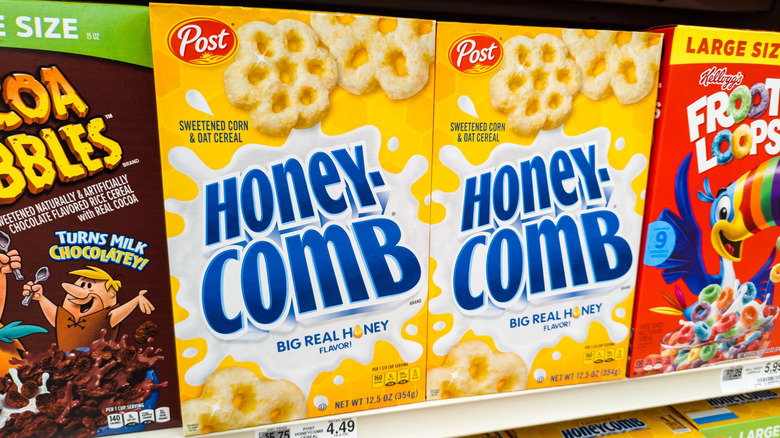
Honeycomb was introduced to the American masses in 1965 and offered a new, unique shape to the typical cereal flake or puff. The large, crunchy pieces look like honeycomb and taste as sweet as honey. While some of the ingredients have been altered over its long life, Honeycomb has largely remained the same for over 60 years. Post has introduced other flavors, like strawberry, chocolate, and cinnamon, but it's the original that has had the ultimate staying power.
Apple Jacks
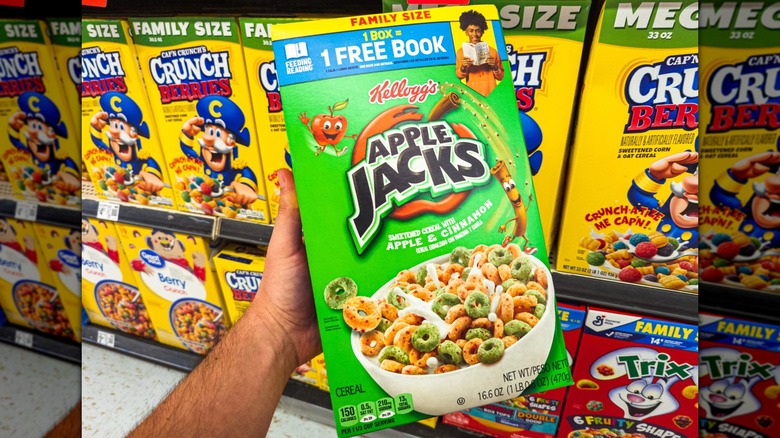
Introduced in 1965, Apple Jacks were originally named Apple O's and didn't get their signature moniker until 1971. It's a scrumptious blend of multigrain "O" shaped cereal, dried apple pieces, and cinnamon. Up until 1998, the cereal was a light orange color, but then changed to also feature green-hued "O's." Despite the difference in color, all the cereal pieces taste the same, and people love them as much today as they did in the '60s.
Life Cereal
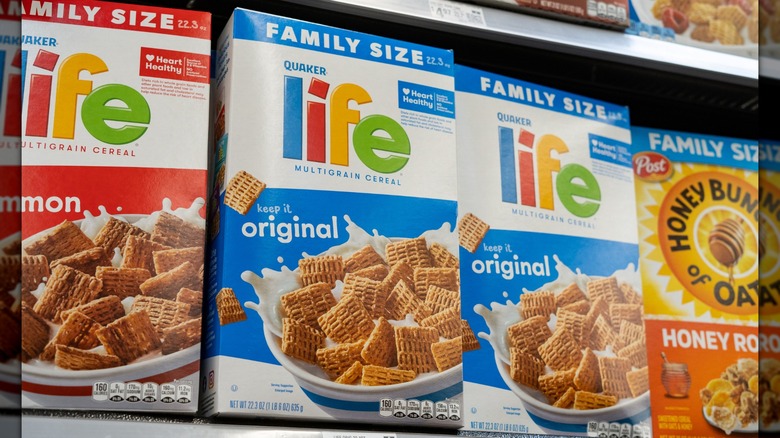
Quaker launched Life Cereal in 1961 and it is still a super popular cereal today. The crunchy, square-shaped cereal pieces are made of shredded oats, and sandwiched inside was sugar to give the grains a touch of sweetness. Popularity of the cereal skyrocketed in 1972 with a commercial featuring the line, "He likes it! Hey Mikey!" This would become one of the most famous food slogans of all time.