

Keep Your Oven Sparkling Clean With This Self-Care Tool
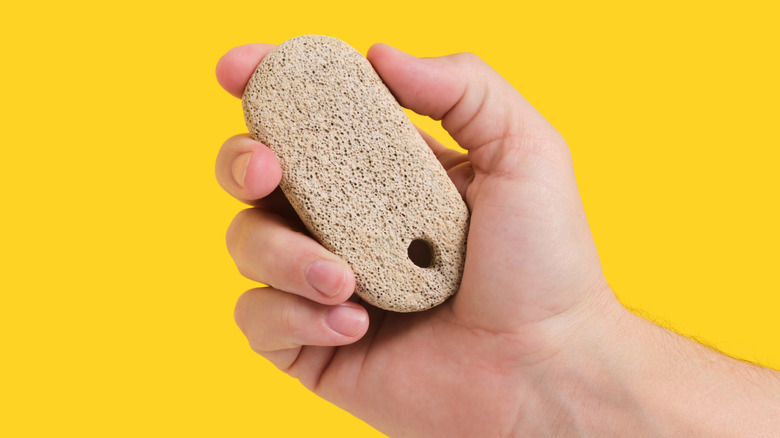
Whether its being used at a salon for a professional pedicure, or at home for a self-care moment, pumice stones are a staple. Scraping away rough, callused skin can leave feet feeling soft and smooth, but the benefits of pumice stones don't here. They can also come in handy for a much less relaxing task: cleaning your oven.
From crumbs left behind from sheet pan dinners to accidental cake batter overflows, the oven can become a catch-all for spills and other messes. Its high heat can bake this residue onto the interior until it starts to feel like part of your appliance. When an ordinary sponge and elbow grease won't cut it, using a pumice stone gives you extra scrubbing power against that stubborn buildup. Pumice is a naturally abrasive volcanic rock formed when lava cools rapidly, leaving behind a lightweight, porous surface. This rough texture helps loosen and wear away buildup that gentler cleaning tools might leave behind.
Before raiding your bathroom cabinet, though, make sure to grab a pumice stone made specifically for household cleaning. Cleaning pumice is coarser than the pumice used in pedicures, and is designed to remove stains and residue from compatible surfaces. There is some technique involved to using one, but it's simple: Keep both the stone and the surface you're scrubbing wet while you work. Gently move the wet stone back and forth over the buildup, adding more water as needed, then wipe away the loosened residue with a cleaning cloth.
Other oven-cleaning tips
It can be tempting to give the entire oven this spa treatment, especially when buildup has taken over. But there is a bit of picking and choosing as to where to use your pumice stone, if you want it to scrub off oven messes without creating another problem. The trick is to use the tool for spot treatments, not an all-over scrub.
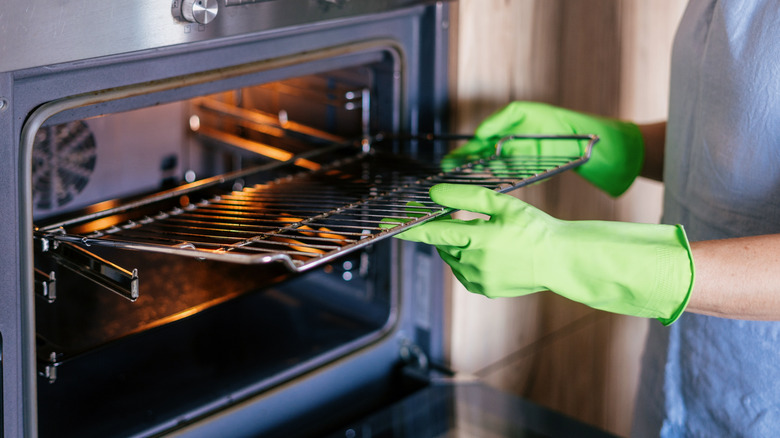
If your oven gives you a sign that it's time to clean, start with the appliance as a whole. First, remove the racks so you can reach the interior, then wipe away loose crumbs. Next, clean the walls and oven floor with warm water and mild soap — following directions for your oven's cleaning cycle –or use lemons to cut through the grease and while leaving your kitchen smelling refreshed. Once the general grime is gone, you'll be able to better see which patches of baked-on food, grease, or carbon deposits have refused to budge. Then, you can grab your pumice stone and focus on specific, stubborn patches.
As satisfying as it is to get your oven looking new again, you should know that the pumice treatment isn't suitable for every surface. Pumice shouldn't be used on glass, highly polished metals, fiberglass, and unbaked enamel. This is because its abrasive texture can scratch or dull these finishes. This means you shouldn't move the stone from scraping the oven interior to scrubbing the glass door just because you're already in oven-cleaning mode. Check the instructions for both your pumice stone and oven first, then save the pumice for the appropriate spots.