

7 Ways You're Ruining Your At-Home Latte (And How To Save It)

If your at-home latte never quite satisfies like the ones the barista whips up for you at your favorite coffee shop, you're not alone. Whether you want to recreate your favorite pumpkin spice latte at home year-round or simply save some money on your daily Starbucks run, creating the perfect latte is both an art and a science. Between achieving the right pull of espresso, the ideal texture of steamed milk, and combining all these flavor and texture elements, it takes some guidance to achieve the perfect pour. We spoke to a couple of coffee experts to get the lowdown on the common mistakes that amateur baristas make with their DIY lattes at home, and gathered some informative insights on how to fix them.
Mary Conklin, Coffee Educator at Variety Coffee Roasters, and Chris Retallick, Co-owner of Boxwood Coffee Roasters, shared their tips for avoiding some of these common mistakes. From using the wrong coffee beans and steaming your milk at the wrong temperature to simply not knowing your espresso machine well enough, there are some small mistakes that can have a huge impact on the outcome of your morning brew. Thankfully, according to our latte expert's insights, there are some simple tweaks and solutions that can take your latte from mediocre to magnificent.
1. Your espresso isn't the right texture, resulting in a watery pull
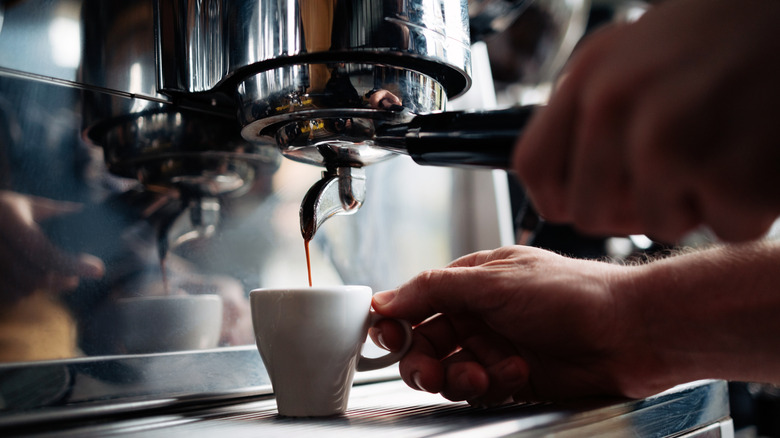
If your latte tastes watered down, thin, or milky, the problem may have to do with the way you're pulling the shot of espresso itself. Beginning with the right texture of espresso is essential for the outcome of your latte. Espresso needs to be substantial enough to stand up to the milk rather than getting lost when the two are combined.
"Your espresso should be thick & concentrated, not the same texture as drip coffee," says Mary Conklin. To make a more concentrated shot, Conklin recommends aiming for roughly 2 ounces of espresso brewed in 25 to 30 seconds. The speed at which the espresso flows through the water has everything to do with how fine it is — if the shot is coming out thin, try grinding the beans finer to slow the water's flow through the grounds. This may require some experimentation with your own espresso machine to find the right grind settings to reach that perfect pull, but it will have a huge impact on the strength of your espresso and the flavor of your latte.
2. You're not using fresh coffee beans
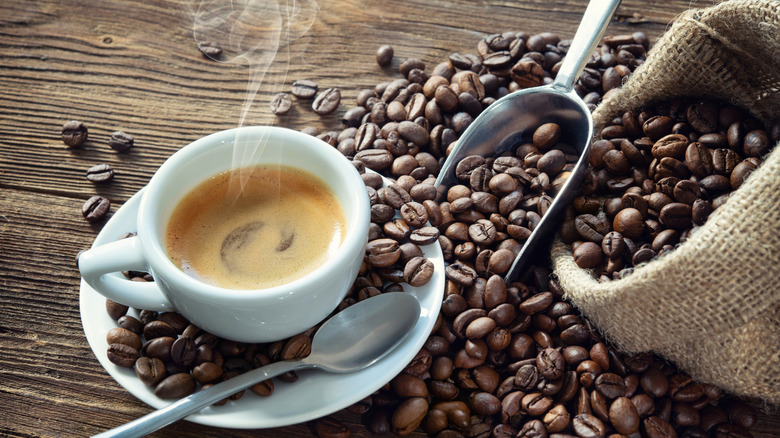
Before you even go to pull your espresso or steam your milk, you want to ensure you're starting with a strong base, which means you need some fresh espresso beans. Coffee beans lose freshness over time due to factors like oxidation, which can make them turn stale and lose their fresh flavor and aroma. Purchasing whole beans to grind yourself at home is generally preferable to coffee grounds because grinding immediately exposes the coffee to the air, letting those deliciously rich flavors dissipate.
Even when buying whole beans, Mary Conklin says freshness is one of the most important things to consider when buying coffee. Rather than brewing them immediately after purchase, she prefers to let her beans rest first, for the best flavor. "I like to rest my beans somewhere between 2-4 weeks after their roast date before I brew them on anything," she says. When shopping for beans, look for a clearly marked roast date and choose a relatively fresh bag. Once you've opened it, keep the beans stored properly and grind only what you need shortly before making your latte.
3. You're buying the wrong milk
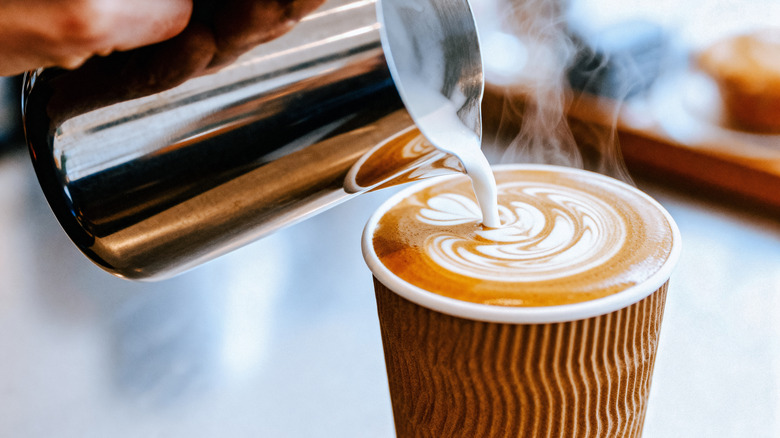
The type of milk you use in your latte is largely a matter of preference, and whether you prefer real dairy milk or milk alternatives is completely up to you. However, it's important to know that different types behave very differently when exposed to steam, which can make or break your at-home coffee creation. Some produce that perfectly smooth, creamy microfoam that coffee shop baristas are so great at curating, while others can separate, become watery, or create large bubbles that sit on top of the drink.
For a creamier texture, Mary Conklin recommends choosing milk with a higher fat content. She also suggests looking for products specifically labeled as a "barista blend," which are formulated to steam well and are less likely to separate when heated. However, if you do prefer using alternatives, her favorites for lattes are oat and pistachio milk to create that perfectly blended, cohesive texture.
4. Your grind size is all wrong, causing bitter or acidic espresso
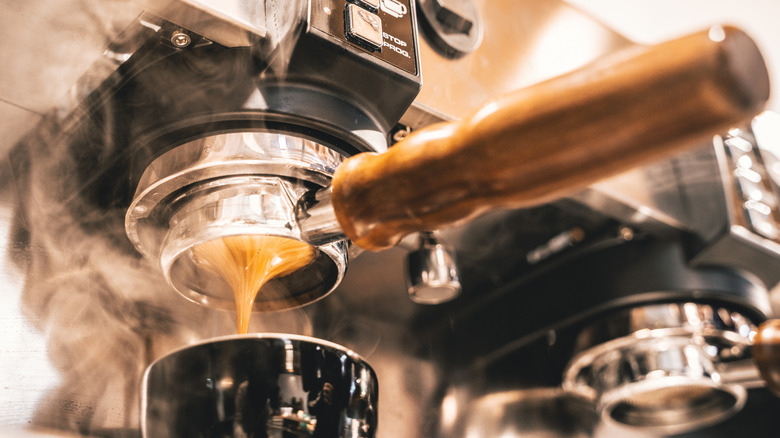
One thing many at-home baristas struggle to get right is the grind settings on their espresso machines. In the same way that the wrong setting can cause a watery espresso shot, it can cause an unpleasant flavor as well. If your espresso tastes bitter, acidic, or even sour, it is likely that your grinding is off, but this is simple to fix. Chris Retallick, explains that if your espresso has an acidic or sour taste, you'll want to dial the grind size in to be finer, resulting in a slower pull.
Mary Conklin agrees, explaining that a shot that tastes overly bitter requires a coarser grind setting, for a faster pull. "Think about rocks in a river," she says. "If my river has a wall of boulders, the water can still flow through pretty fast, through all the big gaps. If I have a wall of sand, it's going to slow the flow a lot." Whether you use a coarser grind for a faster brew or a finer grind for a slower brew, the effect on your coffee's flavor can be noticeable.
5. You're not incorporating air into your milk
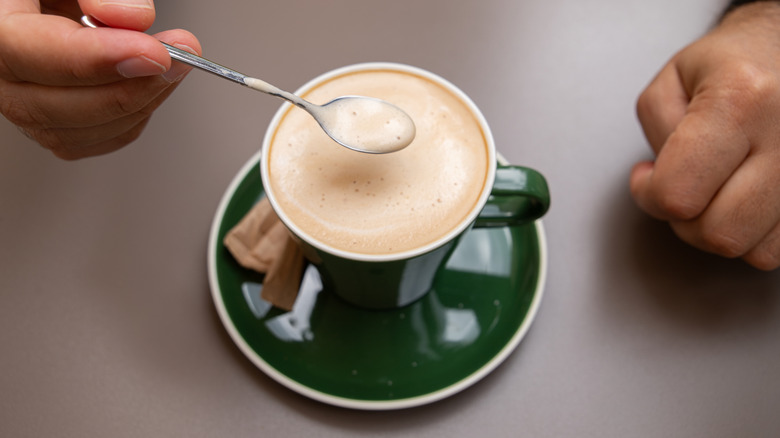
Simply heating up your milk in the microwave is not enough to get the texture of a coffee shop latte. That smooth foam needs aeration, which is a step that both of our experts agree goes a long way when creating a cohesive texture for your latte. "Incorporating air to stretch your milk will create microfoam and allow it to achieve that silky texture," says Chris Retallick.
After introducing the air, Retallick recommends creating a small whirlpool in the milk pitcher as you're steaming, to help distribute the heat and avoid large air bubbles. Mary Conklin agrees that this is the best way to achieve one cohesive texture. The final product should be a milk that looks glossy and smooth, with tiny bubbles throughout, rather than a thick layer of hot milk foam that sits on top of the espresso.
6. You're steaming your milk at the wrong temperature
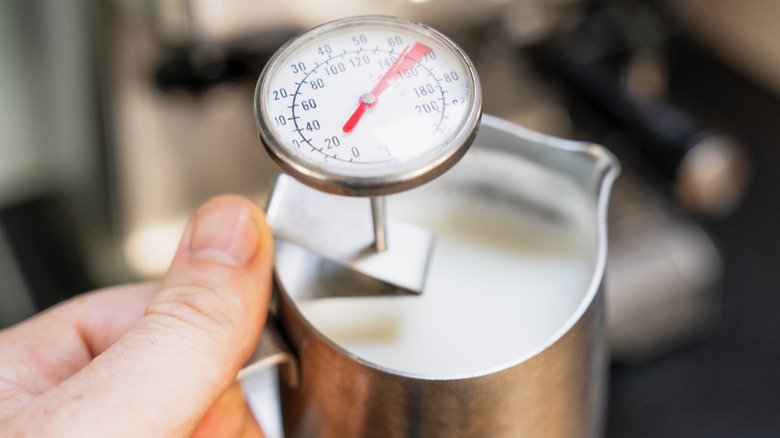
If you want that microfoam texture rather than just frothy milk, you'll need to pay close attention to the temperature at which you're steaming your milk. Milk needs to reach a certain temperature to become hot and creamy, but taking it too far can impact the mouthfeel and flavor. On the other hand, it needs to be warm enough to keep your latte warm, so relying solely on looks is not going to cut it, according to our experts.
Chris Retallick recommends removing the milk once it reaches 140 to 150°F. Similarly, Mary Conklin aims for about 145°F. She likes to use the temperature of the pitcher for an indication, explaining that it should feel hot, but not so hot that it's uncomfortable to touch it. If you're brand new to the milk steaming game, you can also use a thermometer to make it easier to recognize the right temperature.
7. You haven't spent the time getting to know your espresso machine
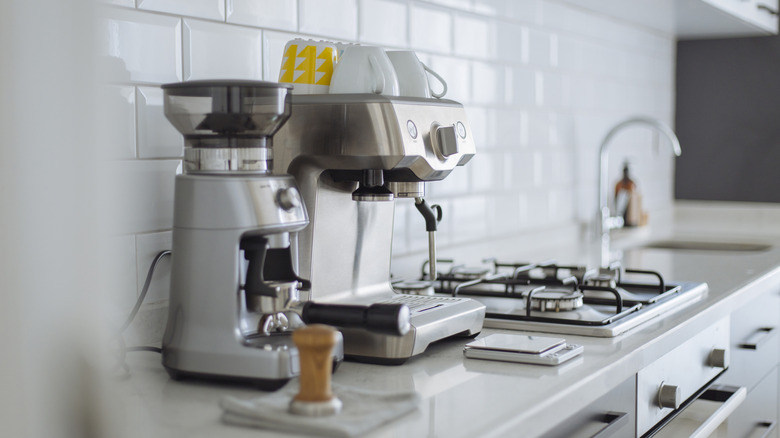
It might be easy to assume that the most expensive espresso machine, grinder, or collection of latte tools will produce the best latte, but you can enjoy gourmet coffee without buying the most costly machine. Even with the best equipment on the market, it's important to spend some time getting to know your espresso machine. Pulling espresso involves knowing several variables, including grind size, dose, yield, brew time, and temperature.
"Get to know your espresso machine & your grinder first before you invest in even more gear, and get good at the basics before you start hacking it," Mary Conklin says. It's a good idea to read the instructions, look up helpful videos, and get comfortable with a little trial and error, because understanding how to adjust your settings will be a game-changer in becoming your own barista. "Espresso is one of those things that you can buy a million different toys for that still won't guarantee a good shot unless you know what's causing what," explains Conklin, so pay close attention to how your espresso changes when you adjust things like grind, dose, or brew time. If you're still having trouble, you can do some research to find the best espresso machines to use for your morning coffee.