

Dark Chocolate Vs Semi-Sweet Chocolate: What's The Difference?
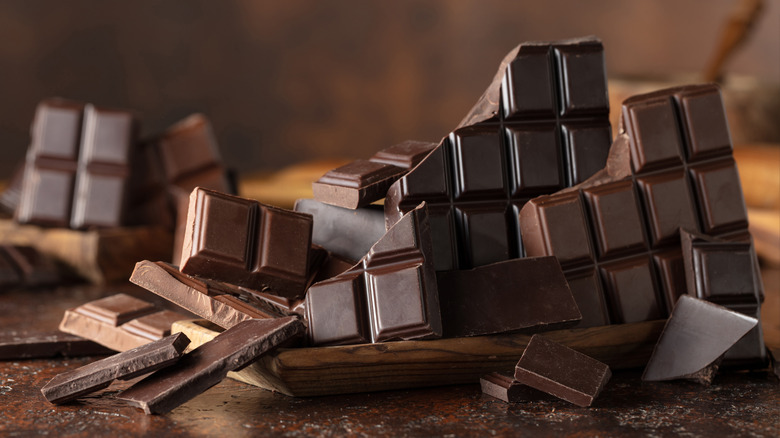
Chocolate has been around for centuries; even before chocolate bars came into existence, the Mayans used cacao as a form of currency. And while we may not use chocolate as money today, this rich indulgence derived from the cacao bean has flooded our market with countless selections of chocolatey goodness. Take a look at the baking section, and you'll find a number of chocolate options, ranging from baker's chocolate to semi-sweet and dark chocolate. Is there even a difference between those two, you may ask? The short answer is that while all semi-sweet chocolate is categorized as type of dark chocolate, not all dark chocolate is semi-sweet chocolate.
Dark chocolate covers a broad range of products you can find on the shelf. Take bittersweet, extra dark, and unsweetened for example. While all may contain different percentages of chocolate liquor made solely from the cacao bean, dark chocolate must contain at least 35% cacao to be classified as such (note that we will be using cacao, chocolate liquor, and cocoa interchangeably in this article, as these terms all describe components of chocolate manufacturing that stem from the same cacao plant). The other components that make up chocolate — sugar, dairy, flavors, and emulsifiers — can make up the other 65%. While some extremely dark chocolates can get up to 85 to 100% cacao, semi-sweet tends to hover closer to that 35% baseline.
Dark chocolate falls on a spectrum, and gets more bitter as you add more cacao
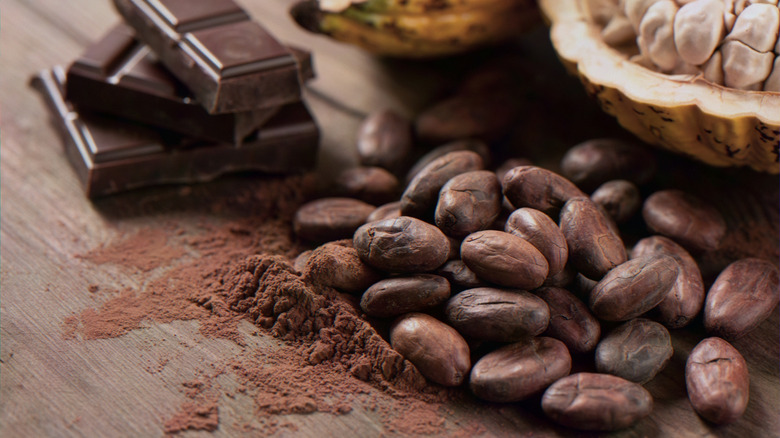
While the FDA's standards on cacao percentage on dark chocolate holds true, most dark chocolate category contains more chocolate liquor than legally necessary. For example, a bar of Hershey's Special Dark Chocolate comes in at 45% cocoa. Chocolove Strong Dark Chocolate Bars have 70% cocoa. And Lindt Excellence Unsweetened Chocolate contains 100% cacao. With a wide range of options on the dark chocolate spectrum, it is up to the consumer's taste to choose the right cacao level based on their own preferences — as a general rule of thumb, the higher the cocoa percentage, the more bitter the chocolate.
Scientifically, the cacao bean contains flavonoids, which are bitter to the tongue and give chocolate its characteristic taste. Milk chocolate, for example, which contains less cacao than dark chocolate, tastes significantly less bitter because of its smaller percentage of chocolate liquor. The way dark chocolate is processed can also lead to your taste bud's perception of the chocolate's bitterness. To mask the bitter taste, it comes down to added sugar, flavorings, and milk that mellow out a dark chocolate bar to make it palatable to the human tongue.
Semi-sweet chocolate typically falls within the sweeter side of the dark chocolate spectrum
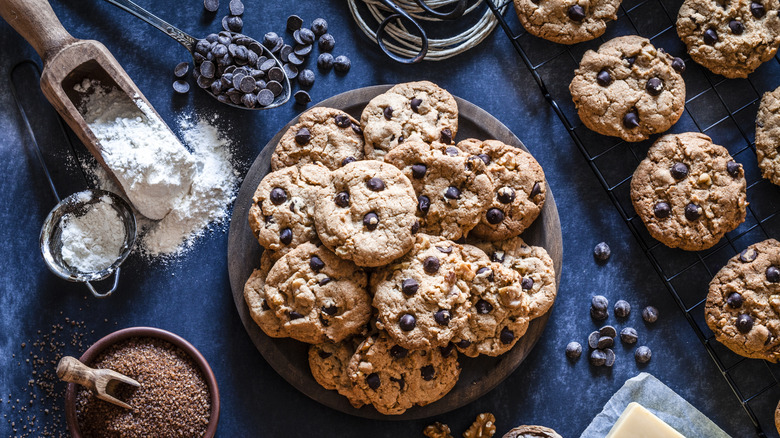
So while dark chocolate can come in many different cacao percentages, semi-sweet chocolate generally skews more towards the sweet side, with with more added sugar than extra dark varieties. But the cocoa percentage is different depending on the given brand; Hershey's semi-sweet chocolate chips contain 42% cacao, while Ghiradelli semi-sweet baking chips contain around 50 to 60% cacao. Regardless, all of these chips are great for baking and melting, the perfect addition to everything from brownies to muffins to chocolate chip cookies.
Evidently, the difference between dark chocolate and semi-sweet chocolate isn't as clear as it may seem. While a category within the wider dark chocolate umbrella, semi-sweet chocolate tends to be sweeter than other varieties, making them common additions to all of your favorite recipes that call for chocolate chips. Now that you understand the difference between dark and semi-sweet chocolate, check out these 12 facts about chocolate that you may not know!