

Greek Yogurt Vs Icelandic Skyr: What's The Difference?

Greek yogurt is kind of having a moment right now. While it was once more of a niche item, in recent years, Greek yogurt has become very popular — even more popular than regular yogurt (by the way, how is Greek yogurt different than regular yogurt again?). This fermented dairy product is now a grocery store staple, and its rise shows no signs of slowing down.
Though it's less ubiquitous, another product that has been making its way onto the shelves in recent years is Icelandic skyr. Like Greek yogurt, it's a thick, liquid-y dairy product with a mild sweet taste that can be substituted into most recipes that call for yogurt. However, despite their similarities, Greek yogurt and Icelandic skyr have some key differences.
One difference is that, while it's often referred to as yogurt, skyr is actually a form of soft cheese that is produced in its own unique fashion. Skyr is also thicker than Greek yogurt, has a lower fat content, and is not as tangy. Now that you've got the basics, let's break them down a little further.
What is Greek yogurt?

Greek yogurt, like regular yogurt, is a fermented dairy product chock full of probiotics. However, it's produced a little differently than regular yogurt, with an additional step. Greek yogurt takes regular yogurt and strains the whey and other liquid out, traditionally by using a cloth bag, but today by using a centrifuge. This results in a thicker, tangier yogurt product. It's also higher in calories as well as higher in protein content — about 14 to 21 grams per cup. Greek yogurt is a versatile food item which can be eaten by itself as a snack, mixed with fruit and granola, or used as a substitute for sour cream. One of the most popular brands of Greek yogurt out there is Chobani, but there are also many other worthwhile brands out there such as Fage and Oikos (check out this list of Greek yogurt brands you should know about).
What is Icelandic Skyr?
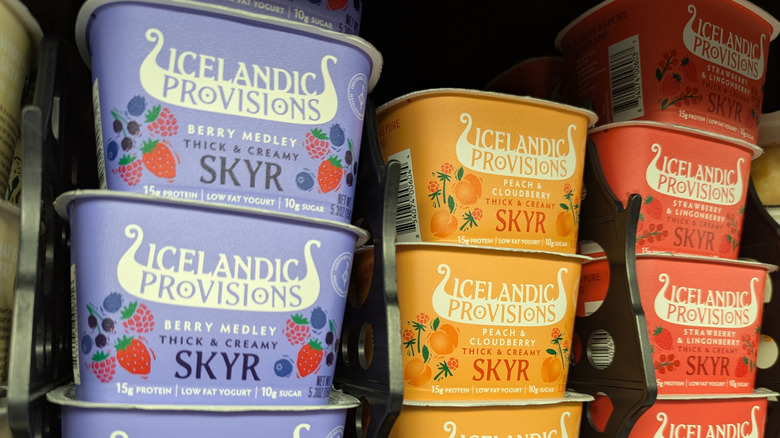
Skyr is a traditional Icelandic food that dates all the way back to vikings in the 9th century. It is a fermented milk product, technically a cheese, that is produced in a somewhat different way than Greek yogurt. While Greek yogurt is often made with whole milk, skyr typically uses skim. And the fermentation process is done at a different temperature. As skyr brand Icelandic Provisions notes on its website, "Unlike traditional yogurt, [s]kyr undergoes a more intensive straining process, resulting in its distinctive texture and high protein content. These fundamental differences set [s]kyr apart from traditional yogurt and is why it warrants its own name."
A cup of skyr has about 20 to 26 grams of protein. It is delicious on its own and can be used basically anywhere you'd use Greek yogurt in a recipe — just keep in mind that the skyr version will be slightly thicker. Want to know even more about this nordic delicacy? Be sure to check out our deep dive on what exactly Icelandic skyr is.