
This Cookbook Scandal Rocked A Former Masterchef Contestant's Career For Good
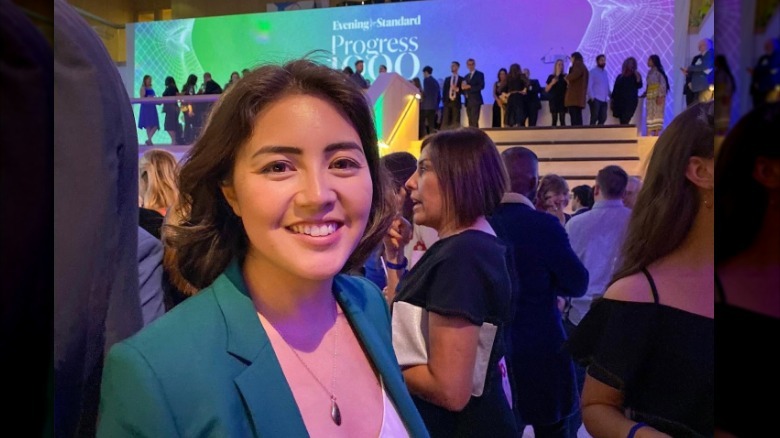
In 2011, Elizabeth Allen was a postgraduate architecture student whose friends dared her to apply for "MasterChef UK." Her prudent use of social media to share her British-Singaporean fusion cuisine, inspired by her mother's cooking, jumpstarted her career in professional kitchens. By 2021, she was Elizabeth Allen Haigh, former head chef of Michelin-starred restaurant Pidgin, and owner and operator of her own brainchild brand, Mei Mei Goods. Haigh had been featured in British Vogue, guest-judged on "MasterChef UK," and was named as "Chef to Watch" by the U.K. National Restaurant Awards. Readers may be familiar with the biggest scandals ever to rock MasterChef, but Haigh's cookbook, "Makan," caused an international online outcry.
Haigh's cookbook was released in May of 2021. The recipes were mostly inspired by Nonya cuisine, a Chinese-Malay fusion cuisine practiced by people in the Peranakan culture of Malaysia and Singapore. It's a highly specific area of Asian cooking and culinary expertise, so it was only natural for Sharon Wee, author of "Growing Up in a Nonya Kitchen," to take an interest in Haigh's book. To Wee's dismay, content had been paraphrased and even copied from her own book, published nine years earlier.
The cookbook removed from store shelves, but multinational retailer Amazon still sells it. No legal action was ever brought against Haigh, and in an interview on "The Go-To Food Podcast" in 2026, she said the book was removed, "With no admission of liability, but as a result of threatened litigation." Haigh went on to describe having to rebuild as a consequence, which she seems to have done with ease. She opened a coffeehouse and lunch spot, Mei Mei, in 2019, and developed a line of South Asian condiments and sauces. As of 2026, Haigh has 91,000 Instagram followers.
Glaring Controversy Leads to Public Outcry
In Sharon Wee's cookbook, she shared: "My mother, like many of her friends, placed their most frequently used condiments and ingredients within easy access while they cooked. That often meant a plastic tray ... where there were small bottles of soy sauces, sesame oil, and jars of minced garlic, salt and sugar. In the past there would also have been a metal container to hold recycled cooking oil."
An email from Wee's publisher to various shops was shared by Eater, comparing Wee's passage with one from Elizabeth Allen Haigh's cookbook: "My mother ... kept her most frequently used condiments and ingredients within easy reach of where she cooked. That often meant a plastic tray full of little jars of oils, crispy-fried shallots or garlic, crushed garlic, salt and sugar. There was also usually an old metal pot for recycled or discarded frying oil."
The two passages are almost identical, and it's not the only example. Wee's description of ginger and how Nonya culture uses it is closely paraphrased by Haigh, and Haigh's description of her mother's handwritten recipes is a nearly word-for-word replica of Wee's own story. Wee isn't the only author embroiled in the controversy, either; an Instagram post by Daryl Lim, a Singaporean food critic, names multiple instances of Haigh paraphrasing or outright copying from other Malaysian culinary sources. In the midst of the outcry, Wee issued a statement confirming her complaint of plagiarism to Haigh's publisher, who removed "Makan" from circulation.