

Do Thrift Stores Typically Wash Dishes Before Selling Them?
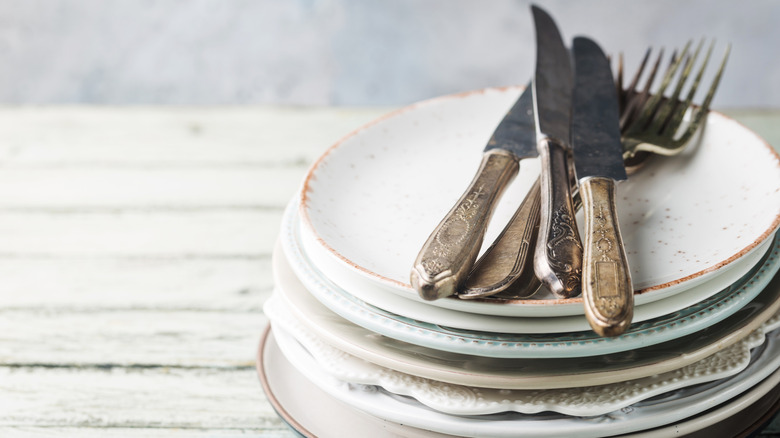
Thrifting used appliances, crockery, and retro cookware is a fantastic way to kit out your entire kitchen when you're on a shoestring budget. As always, inspecting each item for damage before rolling up to the cash register with your basket of goodies is best practice, but what you do with them afterwards is just as important. For instance, if you've bought a stack of cute dishes that look like they'd suit your design aesthetic, make sure to give them a good clean at home, as thrift stores don't typically wash dishes before selling them.
Large thrift stores, like Goodwill, that receive tons of used clothing simply can't wash every item that comes in because of the sheer volume; it follows that the same is likely true for cookware and dishes. However, some stores, such as The Salvation Army, do ask that donations of kitchen items are "washed, free of chips or cracks, and in sets of plates/cups/glasses etc., rather than individual items," so they should, in theory, be clean when received.
Meanwhile, smaller thrift shops have their own policies. Some that operate with a limited number of staff don't have the manpower or facilities to wash donated dishes before sorting and displaying them. However, there may be others, such as smaller boutique-style thrift stores, that select key pieces and take the time to disinfect them. You can always ask the staff about the store's policy if you're keen to learn more.
Always wash your thrifted dishes before use
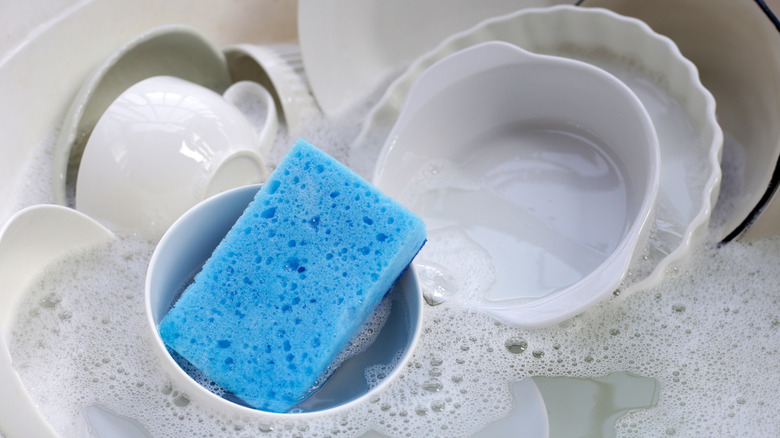
If you're lucky enough to find a thrift store that washes dishes before putting them up for sale, we'd still recommend giving them a thorough clean before use. In fact, even new dishes should be washed prior to first use because they can gather dust as they sit on the shelves (or even be exposed to pests). You can either stack your thrifted dishes straight into the dishwasher to sanitize them in the steamy environment or soak them in the sink with plenty of dish soap. Natural cleaning agents, such as lemon juice or vinegar, will cut through any greasy spots, while a dash of baking soda will create a foam to dislodge any stubborn stains.
Plenty of people who have purchased crockery from thrift stores recommend bargain hunting. However, they do follow health and safety guidelines. For instance, one Redditor said, "I would absolutely not use kitchen items without washing and sanitizing them after buying from a thrift situation. Most of them are nonporous and easily cleaned. I don't buy plastic that's stained or smells, chipped enamelware, or things that are obviously questionable." When one Redditor said they feel grossed out about using thrifted kitchenware in a different thread, a commenter pointed out that "It's no different than using a restaurant's dishes/cutlery, but at least you know you've cleaned them well."