

Dry Rub Vs Seasoning: What's The Difference?
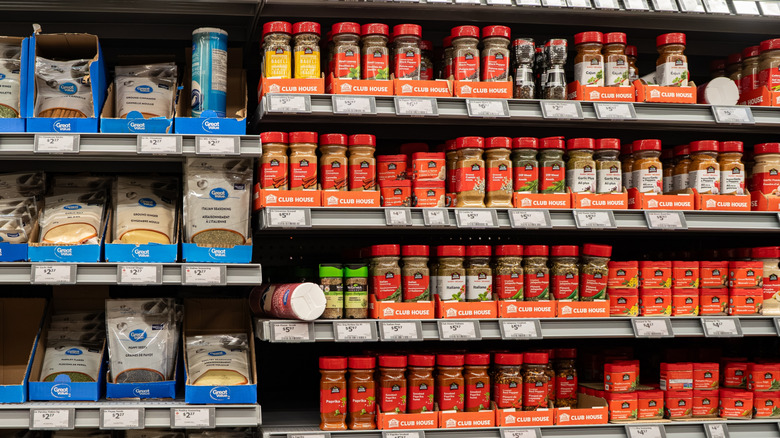
It's easy to get stuck comparing jars in the spice aisle when dry rubs and seasonings look so similar. Both can contain salt, pepper, herbs, spices, garlic, onion, and sugar, which is why the ingredient lists don't always separate the two. However, the biggest difference has less to do with what's in the jar and more to do with how it's used. A dry rub has a specific job: It's rubbed or pressed onto the outside of food before cooking, whereas seasoning is more multi-purpose.
Seasoning is a broad term for ingredients or blends used to add flavor to food. This can include individual ingredients like salt and pepper or blends such as Italian seasoning, Cajun seasoning, and taco seasoning. Seasonings can be used at any point in the cooking process; they can be tossed with vegetables before roasting, stirred into soup or chili, mixed into ground meat, or added to a dish just before serving. There isn't one standard recipe for a seasoning blend either. One jar might be mostly dried herbs, while another could get its flavor from salt, chiles, garlic, or onion. Two jars labeled "seasoning" may taste very different and be used in different amounts; a salt-heavy taco seasoning, for instance, can overwhelm food much faster than a salt-free herb blend.
Since the two can contain many of the same ingredients, a seasoning blend can sometimes double as a dry rub. Taco seasoning can work as a steak rub, for example, once it's pressed onto the meat before it hits the grill. In each case, the goal is to add, enhance, or adjust the flavor of food.
A dry rub is for applying seasoning directly to food before cooking
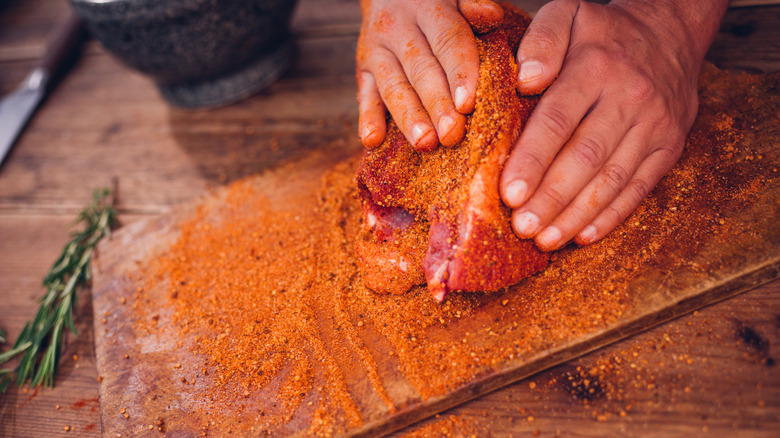
Dry rub blends commonly include seasonings like salt, pepper, herbs, spices, or sugar. The difference between a dry rub and a wet rub comes down to whether liquid is added to the seasoning mix. A dry rub contains only dry seasonings, though oil, mustard, or another binder can still be applied on the food first to help the seasonings stick.
There isn't one formula that turns those ingredients into a dry rub, and barbecue makes that especially clear. A Central Texas brisket rub can be as simple as salt and black pepper, while other blends layer in paprika, garlic, chili powder, sugar, or herbs. The flavors can shift with the food too. Pork often pairs well with sweeter, smokier spices, while beef works well with bolder, more savory flavors. What ties these blends together isn't one ingredient — it's that they're applied directly to the food's surface before cooking.
Regional barbecue traditions take the variation even further. Memphis-style dry-rubbed ribs get their flavor from a spice blend rather than a coating of sauce. Other barbecue rubs lean sweeter, using sugar for both flavor and browning. Those sweeter blends can burn more quickly over very high heat, making them better suited to lower or indirect cooking methods like smoking or slow roasting. The mixture of ingredients can vary; what makes it a dry rub is how it's used.