

9 Classic Foods People Ate In Medieval Times
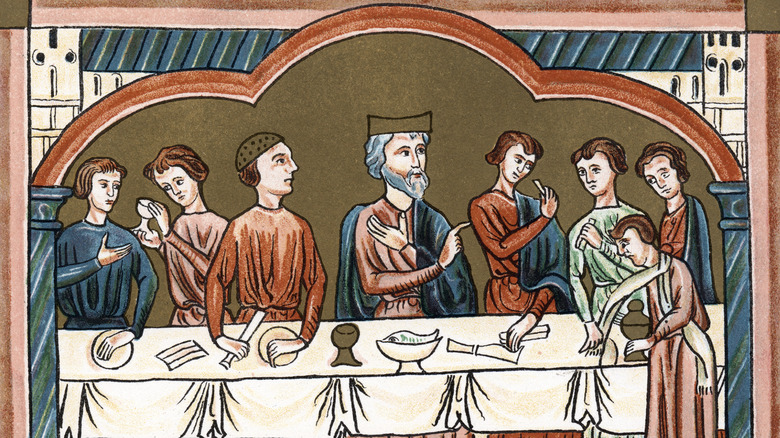
We might think of bread and ale as two of the dominant foods consumed by people in medieval times, but diets varied widely from place to place and across social classes. What peasants and tradesmen consumed would have been quite different from knights and nobles' diets. Food preparation during this period involved a lot of roasting and boiling, but recipes were starting to evolve with enhanced trade routes bringing new flavors into Europe via the spice trade. These spices made for flavor profiles during the medieval era that were quite different from what we have grown accustomed to today. Though many dishes from this era are still things we consume — such as macaroni and cheese and the royally-decreed gingerbread – there are several more that might be difficult to imagine tasting today.
With an emphasis on foods consumed across Europe during the medieval period, which spans roughly from the 5th to 15th century, we sought expertise from historian Dr. Amanda Herbert, Durham University, for some insights. We also asked Andy Hook, managing director at Blackfriars Restaurant in Newcastle, an eatery with a historically-inspired menu, for some input into medieval cooking methods. We got some additional information from food historian Ken Albala, University of the Pacific, to help us curate our list of nine classic foods, from daily bread to special occasion fare, that sustained all echelons of society during medieval times.
Bread
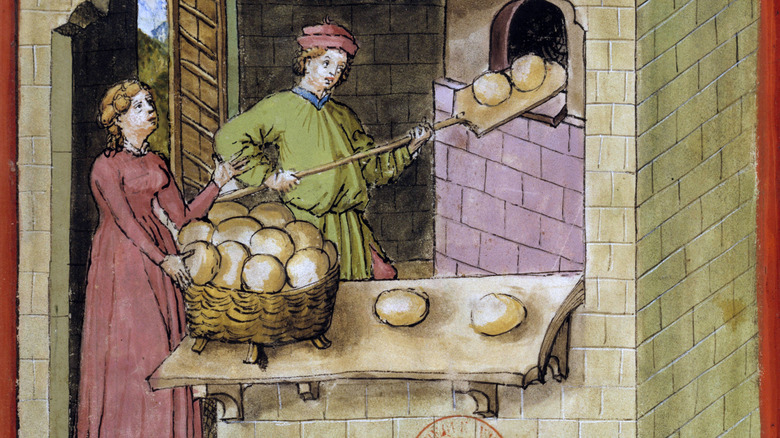
Bread was the single most important food in medieval Europe, and was consumed across all classes. Peasants, having less access to the same variety nobles enjoyed, were even more reliant on this staple. "Bread was certainly everywhere, and part of every meal. But it varied a lot," Dr. Amanda Herbert, Durham University, explained. Bread came in many forms, which differed across regions and cultures, and would also change with the season. Common forms of bread included loaves and rolls, baked hard and soft, savory or sweet, as well as pretzels, which have medieval origins. All varieties were commonly cooked in bread ovens, resembling today's open fire pizza ovens.
Different climates across Europe were better adapted to growing various grains, which was why bread recipes changed across regions. According to Ken Albala, University of the Pacific, Northern Europe consumed more rye bread, whereas more southern territories ate white wheat. There were also economic factors behind variations in bread. Whiter, more refined flours were more expensive. This was why, according to Andy Hook, managing director at Blackfriars Restaurant, refined white flour was reserved largely for the nobility. This is a contrast from today, where white flour tends to be the most affordable option. Lower classes prepared breads from darker, less refined flours, or mixed flours.
A common recipe was prepared with half wheat and half rye flour, resulting in a darker bread known as maslin. "A good wheat and rye mix like maslin with natural levain sure could be tasty! We spend a lot on bread like that today," Albala said.
Pottage
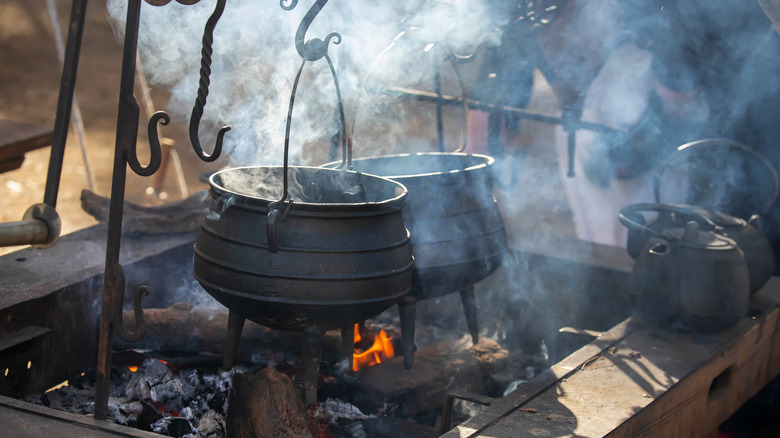
The essential tools in any medieval kitchen, as Andy Hook, Blackfriars Restaurant, explained, included frying pans, spits, griddles, knives, wooden spoons, bowls, mortars and pestles, and, most importantly, cauldrons and iron or bronze pots. Pots and cauldrons were especially important in peasant kitchens, as pottage was a critical element of the everyman's diet in medieval Europe, which could make a hearty meal out of any combination of accessible ingredients.
Synonymous with soups or stews, pottage consists of meals thrown together in a pot or cauldron to be boiled. Depending on who was preparing this, and the time of year, pottage might include vegetables, grains, legumes, or meat — even all of the above. This medieval era one-pot meal was not only an easy way to prepare grains and harvested vegetables, but an essential form of sustenance for lower classes.
Pottage has infinite capacity for adaptation, and its legacy lives on in the soups and stews we prepare today. But, as Hook emphasized, some variations of this dish might not go over so well with modern palates. Pottage containing offal was common, making use of organs, intestines, and membranes to add protein and ensure no parts of an animal went to waste. Stews such as this were generally a common way of preparing meat. As Ken Albala, food historian at University of the Pacific, specified, this cooking method was not only for limited resources, but also utilized because, at this point in history, boiling was the most efficient way to cook animal protein.
Game, fish, and fowl
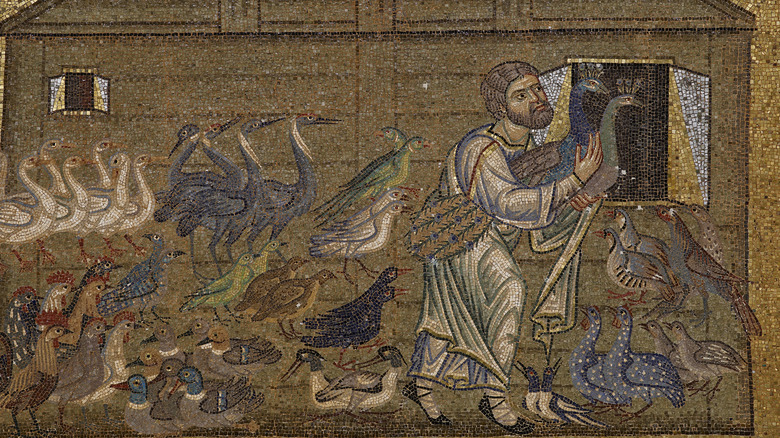
Meat was a significant part of medieval diets, but it was much more commonly eaten among the upper classes. "For lower-status people, meat was more of a treat or a seasonal food than a daily expectation," Dr. Amanda Herbert, of Durham University, explained. Those with more means, however, consumed meat regularly, including a wider variety of animal species than we typically see on modern dinner tables. Domesticated animals, such as goats, sheep, cattle, and poultry, were consumed by middle and upper classes. Wild game, such as venison, was more served on upper class dinner tables. Fowl was the form of animal protein that the nobility consumed in great variety, including many species of birds that we wouldn't dream of eating today. These included swan and peacock, which appeared regularly on banquet tables, presented with their feathers back in place. The result made for an elaborate presentation, but might be a bit unnerving for a today's dinner guests.
Fish and shellfish were also consumed regularly, but certain species were reserved for the elite. These included salmon and lamprey, a prehistoric, eel-like fish that was considered a delicacy back then, but whose teeth and texture might scare modern diners away. Other maritime delicacies included whale and porpoise, also reserved for the upper classes and special occasion fare. The latter was a local delicacy in the United Kingdom, as porpoises could be found in the Thames River, as well as other bodies of water in the UK.
Grains and pulses
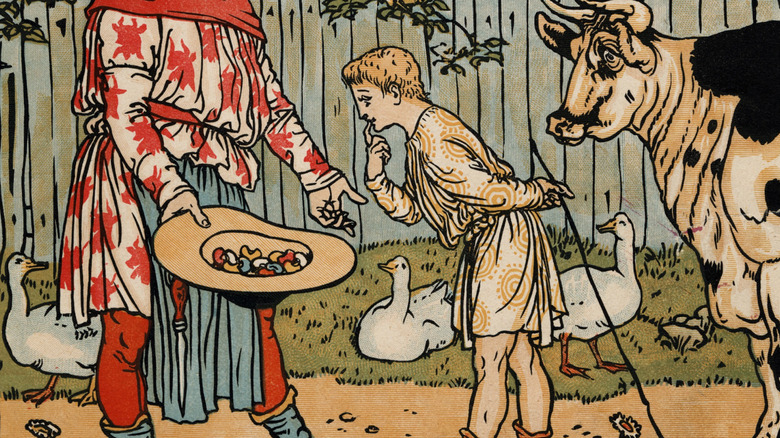
Medieval diets went far beyond simply consuming bread as the common carbohydrate. People of all classes had access to a variety of grains and legumes. Peasants might have proportionally consumed more of these, since they typically had limited access to meat. Grains like bulgur, rye, and barley were used for bread-making, but also eaten as whole grains, often prepared in pottage. In peasant diets, these were often accompanied by pulses, the edible seeds of legume plants, such as beans, lentils, and chickpeas, which are full of protein and shelf stable when dried.
With less access to sugar and meat, medieval peasants' diets might seem generally healthier than those of the nobility. "It's an exaggeration, but there is a grain of truth," said Andy Hook, managing director at Blackfriars Restaurant in Newcastle. "Peasant diets could contain plenty of whole grains, vegetables, pulses, and relatively little sugar. Wealthy diets could be extremely rich in meat, refined carbohydrates and alcohol." Peasants certainly ate wholesome foods, but this was counteracted with a scarcity of resources. Hook explained that, "Peasants also faced periodic famine, food shortages, and nutritional deficiencies, so it would be wrong to romanticize their diet."
Nobles and royalty still had more access to a greater range of nutritious foods, but would consume pulses more likely during periods of imposed limits on meat consumption. Meals evolved with religious seasons in addition to being adapted to the agricultural calendar. As Durham University's Dr. Amanda Herbert iterated, "During Lent, people cut back on, or cut out, most animal proteins."
Spices
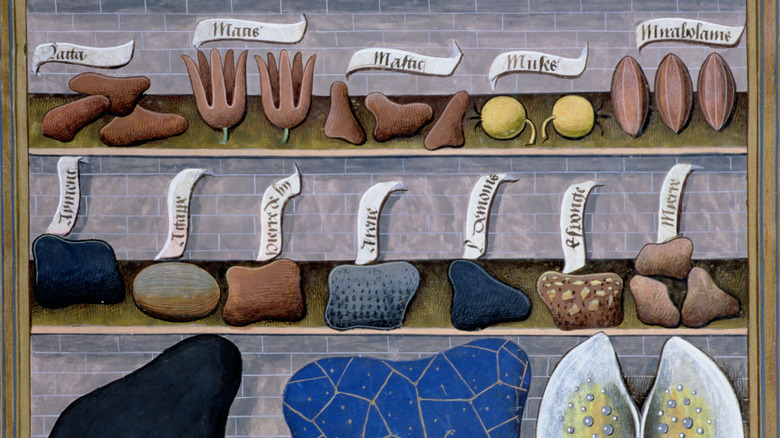
With access to trade routes across Asia and Africa, people in medieval Europe enjoyed a wide variety of spices. But due to the complicated process of procuring these, via long and dangerous land and sea trade routes, spices were a costly commodity. "Spices were expensive status ingredients, and good cooks used them for flavor, aroma, color, and balance," said Andy Hook, Blackfriars Restaurant. Reserved for people with means, these were used ostentatiously to flavor meals with more seasoning than we might typically consider using today. While pepper, ginger, cinnamon, nutmeg, cloves, and saffron were all common in upper-class kitchens, there was also a long list of spices that don't really make appearances in household spice cupboards today. Among these, as food historian at University of the Pacific, Ken Albala, listed, are grains of paradise, cubebs, long pepper, that medieval luxury spice making a comeback, and galangal (also known as Thai ginger).
As Hook further described, "Food would probably taste much more intensely seasoned than the bland 'medieval' food we sometimes imagine — peppery, aromatic, sour, sweet-and-savoury, and often strongly herbal." These abundant spices were commonly used to flavor meat dishes, but not to disguise the odor of rotting meat, contrary to a common misconception. Though spices were indubitably a status symbol, Hook clarified, "The idea that only kings could eat them is misleading. Wealthier townspeople, merchants and institutions such as monasteries could afford them."
Pies and preserved foods
In medieval times, seasonal eating was the only way to eat. People consumed what had been locally grown during harvest months. In the winter, when there was nothing left to harvest, food preservation was extremely important. Long before refrigeration and canning technologies, fruits were candied or dried, vegetables were pickled, grains were dried, and meat was salted or stored in fat. To give a sense of the flavor of these preserved meats, Dr. Amanda Herbert, Durham University, said, "Anyone who has had bacon, pickled herring, lox, or paté knows a little bit about what these foods would have tasted like: salty, smoky, tangy, unctuous, but with the underlying meaty flavor that was characteristic of each of these proteins."
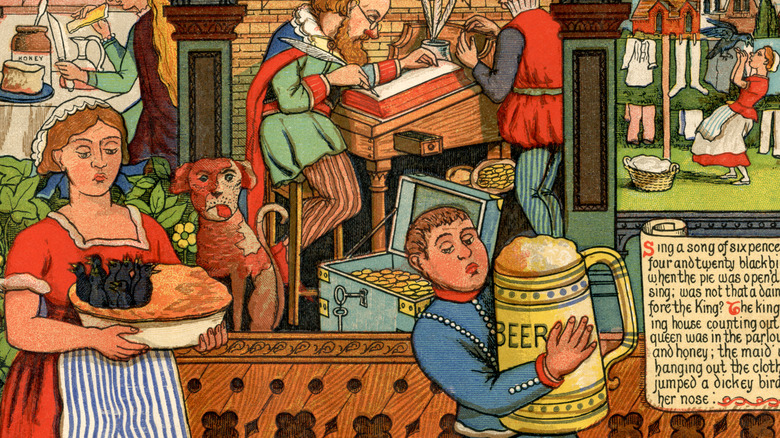
Cooks in the medieval period had other resourceful methods for preserving foods once they were cooked. Pies were one solution. Often savory, many recipes included a combination of spiced meat or fish before being sealed into a pastry crust and baked. These crusts, known as coffins, served as a form of edible container and functioned as a seal. The pastry wasn't always intended to be eaten, but rather ensured that the contents of a pie were airtight. All these methods of preservation usually held people over during winter. It was at the end of this season when things got tight. "The 'starving time,' as it was called in some cultures, was in the early spring, when most supplies had run out and new crops hadn't yet grown," Herbert explained.
Ale and mead
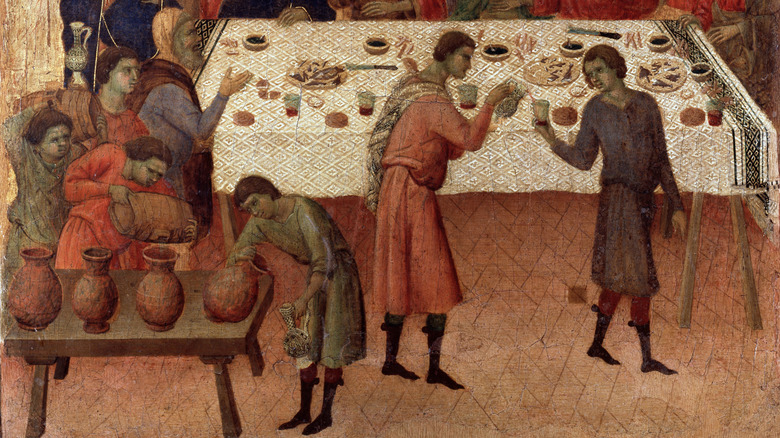
Alcohol was another significant facet of medieval cuisine, and was enjoyed in many forms. In Europe, ale was among the most common beverages in the north, and weaker forms of it were consumed by adults and children alike. According to Dr. Amanda Herbert, Durham University, ale was a household staple consumed as much for its calorie content as for its taste and effects. This was less the case in the south of Europe, where the climate made wine more plentiful.
There's a longstanding belief that ale was such a prevalent part of medieval diets because it was the safest choice to drink. Despite instances in history where poisoned beer wreaked havoc on medieval Europe, it is true that the brewing process did generally eliminate pathogens because it involved heating water. But alcohol was not what people consumed exclusively to quench their thirst during this period. "The claim that 'medieval people drank ale because water was unsafe' is another myth," Blackfriars Restaurant's Andy Hook clarified. "People absolutely did drink water, particularly from springs, wells and rivers when the source was clean." Another form of alcohol popular in medieval Europe, though less common today, is known as mead. Prepared from fermented honey, with a slightly higher alcohol content, it is often flavored with fruits, spices, or even grains. Due to its composition, mead occupies a middle ground between beer and wine.
Blancmange and crème bastarde
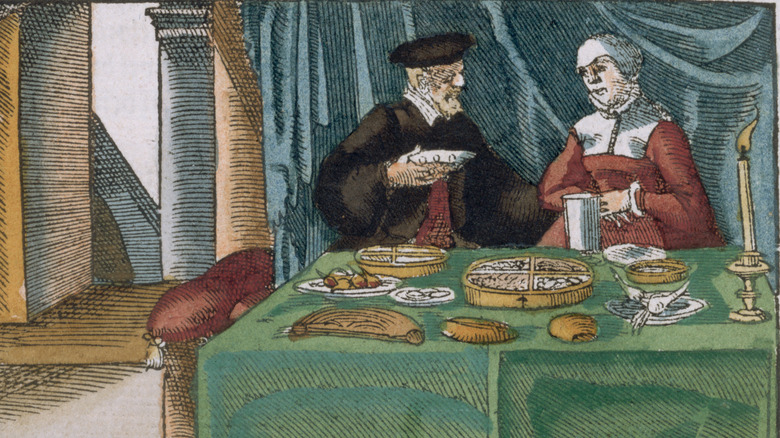
Medieval palates were accustomed to different flavor profiles, resulting in many recipes that would not go over well with diners today. This is especially true in the realm of cream dishes. One recipe University of the Pacific food historian, Ken Albala, confirmed might not appeal to the modern palate is a medieval dish known as blancmange, a soup prepared with chicken, rice, and almond milk. Thought to have originated in the Middle East, where the latter two ingredients came from, this was an expensive luxury dish that only wealthier classes could afford. The creamy base was often seasoned with a variety of spices, such as ginger, cinnamon, or saffron, and recipes would often have included sugar, which was employed as a spice in medieval cuisine. This sweet chicken and rice soup evolved into a cold, creamy gelatin in the centuries following the medieval period — a vintage dessert which still poses a textural conundrum for many today.
Another medieval, cream-based dish which might be more palatable today was known as crème bastarde, a pudding made with milk and egg whites and sweetened with honey. Forming a sort of custard similar to panna cotta versus flan, or a crème brûlée without the crispy sugar coating on top, this is a mildly sweet dessert that appears in cookbooks from the 15th century. With options to prepare crème bastarde with spices and rose or orange-flower water, this aromatic dish was popular with royals of the time.
Lasagna and mac n' cheese
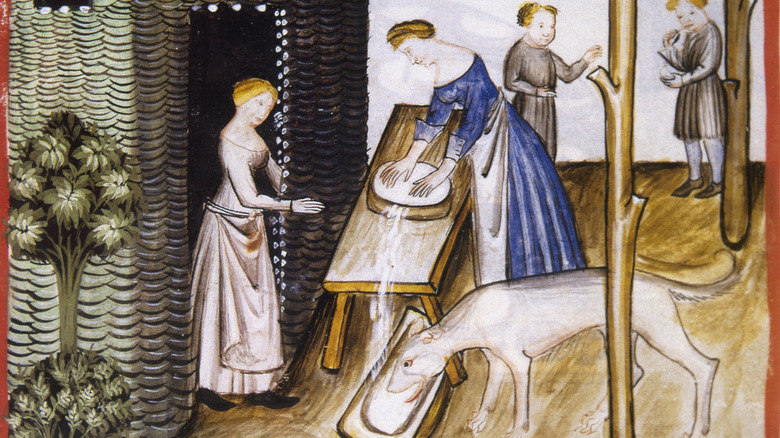
Cheese was another staple of medieval cuisine that transformed a perishable substance into something shelf stable. Milk, according to Andy Hook, Blackfriars Restaurant, was often transformed into cheese as a means of prolonging its shelf life, thereby becoming another important food source during winter months. Consumed by peasants, tradesmen, knights, and nobles alike, cheese was eaten in many forms, both as a standalone accoutrement and an ingredient in a variety of popular cooked dishes.
Simply slicing cheese to serve with bread could make a perfectly decent meal in medieval Europe, but there are a handful of cooked dishes from this era that transformed cheese into hearty, comfort foods we would recognize today. Macaroni and cheese, for example, as food historian Ken Albala mentioned, is among the medieval dishes that have withstood the test of time. Macrows, a dish recorded in a 14th century cookbook, "The Forme of Cury," was a precursor to macaroni and cheese, calling for hand-cut noodles, and served with cheese and butter. Loseyns, another dish from the same cookbook, is an early form of lasagna calling for layers of cheese and sheets of dough, cooked into a combination that would still please contemporary taste buds.