

This Seasoning Was Popular In Medieval Times — Now It's A Hidden Gem On Store Shelves
We may receive a commission on purchases made from links.
High School AP World History probably taught you about the Silk Road and how it brought a wealth of spices to people and places far from their origins. While every spice has a tale, this is the story of long pepper, which rose to prominence during medieval times. In fact, by the time the Roman Empire was trending, long pepper was so valuable that it was worth more than gold. This spice quickly found its way into kitchens in wealthy London society, but what is it, and how is it used today?
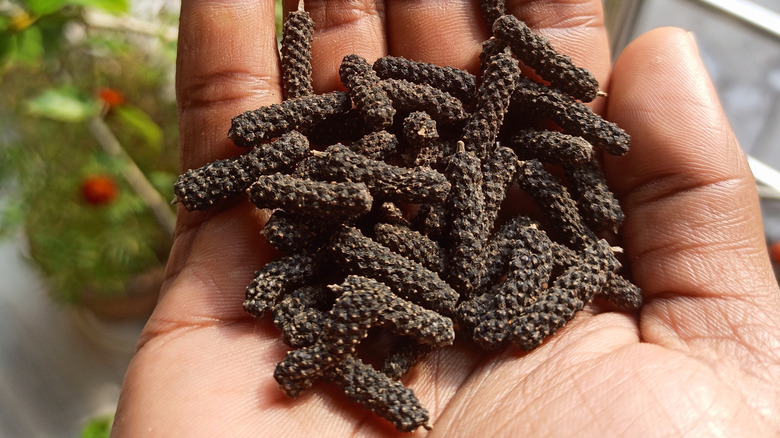
While the two are related, long pepper should not be confused with the ubiquitous and instrumental spice known as black pepper, which comes from ball-shaped peppercorns. Long pepper is derived from what resembles a mini pinecone and is known as a catkin. These conical-shaped spikes grow on a vine-like plant native to India and Southeast Asia, and contain little fruits the size of a poppy seed. They can be ground up or used whole and offer a warm, pungent taste that is both spicy and peppery. Some people say it smells of ginger, while others get more of a cinnamon or cardamom aroma and taste. It is often compared to garam masala. Needless to say, it has layers of complexity.
Use it for modern-day cooking
In medieval times, long pepper was ground up and largely used for medicinal purposes to help with headaches and stomach aches. Later, it was used to create spicy desserts and to flavor meats. While long pepper's go-to status for cooking changed around the 15th century, early distillers found ways to add it to gin. Long pepper complements the juniper berry that flavors gin while adding a little heat.
Today, it is making a resurgence. It might be difficult to find in stores, but Herbs Botanica on Amazon sells a 2-ounce box for just $5.75. Long pepper can be used in place of black pepper using a 1:1 ratio. However, if it is your first time using it, be conservative, as this spice has a heat that can stick around well after you chew and swallow. Use a pepper mill to grind it or cut up those mini pine cones and smash them with your chef knife until you have fine powder. Add it to meat rubs when you barbecue, season hearty stews, or use it to punch up your traditional stir-fry recipes.