

5 Tips For Donating Kitchen Items To Thrift Stores
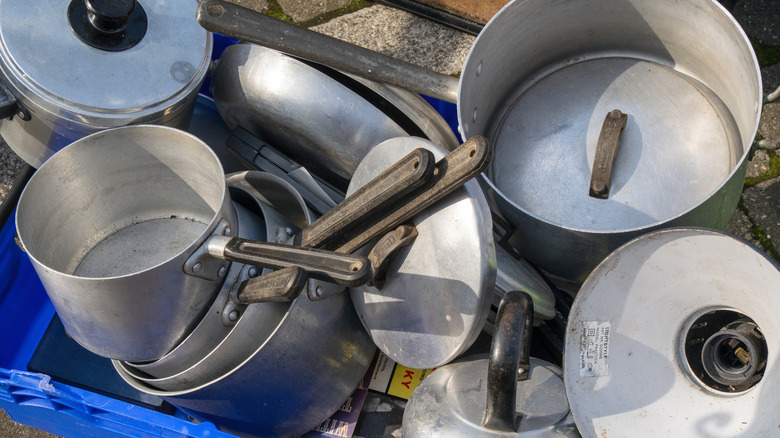
Some thrift stores would be nothing without donations, but don't mistake dependency for desperation. And when it comes to kitchen items, common sense is key when deciding what to donate. Thrifted kitchen goods will frequently touch food and — depending on the item — may even go into the mouth, so there are certain things to know before bringing in that old toaster oven.
Whatever kitchen item is being donated, make sure it's clean, functional, and has all the necessary parts. Nobody wants a broken-down appliance that's also missing components and full of old food crumbs. But it also goes beyond checking the item itself.
Kitchen items can be a bit more complicated to donate than t-shirts and books. So it's a good idea to make sure that your desired thrift store will actually take what you have to donate — there are a few reasons why it might not — before leaving the house. And making the trip at the ideal time can give you the smoothest possible experience, avoiding the frustrating throngs of customers and donors. Read on to fully explore these critical considerations.
Clean the kitchen items
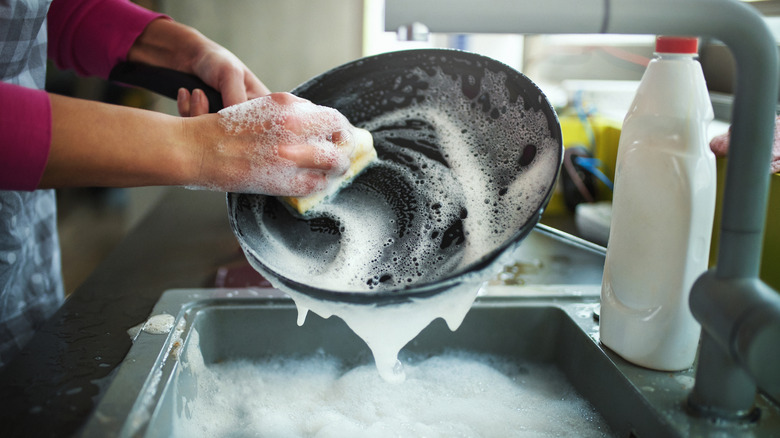
Much like you wouldn't want to be gifted a frying pan caked in old food, no thrift store wants dirty donations. This is especially true of kitchen items. By their very nature, such goods will come into contact with food and our mouths far more often than other thrift store items like t-shirts. And the store itself can't feasibly clean them for you.
For one, washing plates and kitchen appliances is not a thrift store employee's job. They're busy enough updating inventory and organizing the store. And even if they were willing to cut you a break on a nice but slightly dirty item, a thrift store is not a restaurant. It doesn't have the appropriate facilities, equipment, or cleaning agents to wash and dry kitchen donations. The task therefore falls to you.
Before donating any kitchen items, clean them to as close to new condition as possible. Remove all traces of food, including odor and stains. Some items can be particularly tough to clean, like a sauce-stained Tupperware. But there's an easy way to remove tomato stains from food storage containers: Scrub with a paste of soap, water, and baking soda. And there are cleaning hacks for other tricky stains and surfaces, too.
Check for damage
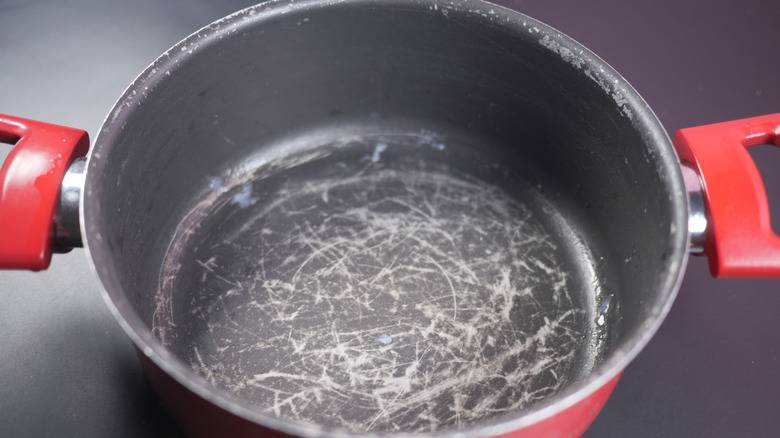
It seems obvious, but donated kitchen items should still be in usable condition. Before donating a small appliance, make sure it still turns on and, if applicable, check that all the different modes still function properly. Kitchen gadgets should operate smoothly; utensils shouldn't be split, burned, or melted; and pots and pans shouldn't be pitted, cracked, or excessively warped.
Slightly damaged items might still be accepted, depending on the type and extent of the damage. For instance, mildly warped pans are not good for flat cooktops of any kind. But many people have gas stovetops on which they could still be used, so these might be accepted despite their condition.
Minor cosmetic damage may also be forgiven, especially if it's a premium brand. Think vintage Le Creuset Dutch ovens with some exterior chipping and stains, but intact cooking surfaces. However, if your old borosilicate glass baker is full of deep gouges, you're better off turning that vintage Pyrex into a DIY planter using just seeds, potting soil, and small rocks.
Make sure you have everything
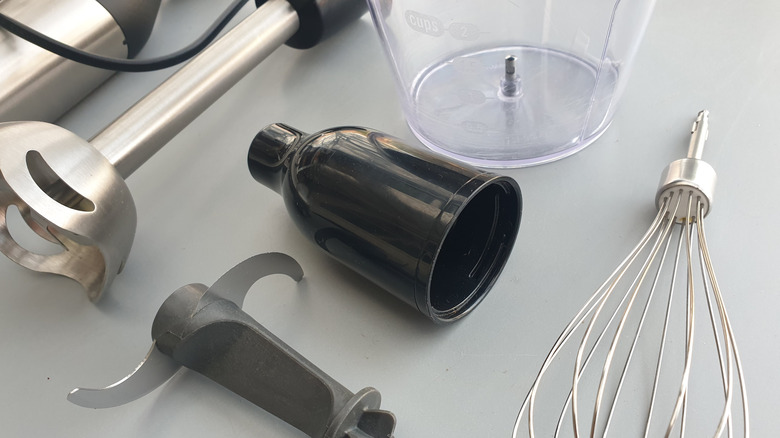
It's not uncommon for a donated item to have spent a long time in storage before finally being given away. Don't let ages of misuse lead you to forget everything that it came with, though. Donated kitchen goods should be given away with all of the attachments and accessories they came with. This is essential to giving their eventual buyer the experience they expect, but also important for you.
Unlike parting ways with only some of a cookware set because you really like one or two pans, there's no use for a whisk attachment to a stand mixer if you no longer have the mixer itself. Forgetting appliance-specific accessories at home only leaves clutter to still get rid of, if it doesn't cause the thrift store to reject your donation entirely.
But anyone who's shopped at a thrift store knows that not everything there is fully intact. The store may not realize that not everything is included and accept the return anyway, or knowingly make an exception for a minor issue, like a fondue set that's only missing one or two forks. Not every store may be so inattentive or generous, though.
Confirm the thrift store accepts such goods
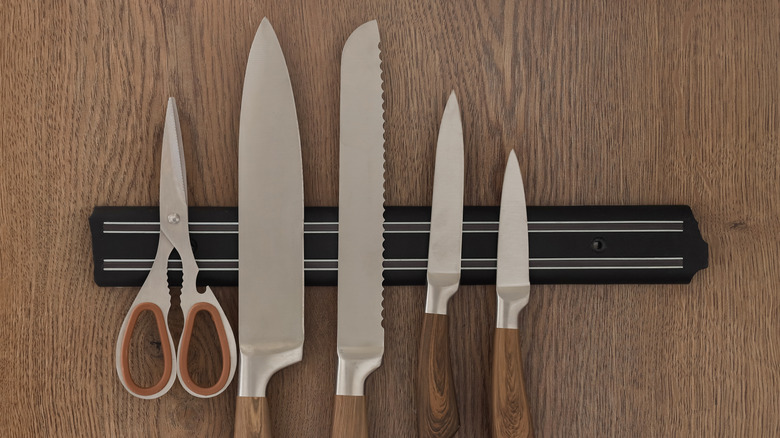
It's a fact of life that the kitchen can be a dangerous place, and sometimes these dangers are worth considering before donating any risky items. Stores may have policies in place about some of them, such as Goodwill, which will not accept sharp knives or blades of any kind for safety reasons.
Another common thrift store prohibition is fuels of any kind, for the obvious risk (however minor) of fires and explosions. This means that things like chafing dishes and butane torches should only be donated without their fuel supplies.
It's not just obvious concerns, either. Before donating any kitchen items, do what you can to make sure they weren't the subject of a recall. Product recalls can be easy to miss, especially for items that are infrequently used and thus seem good to donate. Stores won't knowingly accept any recalled items, but you're better suited to find that out at home than a busy employee in a store full of customers. And for any item in particular, you can always call ahead or check the store's website or social media for guidelines.
Go at the right time
This final tip has nothing to do with the items themselves, and everything to do with the store. You'll probably want to avoid the thrift store's busiest times, because between waiting for other donors to finish with their stuff and then for the employee to evaluate your donations, it can wind up taking a while. And it's so much worse during peak hours, with more donors to wait for and more customers to pull the staff away.
Some thrift stores may attempt to control this with designated donation hours, outside of which items are not accepted. If these rules exist, they should be followed. If the store provides no such guidelines, you can use a little common sense to find a good time to go.
Just like the best time to shop for thrift store kitchen finds is weekday mornings, it's also the best time to donate them. Most people are not going to start their day with the thrift store, so going soon after opening time will likely reap better service. But if enough customers at your favorite store are on to this golden shopping hour, you can try a bit later in the day. So long as you're in and out before people start getting off work, and avoid the generally hectic weekend, it should be a relatively smooth process.