

Beer Garden Vs Beer Hall: What's The Difference?
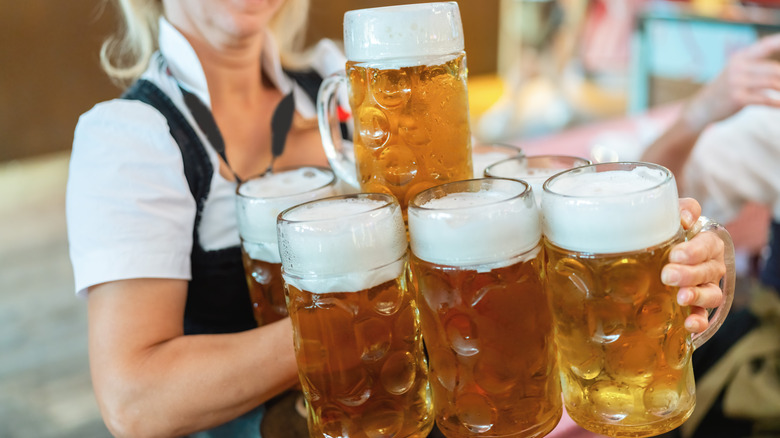
Indoors, outdoors, from a pint glass or a plastic cup, beer is among the most easily enjoyed beverages on the planet. Not fussy, just a bit foamy when poured correctly, the drink has been enjoyed since it was first brewed by Sumerians in today's Iran thousands of years ago. Approximately $317.31 billion is spent annually on the frothy, intoxicating beverage in restaurants and bars globally. A portion of those places in which beer is consumed are created specifically for that purpose. Beer gardens and beer halls have been bringing brew lovers together for years. While they both share a purpose and word in their monikers, many differences also exist, primarily the presence of walls.
Merriam-Webster defines beer hall as "an establishment featuring beer and sometimes offering entertainment." Conversely, a beer garden, also spelled biergarten, is defined as "a garden where beer and other liquors are served at tables." Sounds simple. Is it?
Beer Gardens

Now, for a brief history of beer gardens. We can thank Duke Albrecht V of Bavaria for biergartens. In 1553, he decreed that in the area now known as Munich, beer would only be brewed between late September and late April. This came from fear that fires sparked by coal kettles used in brewing would burn down the area's abundant wooden structures.
Cellars were dug near rivers, allowing stored lagers to keep cool during the hot summer months in which brewing was prohibited. People would purchase beer from the brewers, then imbibe under the trees that were planted above ground to further cool the cellars. Tavern proprietors began to complain that their potential patrons were drinking in the outdoor areas that brewers had constructed and purchasing beer directly from the brewers.
When the Bavarian king Maximilian I made a law that forbade breweries from selling any food items except bread, beer drinkers rebelled, bringing their own food to the brewers' outdoor spaces and picnicking there. Thus, the beer garden was created. Family-friendly, al fresco enjoyment of ales, lagers, and other malt-brewed beverages can be found at pubs and restaurants around the world today. In modern times, these spaces are often landscaped and shaded, with games and sometimes food trucks or other vendors offering bites to supplement the brews.
Beer Halls
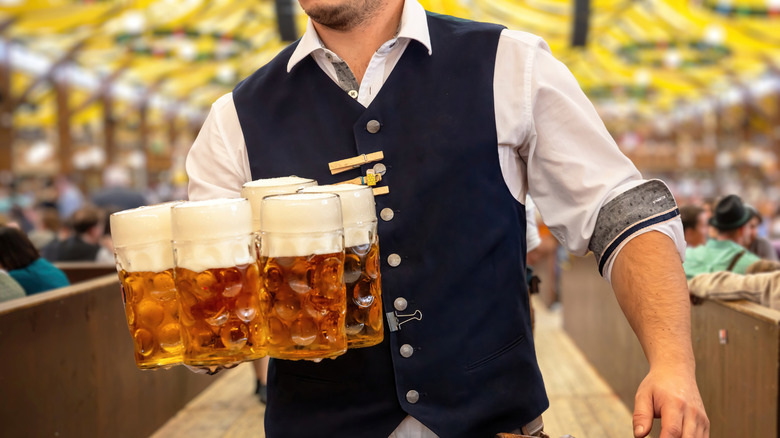
Fresh air accompanies beer drinking brilliantly, but beer halls have added protection from the elements in the form of walls and ceilings, even if soft-sided. As well, a beer hall isn't simply a bar. They're places that encourage socialization generally among large groups of people reveling in tasty ales together. Entertainment is often provided, with mingling and dancing encouraged.
Taverns, essentially the first indoor establishments for the enjoyment of beer, date back to ancient Greece and Rome. Some encouraged group activities like target shooting or even fist fighting, similar to what beer halls have evolved into today, but with perhaps different options for fun. Several of Europe's 13 best beer destinations are known for their beer halls, such as Prague, Czech Republic; Brussels, Belgium; and Dublin, Ireland.
However, Munich, Germany – known for creating Oktoberfest in 1810 – remains a quintessential place to visit for beer hall education. While the original Oktoberfest didn't even have beer tents, today the globally celebrated event is generally held in giant indoor areas as well as outdoors annually. Given this fusion, perhaps it's the perfect place to gain a better understanding of the difference between beer gardens and beer halls firsthand.