

Adults Love These 5 Sour Candies Way More Than Kids Do
We may receive a commission on purchases made from links.
From Sour Patch Kids to Toxic Waste and Warheads, it is clear that kids these days love their sour candies. After all, their sensitive tastebuds and curious palates are practically built for the sour and sweet sensations. But for adults, the appeal for certain brands of sour candies are much more than a kid's desire for a tart explosion on the tongue; they are childhood memories encapsulated in time — edible nostalgia. In fact, a study conducted by Talker Research shows that two-thirds of Americans would pay 32% extra just to have their favorite retired childhood products come back (evidently, the need for nostalgia usurps inflated prices).
Here, we've rounded up our top picks for five sour candies adults love way more than kids do. And there's no need to go hunt online for retro candy sellers peddling questionably expired bags of sour sweets; these sour candy brands are all easily available to you in grocery stores or online today. We've listed them below chronologically, from oldest to newest. And if you still haven't had your fill reading about these nostalgic candies, you can also read about these 25 candies from your childhood you didn't know still exist today!
Sour Satellite Wafers
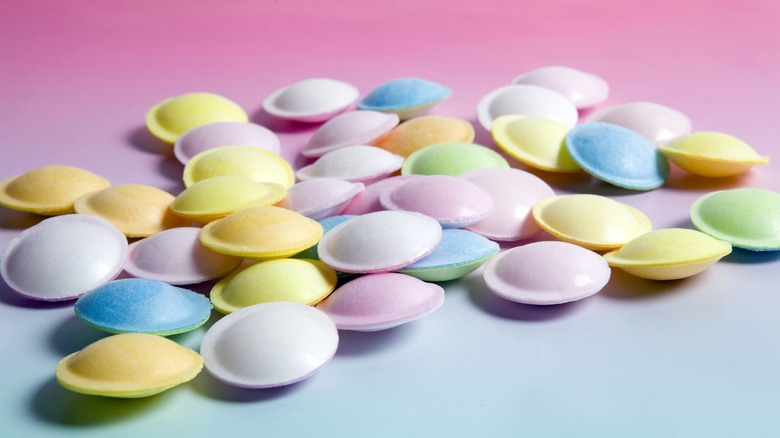
Originating in Belgium during the mid-20th century, the innovator behind Sour Satellite Wafers (frequently called flying saucers or UFOs) was a traditional communion wafer manufacturer looking to diversify sales. By adapting industrial wafer-pressing equipment to seal together two thin, edible sheets of rice paper, the maker created a hollow, spheroidal UFO-shaped shell. It filled these cavities with tart, brightly colored powdered sherbet, or sometimes, tiny nonpareil candy beads — a signature shape that older individuals may remember well.
Interestingly enough, the timing of these sour sweets coincided with the Cold War and the Space Race; at this time, there was intense public fascination with science fiction, unidentified flying objects, and futuristic technology. Both children and adults at the time were enthralled by the novelty of eating a candy that resembled a spacecraft. While some like to nibble on the edge of their satellite wafer and experience the tangy sweetness of the powder inside, others enjoy eating this candy all at once to fully experience the melt-in-your-mouth crunch of the outer rice paper's fizzy sour burst of sherbet. Half a century later, they are still in production today and remain a novelty item among adults, representing a space-obsessed era of confectionary history.
You can purchase a bag of Sour Satellite Wafers for $6.84 on Amazon.
Regal Crown Sour Candy Rolls
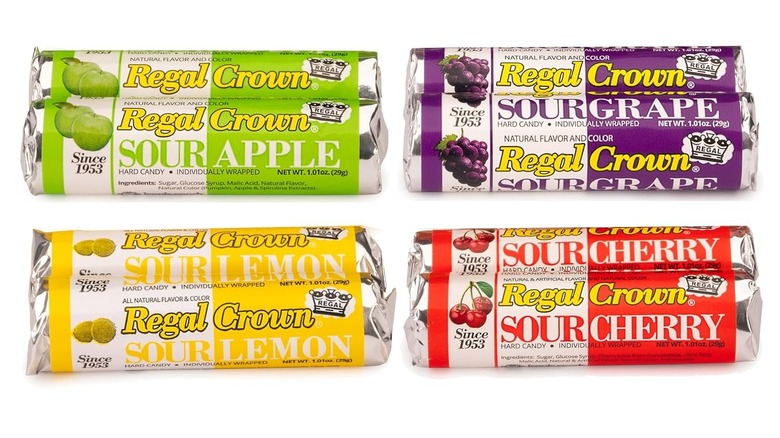
A treat perhaps some adults may remember their grandparents enjoying, Regal Crown Sour Candies possess a distinguished history rooted in European master confectionery traditions. Formulated originally by confectioners in England under UK manufacturer Trebor Bassett during the early 1950s, the line was designed to offer a fruit-forward hard candy experience. Unlike the neon-colored, heavily chemical-tasting novelties of later decades, Regal Crown relied on authentic fruit juices from concentrate, natural flavorings, and traditional old-world sugar boiling techniques to achieve its signature profile.
The candy rolls were imported and distributed heavily across the United States throughout the 1960s, where they carved out a niche among candy consumers looking for a natural-tasting yet mouth-puckering treat. Each disc was individually wrapped to preserve its freshness and sharp citrus punch — most notably the legendary Sour Lemon variant, which balanced a sharp, authentic lemon oil bite with a clean, hard-candy sweetness. Though production has faced interruptions over the years, nostalgic adults can still find this brand today, and it remains a symbol of mid-century candy craftsmanship.
You can find a variety pack of Regal Crown Sour Candy Rolls on Amazon for $14.99.
Zotz
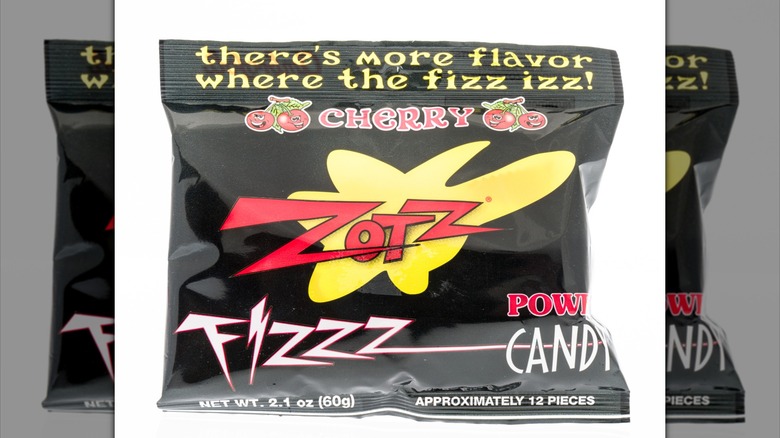
Zotz made their way into the confectionery scene in 1968, crafted by the Italian confectionery institution G.B. Ambrosoli S.p.A. based in Ronago. Created as an interactive hard candy, Zotz revolutionized candy consumption by adding a sour, fizzy core deep inside a sweet, brightly colored hard candy exterior. When consumers sucked on the candy long enough to breach the outer layer, a chemical reaction occurred when baking soda and malic and tartaric acids hit the tongue, producing an unusually explosive (but tasty) foaming fizz.
The brand quickly expanded internationally, making its official debut in the United States around 1970, where it captured the imaginations of children seeking sour, flavorful bursts of sweetness. Packaged in distinctive, colorful wrappers, Zotz provided generations with its one of a kind fizzy surprise. Over the decades, flavors expanded from traditional fruit varieties to class American confectionery iterations like blue raspberry and watermelon, cementing its status as a retro favorite that still thrills the nostalgic palates of grown adults today.
You can purchase a 46-piece bag of Assorted Flavor Zotz on Amazon for $6.22.
Cry Baby Tears, Extra Sour
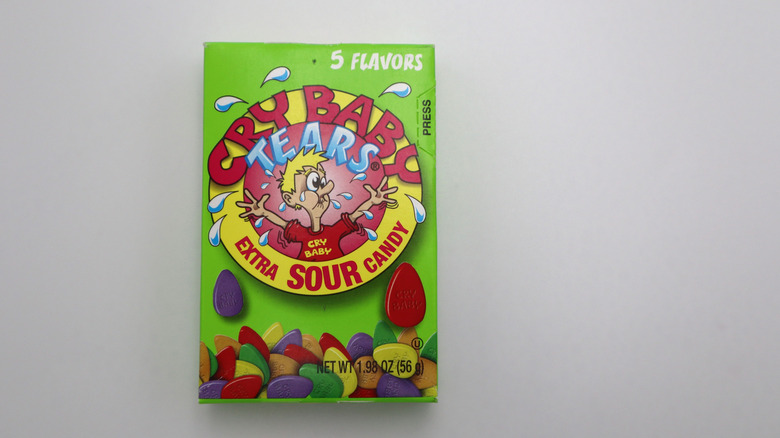
Introduced to the American market in 1991, Cry Baby candies were originally developed by the Philadelphia Chewing Gum Corporation in Havertown, Pennsylvania. Interestingly, the brand concept and naming were influenced by David Klein, the visionary creator behind Jelly Belly jelly beans. Cry Baby Tears Extra Sour were designed as teardrop-shaped, intensely sour hard candies packaged in small paper boxes. They (along with the rest of this brand's sour candy products) were engineered specifically to test the limits of sour candy enthusiasts' taste tolerance. Today, they still continue to numb nostalgic adult's palates with their intensity, as a candy not for the faint of heart.
The sweet features an aggressive external acid coating designed to shock the palate instantly, living up to the marketing lore that they were tart enough to force a person's eyes to water. In 2004, Tootsie Roll Industries acquired the brand through its purchase of Concord Confections, securing the product's long-term future on retail shelves. Featuring multi-flavored assortments spanning lemon, cherry, green apple, and orange, Cry Baby Tears have become an iconic staple of 1990s adventurous sour snacking that kids today may find too strong, yet adults who survived those playground dares still crave as a lingering badge of honor.
You can buy a box of Cry Baby Tears Extra Sour for $2.00
Retro Sours (formerly Altoid Sours)
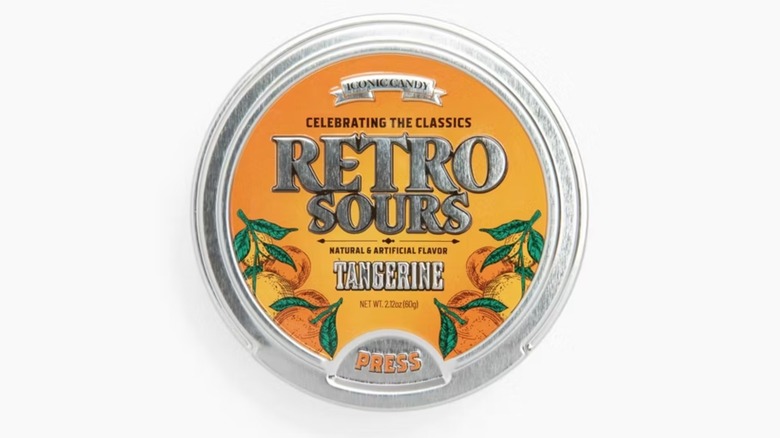
Altoids Sours were first launched in 2001 by Callard & Bowser-Suchard under the Wrigley umbrella, initially meant to capitalize on the massive brand equity of the original "curiously strong mints," Altoids. Instead of breath freshening, however, these small, convex tablets delivered a zesty blast of fruit-flavored acidity while dissolving fast with their chalky texture. Sold in pocket-sized, sliding metal tins in flavors like tangerine, raspberry, apple, citrus, and mango, they cultivated an intensely loyal cult following from kids and teenagers throughout the early 2000s that would follow them into adulthood.
Despite their immense popularity among sour candy snackers, lagging mass-market sales led to their abrupt discontinuation in 2010. This sent fans into a decades-long frenzy of online petitions, petitions, and exorbitant secondhand selling prices for expired tins. Recognizing this deep psychological nostalgia amongst today's adults, the candy made a triumphant return under the new moniker Retro Sours, reviving the familiar flavor profiles that defined an era of millennial snacking.
You can buy a tin of Retro Sours Candy at Target for $3.29.