

How Cowboys Drank Beer In The Wild West
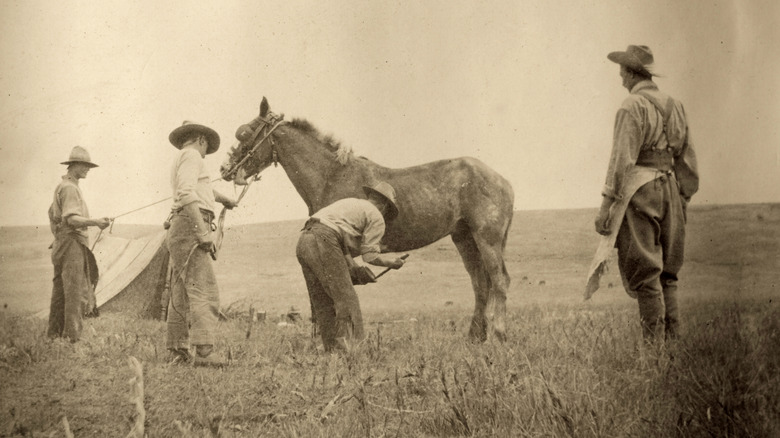
Beer has been a favored drink for much of U.S. history, even more so after lager was introduced by German immigrants in the 1830s. Prior to the German immigrants showing up in the U.S., beer was mostly home-brewed in small batches. And the beer cowboys had to tolerate in the early days of the Wild West had inconsistent flavor, wasn't pasteurized, was made without hops, and had lower-quality grains. It was also hard to transport, and there weren't many options to keep it cold because refrigeration didn't exist yet. These factors meant cowboys on the Western frontier had to have their beer served warm, in a glass, from a keg or barrel (bottling wasn't around yet), and they had to drink it quickly so it wouldn't immediately go flat. It's no wonder some might have chosen a rotgut whiskey over a warm beer instead.
The Wild West in the U.S. was a place that had a tendency to get really hot and dry in the summer — think Texas, Oklahoma, and Nevada. So, it's only natural that someone who spends the majority of the day outside, riding horses and working hard, is going to want something cool and refreshing to drink at the end of the day. While taverns and saloons served beer warm at the time, which could be refreshing even at room temperature, on occasion they managed to serve it cold, but that was a rare occasion. Good beer wasn't a consistent thing at the time; that is, until refrigeration and breweries came along and began to innovate.
Why cowboys often only drank warm beer out of a glass
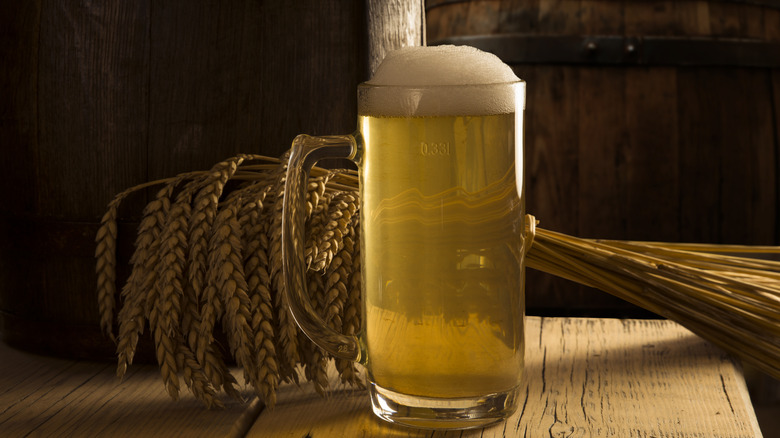
There are a lot of myths about beer. One of these is that the brew always tastes better served ice cold. Still, while warm beer might be better in some cases, many would agree that on a hot summer's day, a cold beer is extremely refreshing. Sadly, cowboys wouldn't get to enjoy a cold beer from a bottle on a regular basis until around the 1870s or later. Until then, they mostly hoped that the tavern they frequented was one of the few that had harvested ice from lakes or rivers in the winter and stored it in an icehouse nearby.
When German immigrants began to move West, there was a marked improvement in the quality of beer served in saloons or taverns. The introduction of lager with better grains and hops became popular with cowboy customers. Then, in 1870, breweries began to utilize refrigeration for the first time in beer manufacturing and distribution. In 1873, pasteurization and bottling became part of the brewing process. Then, by the 1880s, saloons and taverns finally had consistently cold beer to serve to patrons, and many establishments were even sponsored or owned by breweries. Thankfully, it was after that point that hard-working cowboys across the Wild West no longer had to endure warm, flat, poor-quality beer.