

8 Retro Candy Bar Wrappers We Wish Were Brought Back
We may receive a commission on purchases made from links.
With that first bite, candy bars have a way of transporting us back to childhood, to a simpler, carefree time. However, sometimes it's the wrapper and packaging that hits you in all the nostalgic feels first. Before sleek and minimalist designs took over, vintage candy wrappers were quirky, fun, and full of life. Some had cartoon characters, others had wild fonts, and a few lured chocolate lovers in with weird, wacky names. So, we selected eight retro candy bar wrappers we wish would make a comeback.
While some of the chocolate bars remain on the market today, the whimsical, vintage wrappers are a thing of the past. If you're lucky, you can track them down on resale sites, but most live on only as memories and in discussions on collector forums. These discontinued classics and vintage versions of familiar favorites are tiny time capsules of a sweeter era. Enjoy this sweet, nostalgic trip down memory lane.
Chicken Dinner Bar
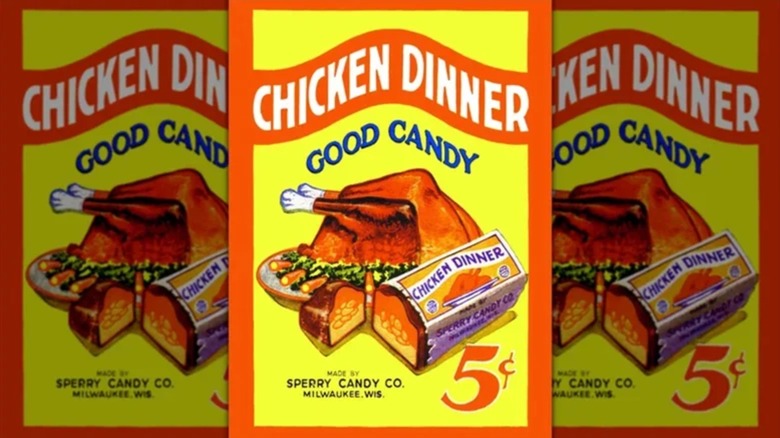
"Chicken Dinner" is an odd name for a candy bar, and the wrapper made it even more unappetizing and raised a few eyebrows. But that's just what Sperry Candy Co. did when it released this confection in 1923. While the 10-cent (later reduced to 5) chocolate bar's wrapper displayed a large, plated chicken, the actual treat didn't contain any chicken, thankfully, but rather milk chocolate with a peanut/caramel roll center. It caused quite a stir and was meant to symbolize value or good fortune. Chicken Dinner was discontinued in the '60s, but you can still track down the wrapper on sites like eBay.
Scrappy Bar
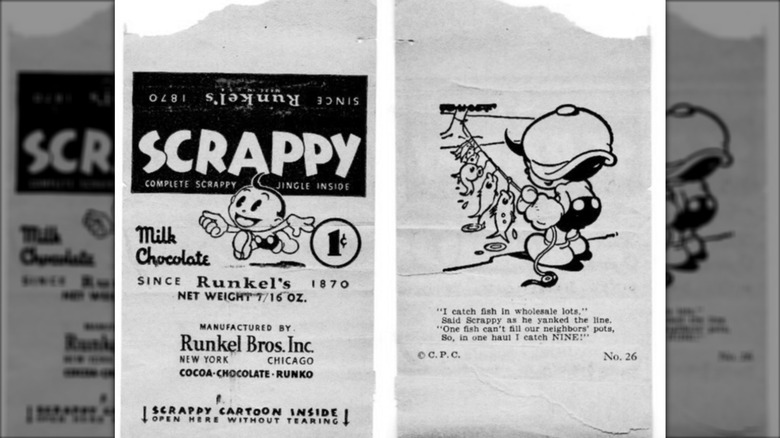
Runkel Brothers was a prominent New York chocolate and cocoa manufacturer founded in 1870 that operated until the late 1940s, when the name was sold. In the early '30s, the company began producing cartoon-themed wrappers, including this rare "Scrappy" character on its chocolate bars. The wrapper displayed a little boy running happily, featured a jingle inside, and came in a variety of flavors. Over 100 cartoons and jingles were associated with the candy bar. Scrappy even had his own magazine, published in 1935 and sponsored by the Runkel Brothers. The magazine also marketed contests with prizes like free bicycles.
Milkshake Malted Milk Bar
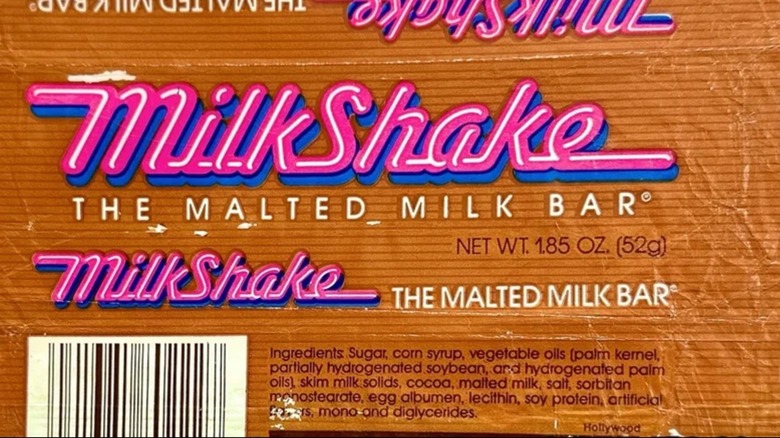
The name on the wrapper alone was enough to get anyone drooling. A malted milkshake in candy bar form? And tie it in a pink neon, eye-catching logo? Yes, please! Created in the 1920s by Hollywood Candy Company, each bar was coated in milk chocolate with a malted milk nougat center. It was one of the most successful chocolate bars to incorporate malted milk, and one of the first to include fluffy nougat in a candy bar. The Hollywood brand changed hands several times, and Hershey eventually bought it, discontinuing the Milkshake bar in 1996.
Hollywood Bar
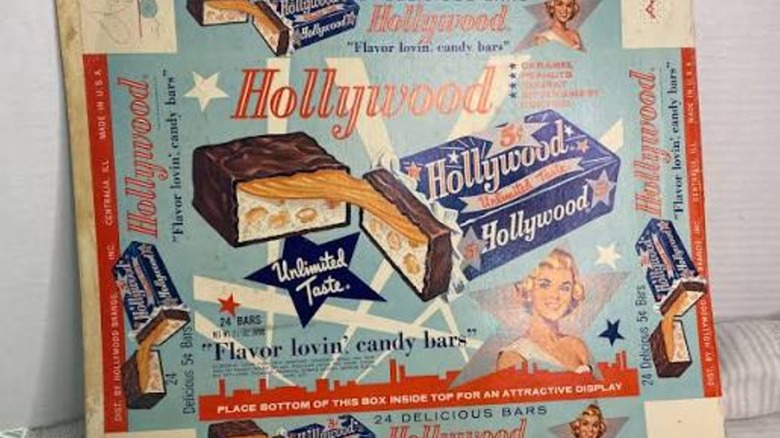
Lights, camera, candy! Hollywood Candy Company's Hollywood Bar was all about grabbing your attention. The flashy blue wrapper featured colorful stats and lights, and the box showcased a city skyline with a blonde Tinseltown starlet. Made with caramel, peanuts, nougat, and a dark chocolate coating, this was the company's answer to Mars' Snickers, both introduced in the 1930s. While Hollywood Candy Company is only a memory, you can still purchase the Hollywood Candy Bar vintage boxes on second-market sites, anywhere from $65 to $150.
Denver Sandwich
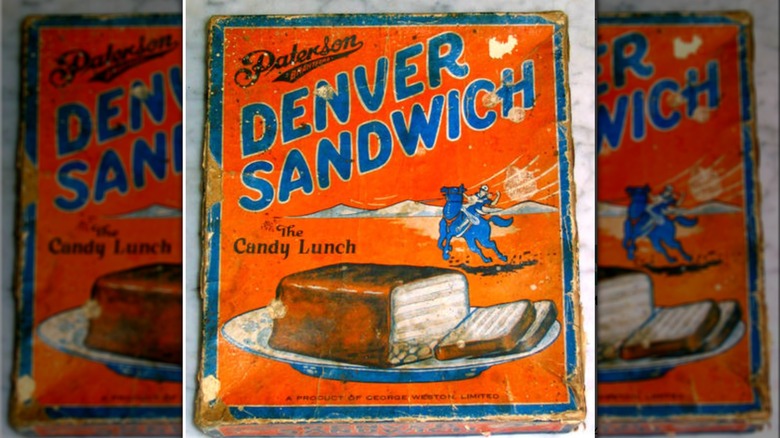
In the 1920s, Chicken Dinner wasn't the only Sperry Candy Company treat getting attention. The company also introduced Denver Sandwich, named after a popular diner dish. The name alone was part of its appeal. Dubbed "The Candy Lunch," Denver Sandwich packaging featured the bar on a platter with a knife slicing it open, marketing it as a meal replacement in an era when food was scarce. The box also displays a cowboy on a horse. The chocolate/caramel wafer bar was discontinued in the '60s, but you can find several wrappers listed on eBay.
Zero Bar
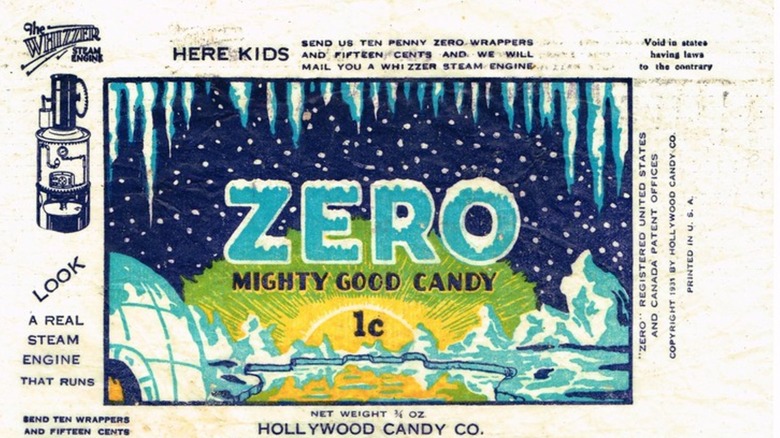
Zero is one of the only bars that remain in production from Hollywood Candy Company. Created in 1920, the caramel, almond, peanut, and nougat confection is still a popular treat but has gone through many designs. It's kept its signature white, silver, and blue tones, but the packaging has an interesting backstory. Zero's first wrapper touted a purchasable steam engine toy if customers sent 15 cents and 10 wrappers to the candy company. The wrapper also featured polar bears, icebergs, and igloos. Dipped in white fudge to look like snow, Zero was marketed as a treat to cool down in summers before air conditioning.
Seven Up Bar
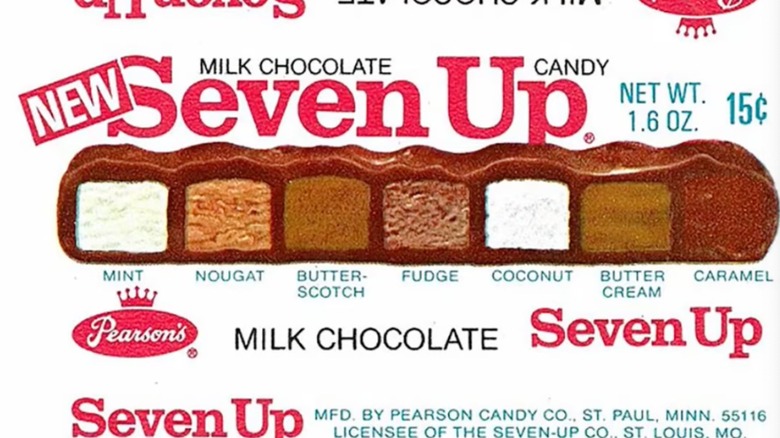
Sometimes it's fun to get a sneak peek inside a sweet treat. Pearson Candy Company let its wrapper do all the talking when it introduced the Seven Up bar in the 1930s. This one showcased what was inside, with seven unique squares, each filled with a different flavor: butterscotch, caramel, buttercream, coconut, fudge, nougat, and mint. The company sometimes rolled out new flavors, such as cherry cream and orange jelly, making it one of the most uniquely designed bars. After a trademark issue with the popular soda in 1979, the bar was discontinued.
Hershey's Milk Chocolate Bar
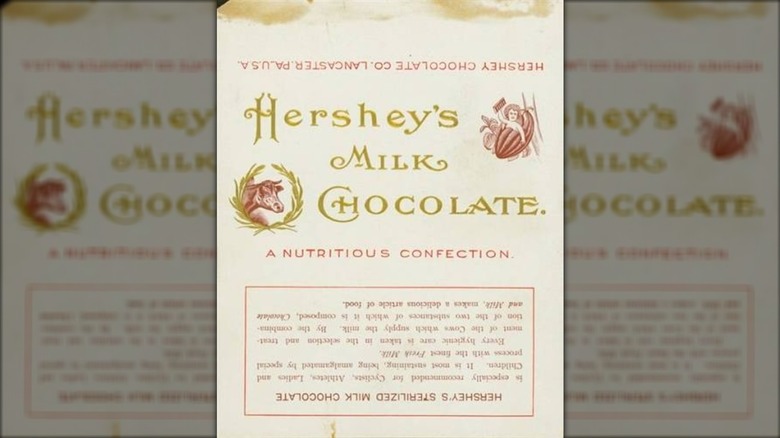
A staple in candy shops, grocery stores, and five-and-dimes since 1900, Hershey's milk chocolate bar has gone through a variety of designs over the years. However, the original wrapper that was introduced is timeless and virtually impossible to find today. It featured a cherub nestled inside a cacao bean holding a Hershey's bar and a cow. The wrapper was made of glossy white paper with gold text. It screamed luxury, but at the time, the chocolate bar only cost a nickel. This design ran until 1903, overlapping with the company introducing its classic maroon/cocoa-colored paper in 1902.