

Martha Stewart's Mess-Free Method For Poached Eggs

If your company doesn't bring in a professional chef to cater a business meeting, well, maybe it's time to look for a new job. Martha Stewart understands that if she's making employees and business associates come out to her farm in Bedford, New York, she'd better feed them well. So, when she posts on her blog about making eggs Benedict for a work function with her friend, Chef Pierre Schaedelin and Sous Chef Moises (who lovingly goes by just his first name), there are still cooking tips to pick up. One of the best is an easy way to make poaching eggs less of a hassle: Cracking each one into its own little bowl before sliding it into the hot water.
Yes, cracking your eggs straight into the hot water is faster, but the advantages of taking your time can't be ignored. Cracking them into individual bowls or ramekins first gives you more control — you can check for eggshells more easily, and you can make sure there are no broken yolks before committing the egg to the boiling water. Then gently slide the egg in while holding the bowl close to the water, which helps it hold its shape and creates fewer pesky white wisps. Yes, you still have to clean the bowls, but the cooking process yields a less messy egg.
Martha's other tips for poached eggs
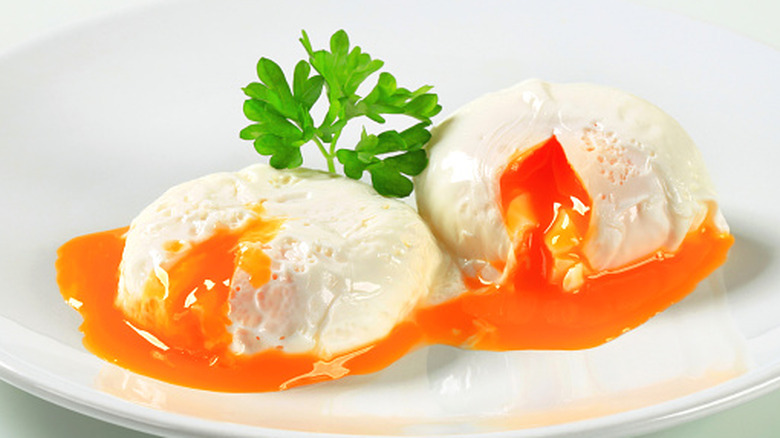
This isn't Martha Stewart's first poached egg. On her website, she has a guide to making the dish stress-free. One of her tips is to use fresh eggs. Not all of us can use eggs straight from our own farm's "wonderful hens," as she calls them on her blog. If you don't have a coop of chickens providing you with perfect fresh eggs, you can always use the water trick to confirm the freshness of your eggs. If the egg sinks to the bottom and rests on its side, it's very fresh and ready to poach. If it sinks, but is upright, it's edible — maybe save it for the scramble or baking. (Or use Julia Child's trick of simmering it in the shell for 10 seconds before cracking.) If it floats — toss it!
Make sure the water isn't at a rolling boil. A nice, low simmer will help the egg hold its shape as it poaches. If you have a thermometer, aim for 180 to 190 degrees Fahrenheit. There should be little to no bubbles breaking the surface that could tear an egg on its journey up.