

Fridge Left Open Overnight? Here's Everything You Should Do Next
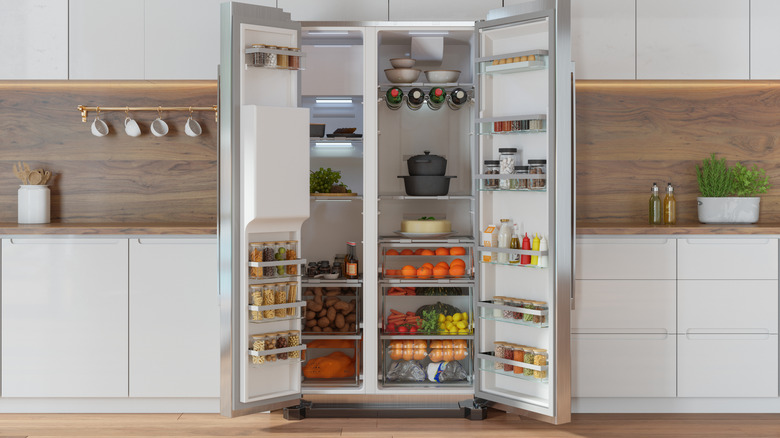
It doesn't happen often, but when it does, panic can strike. At some point in your life, you might wake up and walk to the kitchen only to find that the refrigerator door is slightly ajar or even wide open. Maybe it was you, or perhaps it was a kiddo, but in either scenario, you are probably going to be wondering, "How long can food last in a fridge when it's been compromised?" However, the question should really be: What do I do next?
First, unplug your fridge so the compressor doesn't continue to overheat. Your appliance's compressor has already been working harder than it is designed to work to keep things cool because you left the door open. This creates more pressure on the motor and cooling system. So, give it time to rest.
The second thing you need to do is remove all of the food items from the appliance. What do you toss and what do you keep? You can figure this out by using a thermometer to check the temperature of the food. According to the U.S. Food & Drug Administration, while the freezer must be kept at 0 degrees Fahrenheit, the refrigerator temperature must be at 40 degrees Fahrenheit or below. If perishables are not above 40 degrees, it is probably safe to keep them.
Toss, save, clean
The FDA notes that you are in the danger zone when food has been above 40 degrees Fahrenheit for more than two hours (or one hour if it's particularly hot outside). In fact, bacteria can double every 20 minutes when it is exposed to room temp. Additionally, when the fridge door has been open for a few hours, the temperature rises, and moisture collects on the food, increasing the risk of bacterial growth.
Think of it this way: you wouldn't leave milk out of the refrigerator for more than two hours and then pour yourself a glass. This is because dairy and eggs, along with soft cheeses and meats, grow bacteria quickly. So, you want to toss those items. Things that you can keep include food items that are a little more tolerant of a little heat. This includes fruits, vegetables, butter, condiments, and vinegar-based salad dressings.
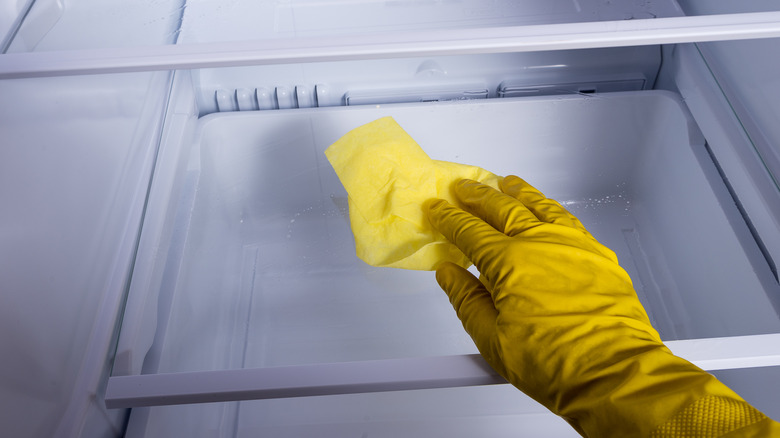
Once you've removed food, it's time to clean your refrigerator. Get rid of any ice that may have built up as a result of your door being open and the compressor trying to cool things off, and wipe down the interior to remove any excess moisture. Once you've done this, plug your fridge back in and keep an eye on the temperature. Once it gets back to the recommended below 40 degrees Fahrenheit reading, you are back in business.