

Here's What Samurai Drank To Party 400 Years Ago
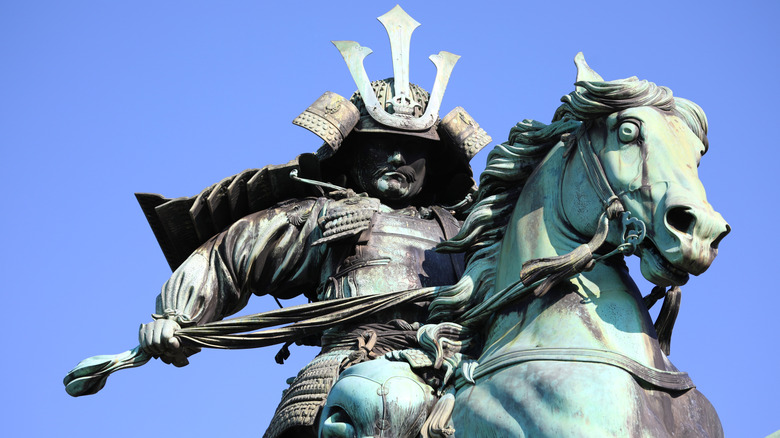
The samurai, Japan's elite warriors who served governors and landlords, knew how to party. While these fighters were revered for their honor, discipline, and skill with a sword, they also enjoyed cultural experiences similar to those we do in modern times. High-ranking samurai liked dressing in elaborate clothing that showed their wealth, rubbing elbows with rich and powerful courtiers, and — during the Edo period, which began over 400 years ago — these military masters enjoyed toasting as they raised small glasses of sake.
Why this drink? Rice was the basis of these warriors' stipends, and sake is a rice by-product, but beyond that connection, it also played an important role prior to combat. Before battles could get underway, the routine of praying and eating had to take place. This included sipping on this Japanese merry-making libation.
Sake also played an important role in samurai relationships and the ceremony known as shikisankon. A cup of sake was passed around to make alliances, pledge loyalty, and cement friendships of trust. Today, this ritual of drinking sake is still part of some Japanese weddings to seal the relationship.
What are some of the basics to know about sake? Its roots stretch back to ancient fermented rice beverages made in mainland China around 4800 B.C. It was in Japan, however, that those early traditions evolved into the beverage enjoyed today. It is made by fermenting polished rice, koji (a mold used as a fermentation starter), water, and yeast. It can be served warm or cold.
Sake evolved from ancient ritual into a global industry
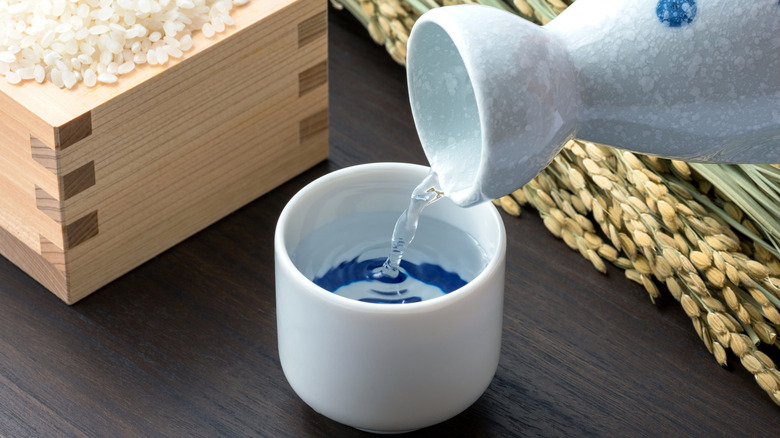
Koji was a game changer for sake brewers. Before its widespread adoption, some traditional methods relied on women to chew the rice to begin the process of converting the rice starch to sugar. This practice is associated with the divine feminine myth behind the invention of sake. The task was performed by young women and Shintō shrine maidens, where sake was an offering to the gods. This type of sake even has a name: kuchikamizake.
By the 1600s, during the peaceful Edo period, sake moved from a local custom to an exploding industry. Brewers and their techniques improved, and the industry became more regulated, as did the price of rice. There was also a switch to brewing sake primarily during the colder months.
Today, this Japanese tradition is still beloved. It is imbibed around the world at everything from dinners to celebrations, and there is plenty of variety to choose from, including sparkling, still, and even rosé. It pairs well with various sushi rolls and other seafood, as well as salads or charcuterie boards.