

Stop Shattering Your Pyrex Dishes And Follow This Tip
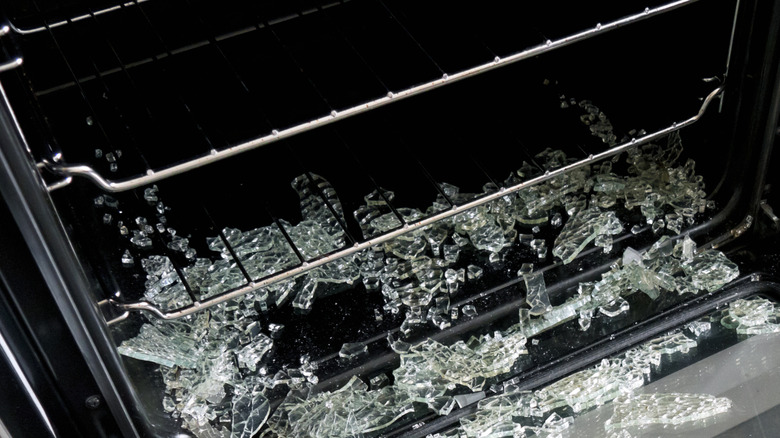
There is nothing quite as scary as the experience of taking a Pyrex baking dish full of delicious lasagna out of the oven, setting it on the stovetop, and having it explode, sending glass everywhere. Nobody wants to fear for their life every time they go to bake their favorite meal. This often happens because many of us rarely take the time to read the use instructions on our bakeware. It's not that difficult, right? Take it out of the box, wash it, and use it.
The problem is that glass bakeware (especially modern Pyrex) is a little more finicky than metal or silicon. Glass is brittle and expands when heated; if the time period between two temperature extremes is too short, the glass can experience thermal shock. And thermal shock is what results in the nightmare of having to clean up glass and lasagna off the kitchen floor. But there is a simple trick that can help prevent this situation and give you some peace of mind — a little liquid.
Many people may get hung up on whether they have a "Pyrex" or "PYREX" dish and if their differences make one better than the other – it's been said one is more durable than the other due to its materials — as if that determines their risk of experiencing thermal shock. The reality is that everyone should be taking precautions either way. The first and most basic trick is to not bake food in the oven in Pyrex that is lacking moisture. Add a little liquid to the pan before you put it in the oven. This one simple step will help prevent dangerous thermal shock situations when using your favorite Pyrex baking dish.
Add liquid to your Pyrex to prevent thermal shock
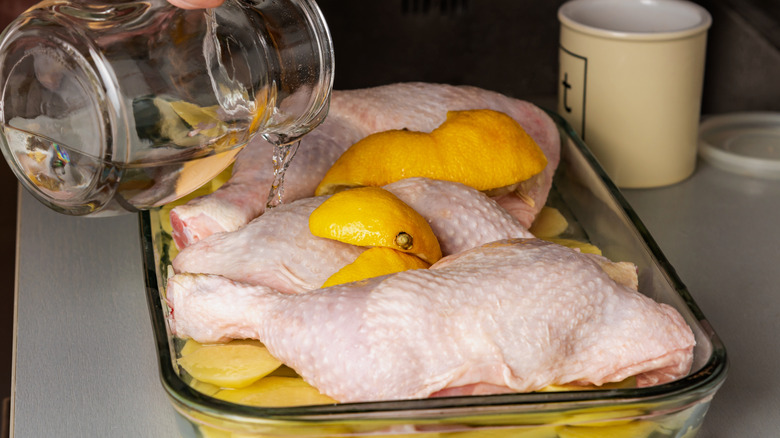
The reason it's never a good idea to put a dry glass dish into an oven with food in the center, like meat or veggies, is that there will be areas of the glass that heat unevenly. Some areas of the baking dish can get really hot, while the portion where your food rests will be cooler. If any liquids cook out and touch the hotter glass, your baking dish will crack or shatter (we've all seen the kitchen disaster posts on social media proving this). Using a liquid in the bottom of your baking dish before you place it in the oven will help distribute the heat evenly, preventing thermal shock.
If you worry about this tip ruining your favorite recipe, you can get creative. You don't have to just use water. If you're cooking up a perfect roast chicken, add some chicken or vegetable broth to your pan; you can do the same for beef.
As for how much liquid to use, Pyrex recommends: "Prior to putting the dish in the oven, add enough liquid to cover the entire bottom of the dish for any foods that may release liquid while cooking such as meats and vegetables." Never pour liquid into your baking dish after it's been heating in the oven. Even boiling liquid is too cold for a hot baking dish. If you follow this advice, you will be less likely to experience a disaster in your kitchen.