

Pyrex Vs CorningWare: What's The Difference?
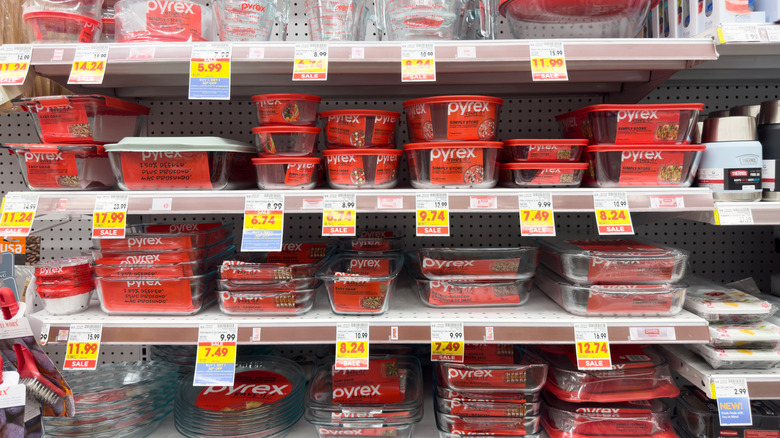
Savvy collectors of vintage kitchen items can attest to the enduring appeal of both Pyrex and CorningWare. Both lines of kitchenware have a reputation for versatility, practicality, and functionality. They also originate from the same parent company, Corning Glass Works. These days, many home chefs are asking what the major differences between "Pyrex" and "PYREX" are. But another equally important question they should be asking themselves is: What is the differences between Pyrex and CorningWare, and why should I care? Ultimately, it comes down to what they're made of, and that matters a lot when you're reheating mac and cheese.
The importance of the invention of both Pyrex and CorningWare for use in home cooking cannot be overstated. The introduction of Pyrex for home use in 1915 made it possible to bake a meal and bring it to the table instead of transferring it to a serving dish (save time with fewer dishes). Vintage Pyrex was made of a clear glass called borosilicate, although modern Pyrex is made of less heat-tolerant tempered glass. CorningWare followed decades later (in 1952) and is made from a glass-ceramic, which not only doesn't shatter if you drop it but can also withstand greater temperatures than Pyrex. Knowing which to use when it comes to mealtime is why it's important to understand the materials they are made of.
CorningWare can handle extreme temperature changes better than Pyrex
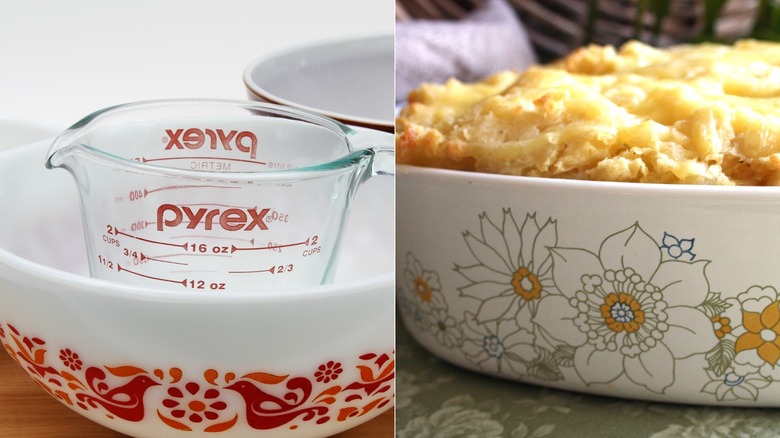
While it might not be a good idea to take your Pyrex from the fridge directly to the oven, you can still take it directly from the oven to the table (always use a trivet or a hot pad). Modern Pyrex needs to transition temperatures at a slower rate than the vintage version, or else the dish can experience thermal shock. It has never been a good practice to use Pyrex on a stovetop or under a broiler; the glass cannot withstand direct heat and could shatter.
Pyrex is extremely handy for making a pan of fudgey brownies or throwing together a delicious casserole, but if you need more versatility with temperatures, you should consider vintage CorningWare, which was manufactured before the 2000s and was made with the glass-ceramic material known as Pyroceram. This material was what made it possible to use the popular kitchenware right out of the freezer or refrigerator. You could use it on a stovetop, under a broiler, or even on a gas stove without worry of thermal shock. The Pyroceram could even tolerate a sudden temperature change of up to 840 degrees Fahrenheit. Modern CorningWare is made from stoneware and, unfortunately, does not have all of the amazing properties of the vintage line. If you want the benefits of a vintage CorningWare, check your local thrift store or online auction site. Always check the bottom of your piece: Modern versions will say not to use on the stovetop or under the broiler and often have a rough, unglazed edge. If you are unsure, don't risk it.