

The Power Levels On Your Microwave, Explained
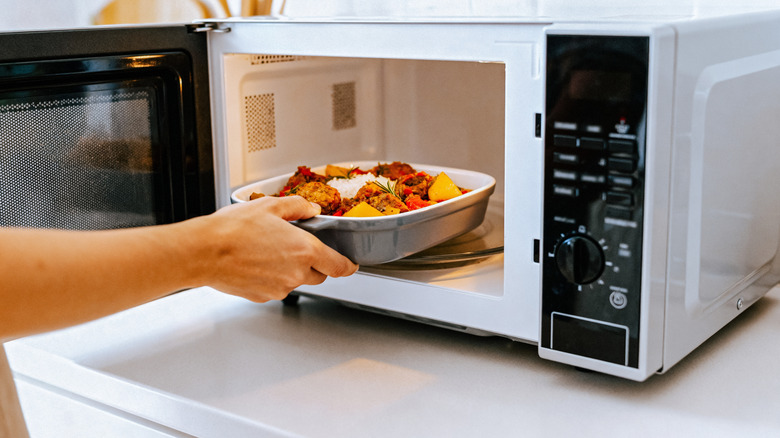
We may receive a commission on purchases made from links.
Many of us have never actually adjusted the power settings on our microwave. It's most likely because the majority of us fall for one of the many microwave myths out there: that a lower power level means the microwave is cooking with less energy. But the "High" setting on your microwave is best reserved for soup, not pizza (unless you like cardboard). The truth is, using the proper power settings on your microwave can actually prevent you from ending up with a burrito that's like lava on the outside and icy cold inside, and it only takes a little effort to understand the settings.
Like all appliances, knowing what the settings mean on your microwave can help you cook with it more efficiently. Often, we tend to treat our microwaves like a toaster: pop the food in and cook. When we really should be thinking of this cooking appliance more like an air fryer. It has power settings for a reason.
According to Whirlpool's website, "A typical microwave has around 5–10 different power settings, and each level has a specific cooking purpose." Generally speaking, the higher power settings are meant for cooking food with higher water content, medium settings are better for reheating and cooking starches, and lower settings are best for gentle warming or defrosting. Properly following these standards is not only a great way to get the most use out of your microwave, but it can also help you get better-tasting meals.
Why you should be adjusting the power level setting on your microwave
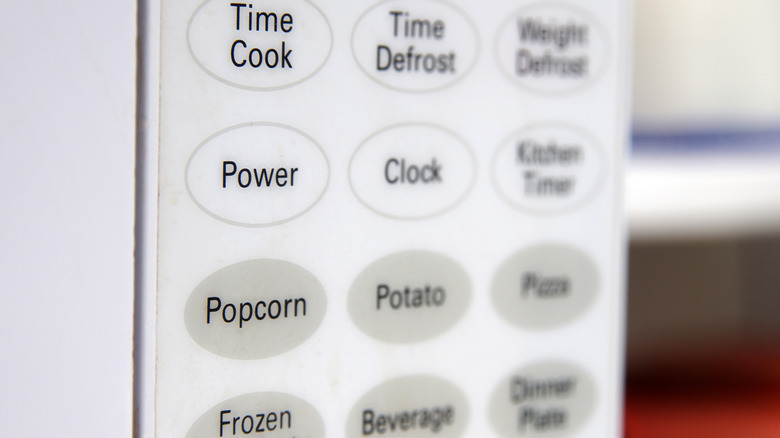
There are quite a few foods you never want to cook in the microwave, especially considering we now have so many better choices for cooking appliances these days. The power levels on the device, as mentioned in the intro, don't increase or decrease the intensity of the microwaves emitted; they simply change how often the waves are activated. According to Maytag, "Microwave power levels represent a percentage of 'on' time for the magnetron tube. The magnetron tube cycles on and off to reach each level. When used as recommended, each power level serves its own purpose." You should also remember to consult your microwave manufacturer's manual for proper usage settings.
Power levels are designated by percentages to indicate the amount of time the magnetron tube is on. On 'High,' it is on for 100% of the cooking time. This is only recommended for foods with high water content levels like soup, veggies, or convenience foods. For something like chicken, you definitely don't want to cook it on "high" the whole cooking time. With that setting, there won't be enough "off" time to allow the heat to spread evenly throughout the meat, and you will end up with dry, rubbery chicken. The same applies to dairy-based dishes; a lower setting reduces the chance of scorching. If you want to melt chocolate, 40% is generally the best power level; it is also best for heating pastry. Now that you know the importance of power settings on your microwave, you have the secret to cooking food evenly every time.