

Give Store-Bought Herbs New Life And Replant Them In Your Garden
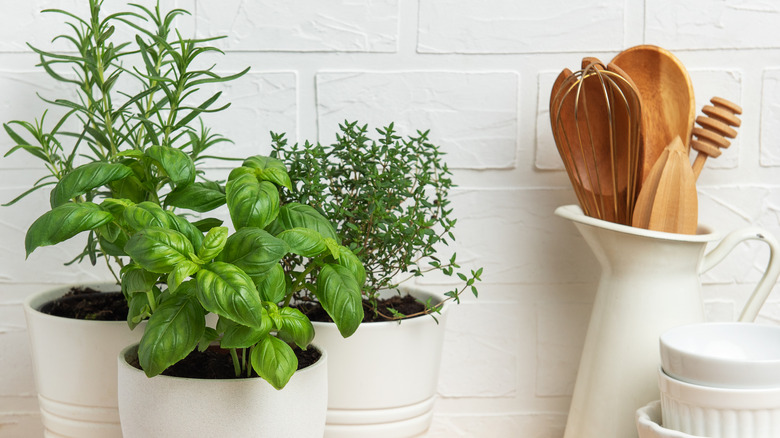
Store-bought herbs in plastic containers are perfect for adding to salads, soups, and casseroles. However, they can quickly turn limp, discolored, and even slimy if you don't use them immediately. Buying living herbs potted in soil is an incredible solution because these verdant aromatics can live for far longer on your windowsill with just a little sunshine, water, and good vibes. Having said that, even these herbs will eventually discolor and wither away too if they aren't repotted into a bigger container – or replanted outside in your garden — to accommodate their growing roots.
If you have a burgeoning basil plant (or even a freshly bought specimen) that needs to be rehomed in your backyard, the first step is to gently remove it from the plastic container so you can see the roots (give it plenty of water first to soften up the soil, then you should be able to ease the roots out with a little squeezing). Often, supermarkets will plant several smaller seedlings together to make one bigger plant, which means you can identify them, separate them, and plant them individually to create an abundant harvest. The key is to look keenly at the soil and gently individuate the roots to divide the densely packed seedlings. At this point, you can thin out any very small plants that won't be able to compete with the bigger ones.
Plant the seedlings outside in a sunny but sheltered area
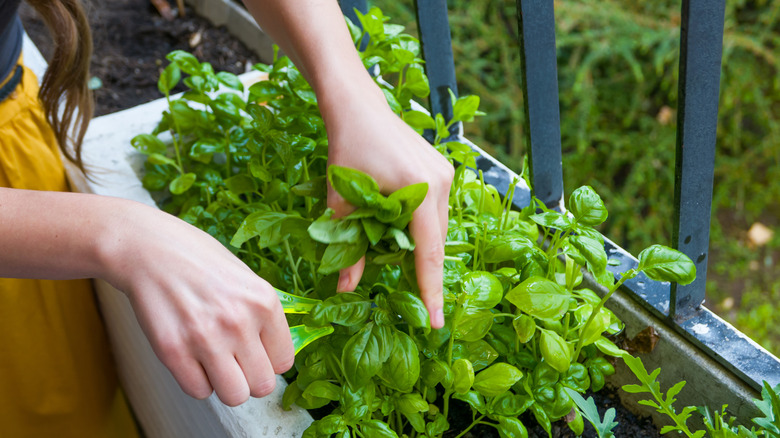
Once you've divided your herbs into smaller clumps, plant them outside in a garden border or raised bed, leaving a gap between each so the roots have plenty of room to flourish. Most herbs require a sunny but slightly sheltered spot to grow well, but don't be disheartened if you've done all the right things and they aren't blooming. It will take time for the herbs to adjust to their new environment, so give them some room to breathe and water them as needed. This technique can be used with many herbs, but hardy ones, like mint, sage, thyme, and rosemary, can thrive outdoors (perfect if you want to add fresh greenery to your honey mint julep).
You might also like to try your hand at companion planting. This is when you plant certain herbs together to encourage their growth. For instance, rosemary boosts the growth of basil, whereas chamomile aids dill, chives, and marjoram. Potatoes also make a good companion plant for some herbs, including cilantro and basil. Selecting starter plants (versus growing from seed) is a convenient way to plant an herb garden because it allows you to skip the lengthy germination stage. However, if you enjoy the challenge of growing from scratch, consider regrowing foods from kitchen scraps. Scallions, ginger, bok choy, and even garlic can be grown from vegetable leftovers that would otherwise be discarded.