

16 Dishes From The '70s That Define The Disco Era
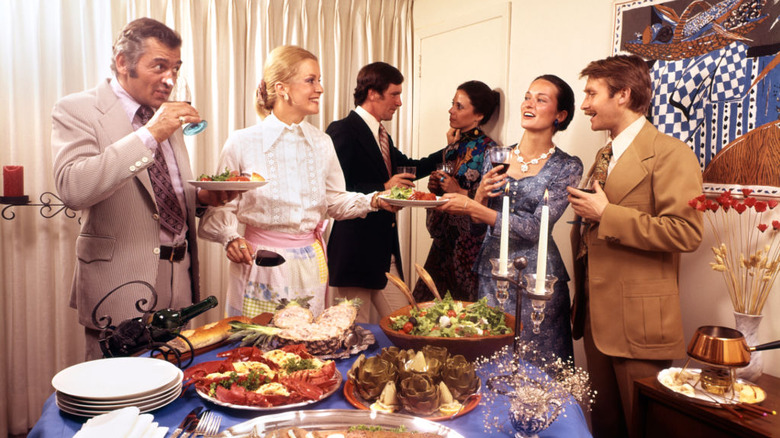
In the '70s food looked a lot different than it does now. Cookbooks of the time, like Betty Crocker's 1973 edition, were characterized by classic recipes for chocolate chip cookies, deviled eggs, and quick breads, but also featured more exploratory dishes like soufflés and curried eggplant. Volume 2 of "Mastering the Art of French Cooking" (1970) and "The New York Times International Cookbook" (1971) set to expand the selection of recipes available in the American home and encouraged the home cook to boost their repertoire.
As entertainment, pop culture, and nightlife of the disco era became more lively and amenable, the taste for new flavors grew. Dinner parties thrived — the perfect environment to showcase one's culinary prowess. And while many of these iconic '70s dishes still leaned on Depression-era ingredients, others showcase a curiosity for worldwide recipes. These are the dishes that defined the Me Decade, some of which still live on at dinner tables today.
1. Tuna casserole
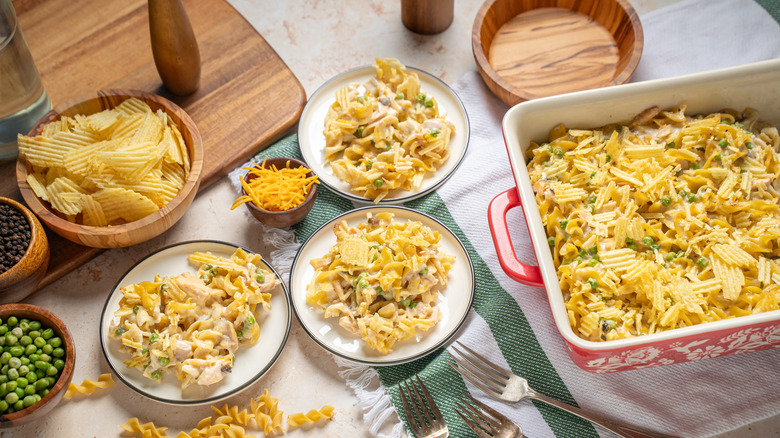
What screams '70s quite as much as an easy-to-bake casserole? These dishes took the stage in many forms, some of which still remain commonplace today (looking at you, green bean casserole), but none were quite so popular as the tuna casserole. If this is a dish you still love to whip out but worry about being basic, there are plenty of ways to upgrade your tuna casserole from average to elite. But tuna casserole at the time was all about popping open a few cans of cream-of-chicken and canned tuna, opening a bag of frozen peas, mixing everything together with your pasta of choice and baking with cheddar cheese.
We're not knocking it — that creamy soup combined with pasta and melted cheese is an instant trigger for nostalgia and comfort. There's no wondering why this dish had the 1970s in a choke hold when it came to everyday meals.
2. Beef stroganoff
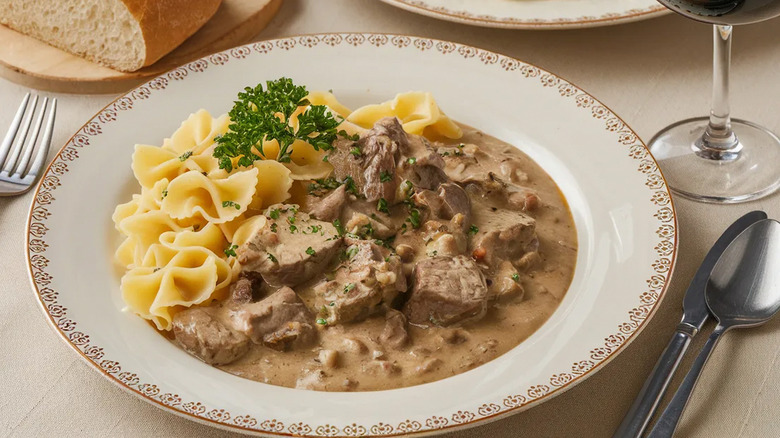
Ahh, beef stroganoff. If your parents grew up in the '70s there's a good chance you were raised with this dish still being a weekly occurrence at dinner time. The recipe for Russian beef stroganoff was published in "The New York Times International Cookbook" at the beginning of the decade, and given how easy it is to prepare, quickly became a fan-favorite.
Similar in simplicity to a casserole (minus the step of putting it in the oven), beef stroganoff is made by sautéing strips of beef, onions, and mushrooms with cooked egg noodles, and finishing with a dollop of sour cream. It saves the time of reducing cream like a typical pasta dish, and the sour cream adds additional flavor to cut through the richness of the beef. It's hearty, filling, and simple to prepare — an instant hit.
3. Swiss fondue
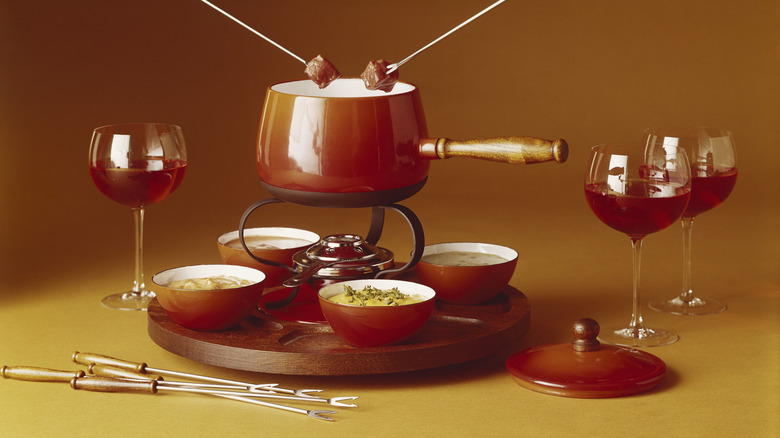
Of all the disco-era dishes on this list fondue is one of the most iconic. Brightly colored pots adorned dinner party tables on the daily, long-handled forks held in the hands of guests eager to dip bread, meat, and vegetables into the welcoming pot of melted cheese. Is there any better way to eat broccoli? As Kitty Forman said in an episode of "That '70s Show," "I don't know why they call it fondue, they should call it fundue."
The history behind Swiss fondue tells more than just the story of an enjoyable dish. The 1970s saw a lot of turmoil in the dairy industry, both in the United States and Switzerland. Prices were high before the government began subsidizing farms, causing the cost of everyday products to decrease as supplies back piled. With all that extra cheese to sell, advertisers began pushing the popularity of fondue — and the rest is history.
Those vintage fondue pots sure looked good gracing a dinner table — and if you're thinking of having a retro-themed party fondue is the perfect throwback-dish. Just remember if you drop your food in the pot, some traditions say you're obligated to give a friendly kiss to the person seated next to you.
4. Crepes Suzette
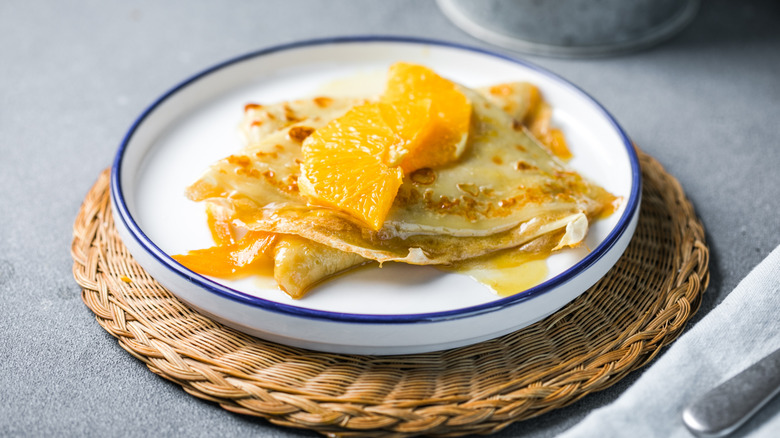
Crepes don't have quite the same novelty as they did decades ago. What is now commonly found on menus at cafes, crepe shops, and diners alike was once a rarity only available to the wealthy few. Crepes Suzette first appeared in the early 20th century, but was really only served on upscale restaurant menus. By the '70s many home cooks had learned the trick and taken to impressing their dinner guests by serving this dish at home.
Not your average Nutella-stuffed crepe, the recipe for crepes Suzette consists of the thin pancakes being soaked in an indulgent sauce of orange juice, syrup, and butter which would be flambéed with cognac table side for dramatic effect. Originally called crepes caramel and made without the flambé, a waiter at The Ritz London tells the alleged origin-story of the dish (and its name) in an Instagram video. The story goes that crepes Suzette came about utterly by happenstance when cognac was accidentally splashed into the pan of crepes caramel and onto a guest at a table — whose name was Suzette. It's popularity throughout the '70s is likely what led to the widespread availability of crepes in the United States.
5. Vol-au-vent
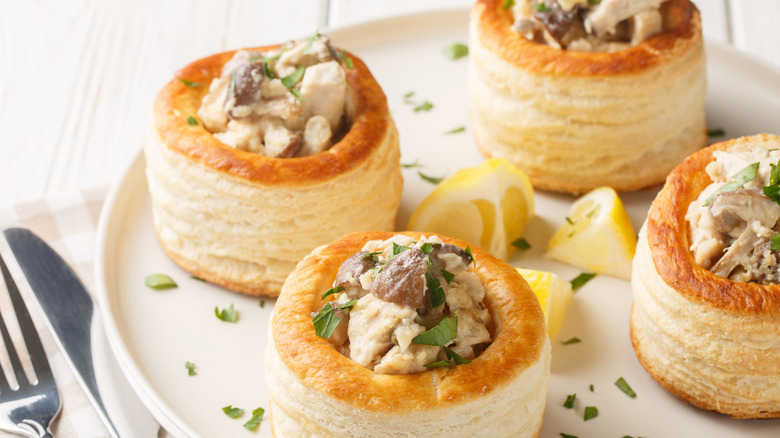
The French name may make this dish sound mysterious and intriguing, but in its production it is quite simple to prepare. One of those French snacks you simply have to try, vol-au-vent consists of a small shell of puff pastry stuffed with any filling your heart might desire, whether it be savory or sweet. The main idea is to keep it bite-sized, which made this dish a popular hors d'oeuvre at many parties in the '70s.
These pastries may be seen as old-fashioned but that doesn't stop them from still being a popular menu item today. The room for creativity, given that you can basically stuff the pastry with any combination of ingredients, has allowed chefs to keep the tradition alive, putting them on tasting menus around the globe. One of the key ingredients to great food is nostalgia, and vol-au-vent is one of those dishes that will forever remind your guests of a time gone by.
6. Stuffed celery
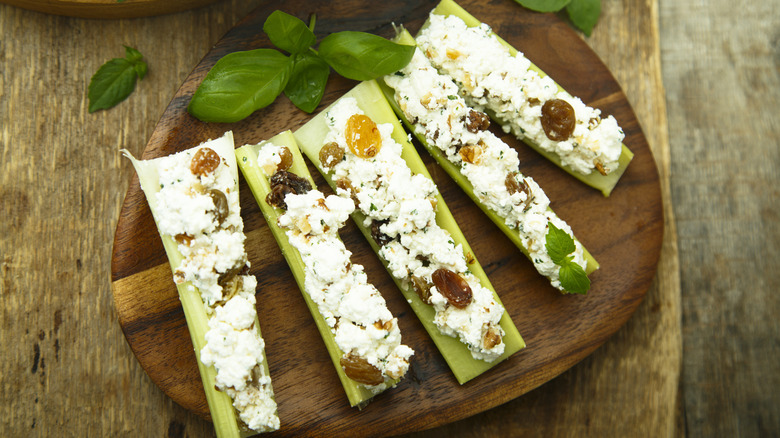
For those raised in the era of Ants on a Log, the concept of stuffed celery may draw memories of long bouts of chewing and picking stringy pieces of the vegetable out of your teeth. Celery isn't the most attractive appetizer to us now — most of us associate the dish with something our mothers made to get us to eat vegetables — but in the late 19th century it was still a rare find. Difficult to grow, with thin, spindly stalks that weren't ideal for eating, the rules of supply and demand made celery very expensive and thus, a luxury.
Even into the '70s the vegetable maintained an association with prowess, and different variations of stuffed celery were one of the hottest appetizers you could present at a party. Pimento cheese, cream cheese and bacon, olives, or sweet versions with pineapple were all the rage. For those who grew up in the disco era it's a dish that will bring back memories.
7. Carrot cake
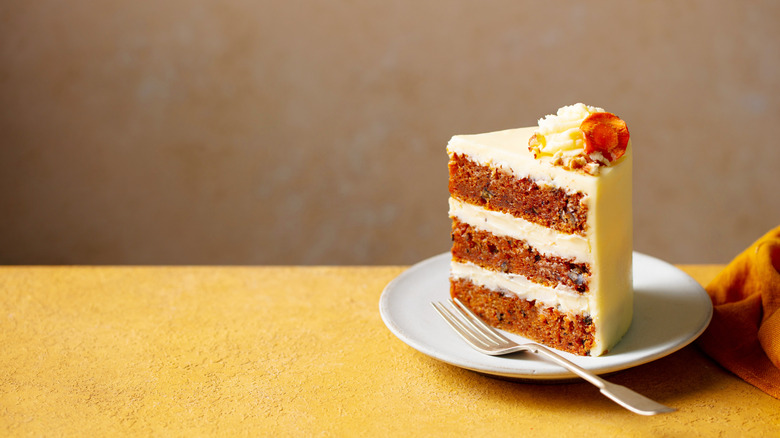
It's hard to imagine a time when carrot cake wasn't popular — the dessert is still being served in restaurants, bakeries, and at birthday parties around the country. But once upon a time the carrot cake wasn't nearly as popular as it is today.
Recipes for desserts made with carrots date back hundreds of years to times when processed sugar was much harder to come by and carrots were valued for their naturally high sugar contents (although there's no doubt those sugarless variations wouldn't be quite as enjoyable as the cake is now). The first published recipe for carrot cake in the United States was in 1929, but it wasn't until the '70s that the dish really took off. So what changed? An increasingly health-conscious public found a cake containing carrots and nuts to appear more in line with their diets. But there was another trick at play, too.
It isn't just carrot cake that makes this dessert so good. After all, carrot cake wouldn't be what it is without that tangy, sweet, cream cheese frosting. At some point in the mid-20th century the Philadelphia brand began running advertisements for carrot cake paired with cream cheese frosting, and the duo took off. Now a staple among American desserts, a Google Ngram chart shows that mentions of carrot cake in books was almost nonexistent pre-1970s.
8. Betty Crocker's sandwich loaf
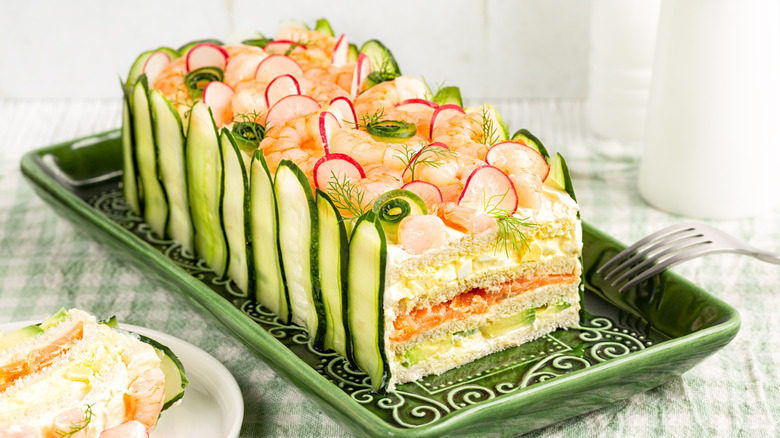
While some of these dishes found their foothold in the 1970s and remain legendary even until today, others have long been lost to dust-covered cookbooks — and Betty Crocker's sandwich loaf is certainly one of them. Shaped like a cake, but with savory sandwich-flavored fillings, this recipe was perhaps just a warmup to the wacky cake trends of today.
Perhaps the idea was to make basic sandwiches party-worthy by turning them into a cream cheese-clad decorative dish, but this recipe isn't one that stuck — and we're not terribly surprised why. The original recipe calls for the making of three separate savory fillings — salmon, chicken-olive, and golden cheese. These fillings are then spread in layers between a loaf of bread that's been trimmed of its crust and sliced lengthwise. Finally, the whole ordeal is slathered in yellow dye-tinted cream cheese and decorated picturesquely with vegetable garnishes.
While the Betty Crocker version may not sound quite as appetizing, there were many variations to this dish. A sandwich loaf can be made with the savory ingredients of your choosing, such as deli meats and lettuce.
9. Watergate salad
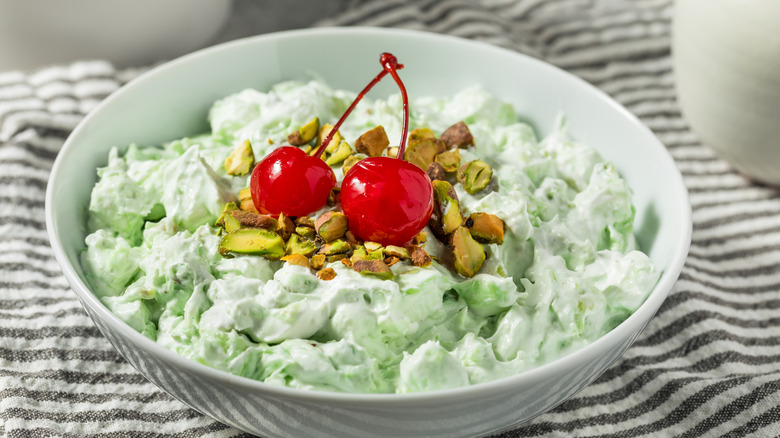
The Me Decade was known for all sorts of funky foods, and this sugar-laden dish is sure to be a topic of controversy at any family function. Similar to Ambrosia salad in fluffiness (the word salad can be read in quotation marks for these dishes), Watergate salad is tinted a cooling green color from its base of pistachio pudding and cool whip. Canned pineapple chunks, chopped pecans, and miniature marshmallows are mixed in for flavor and texture. The nuts make it healthy, right?
The name itself was indicative of the times, although this dish is called by many titles including Pistachio Pineapple Delight or Green Fluff. In 1973 Watergate Salad even got a write up in The Miami News, where the paper highlighted it as an easy-to-make icebox salad that was becoming popular.
10. Spanish paella
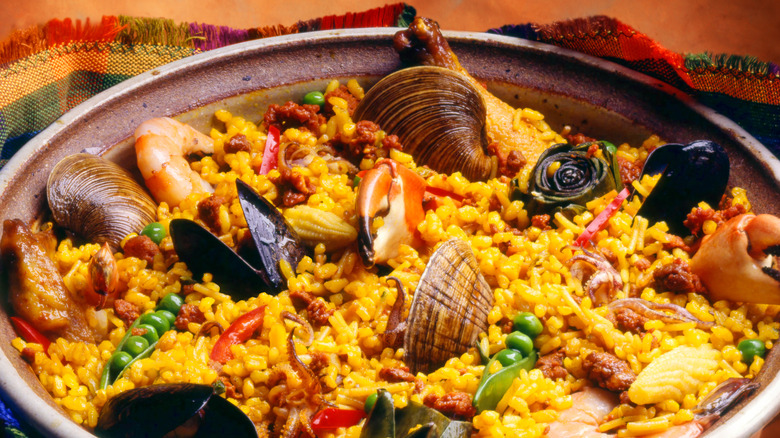
We're spoiled around the United States with incredible Spanish restaurants and ingredients. Tapas menus aren't hard to come by thanks to chefs like Jose Andres — who now has numerous Spanish-centric restaurants around the country — and ingredients such as chorizo, saffron, manchego cheese, and jamón Ibérico are all the more common. But back in the '70s Spanish food was largely a mystery — except for one dish.
John Sconzo of Rascal + Thorn said in an interview with Resy that, "What people thought of Spanish cuisine in the '60s, '70s, and '80s was very little beyond paella." As was on theme with dinner parties of the era, one-plate dishes were all the rage, and paella fit snugly into this category. The technique for cooking the rice may take a bit more finesse than a tuna casserole, but if you avoid the most common mistakes when cooking paella it is still a dish that's relatively easy to pull off.
11. Hamburger Helper bakes
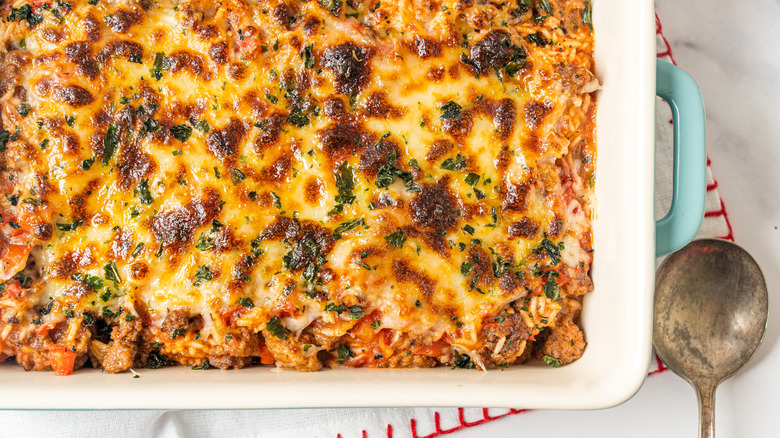
Hamburger Helper was the boxed dinner that many families survived on in the '70s. Introduced by General Mills in the year 1970, the product was a response to economic difficulty and rising costs of beef, and allowed families to make expensive meat stretch further by mixing it with seasoning packets and starches.
It wasn't just the basic box mix that was popular — more involved recipes were developed to bake Hamburger Helper into all sorts of casseroles and baked dishes. Many of the recipes were published by none other than Betty Crocker (a brand also owned by General Mills), which made the product even more appealing to those who still wanted to put their own twist into making dinner for the family.
12. Harvey Wallbanger cake
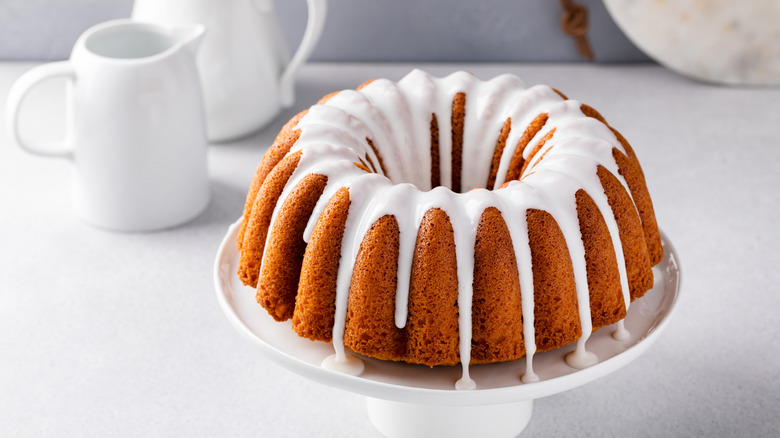
The Harvey Wallbanger Cake may look like your run-of-the-mill Bundt cake on first impression, but its vibrant flavor profile is inspired by the cocktail of the same name. The cocktail is one key ingredient away from your classic Screwdriver — vodka and orange juice with the addition of Galliano, an herbal Italian liqueur that tastes a bit like vanilla and anise. The cake takes on the same flavor profile and even uses vodka and Galliano in the batter as well as the glaze. Orange juice and vanilla pudding mix make this cake moist and citrusy, and the iconic Bundt-pan shape is an instant '70s throwback.
Both the cocktail and the cake were all the rage in the '70s, and the name itself — Harvey Wallbanger — is a pretty catchy order. The popularity of the drink (and cake) may have been more attributed to clever marketing by the Italian liqueur company Galliano than anything — but nonetheless, they remain classics of the disco era.
13. Pineapple chicken
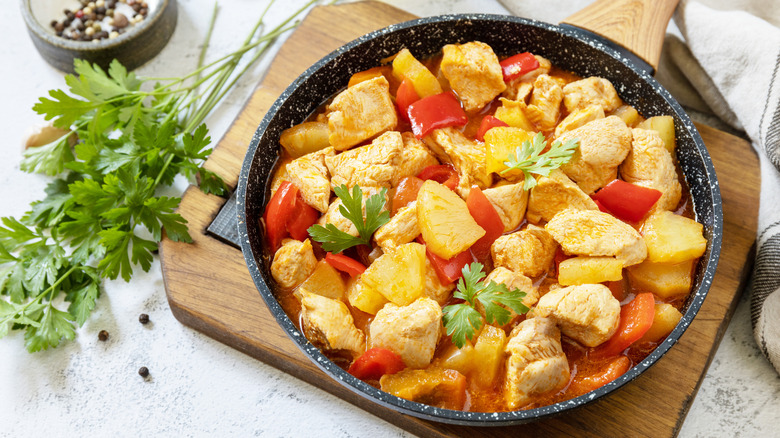
Hawaii became a state in 1959, six decades after the United States initiated an illegal coup to overthrow the island's monarchy. In the years following the announcement of official statehood, tourism to the island expanded rapidly and with it, tiki-themed restaurants and dishes on the mainland.
Pineapple chicken was exemplative of the exoticization of this time just as much as Hawaiian print shirts and tiki-themed parties. The ingredients of the dish — canned pineapple, frozen peas, roasted chicken and onions all cooked together in a casserole dish — are quintessentially '70s. At its most basic the dish consists of just a few simple ingredients, but it might also be elevated with cornstarch-thickened glazes, slivered almonds, or by being served in the half-shell of the pineapple itself.
14. Jell-O salads
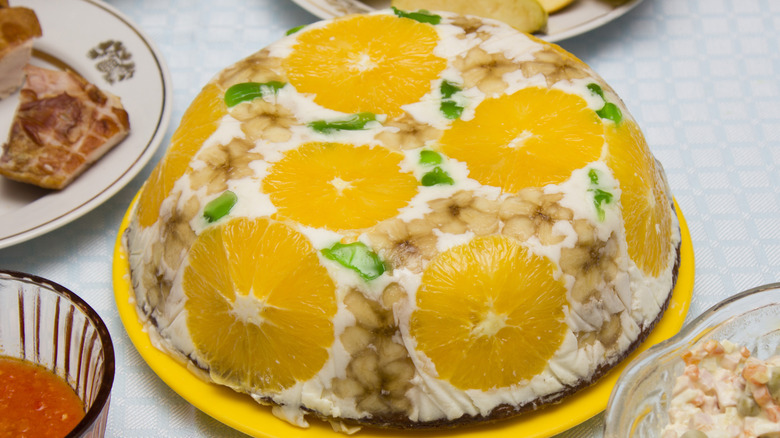
The word "salad" in the '70s was really more of a catch-all term for a random assortment of ingredients compiled into one dish. The Jello-O salads of the time ranged from sweet to savory, and from delicious to jarring. The more palatable options might include an Orange Dreamsicle Salad made with orange Jell-O, mandarins, and Cool Whip, while other sweet versions perhaps took it too far — like one made with Coca-Cola, cherry pie filling, and canned pineapples.
Many recipes are difficult to believe actually existed, and even stepped into the savory world with aspics and meat fillings. One Facebook user posts a retro photo of a cathedral-like molding of green Jell-O with artful placements of shrimp, cherry tomatoes, and peas. Various old-school ads for meat Jell-O are posted on Reddit. It was a creative era, to say the least, but whether you'll be choosing any of these recipes to grace the table at a '70s-themed party is up to your own discretion.
15. Pasta Primavera
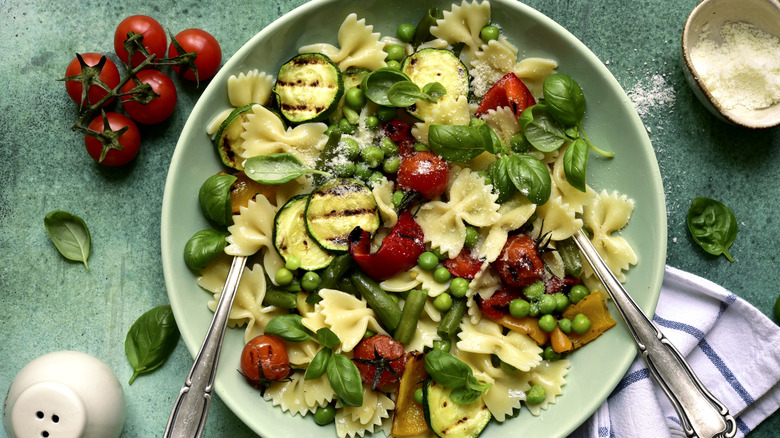
Pasta Primavera may sound deceptively Italian (primavera means Spring) but it's a dish that is definitely American. First invented at the New York City restaurant Le Cirque in the mid-1970s, the original recipe calls for an abundance of fresh vegetables which are each blanched individually in salted water before being tossed with spaghetti and cooked into a cream-and-cheese laden sauce. The result is a bright, colorful pasta dish with just enough fat and cheese to make you forget you're eating a bunch of vegetables.
This dish was all the rage '70s and continued its popularity into the '80s as more and more people got their hands on the recipe. Nowadays it's seen as a bit old-fashioned, but the basic recipe is still delicious. You can swap the springtime ingredients for parsnips, squash, and Brussels sprouts in the fall and make a "pasta autunno" that will pay homage to a classic without seeming outdated.
16. Quiche Lorraine
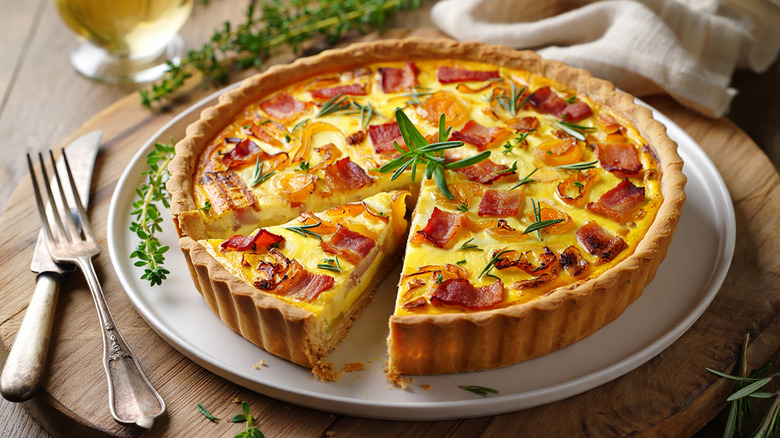
A big theme of the '70s was convenience in cooking, and quiche was the equivalent to a casserole for breakfast. The quiche Lorraine, in particular, was incredibly popular at the time, and is true to the ingredients one would expect of a classic quiche — bacon, onion, and cheese added to a custard and baked into a pie shell.
This quiche was first a popular dish in France, but their style of making it looks a bit different than in the United States. In France, the focus is on a properly made custard which becomes creamy and smooth without the addition of shredded cheese. The pork is cut into a perfect dice to be evenly distributed, and the size of the shell is thinner and more delicate.
The Americanized quiche Lorraine that became so beloved is a bit bulkier, often with more vegetables used in the custard which can cause the result to be water-logged. Shredded cheese is often used as well, and the milk for a true custard might be replaced with heavy cream or half and half. This isn't to say one is better than the other — the American quiche Lorraine is popular for a reason.