

Give Your Kitchen A Retro Touch With This '50s Flooring
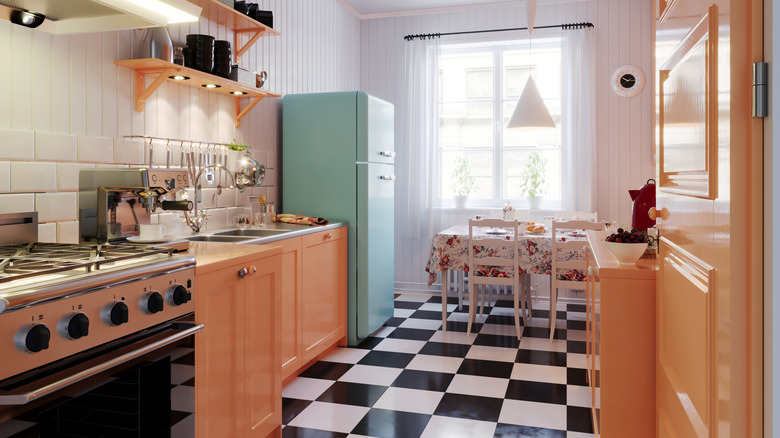
Sleek kitchens featuring cabinetry without handles, cool marble worktops, and hidden pantries are a design trend that's showing no signs of receding. After all, these creative solutions can make a space feel bigger by reducing visual clutter and camouflaging bulky appliances and cookware. However, going too hard and fast with this streamlined aesthetic can rob your kitchen of character and identity, which is one of the reasons boomers aren't impressed with concealed kitchens. One way to give the hub of your home a warmer and more considered feel is to hit it with a retro touch in the form of 1950s flooring, otherwise known as the classic checkerboard pattern.
Picture an old-school diner, and you likely imagine checkerboard floors along with vinyl-covered booths and ice cream floats. Why? During the 1950s, lino flooring featuring this distinctive grid-like pattern became a popular choice in casual eateries due to its low cost and convenience when compared to ceramic tile options. Plus, they didn't have any grout lines, making them easy to clean with a quick mop down. Eventually, this aesthetic trickled into the home kitchen too. The freshness of black-and-white checkerboard flooring provided a welcome contrast against dark cabinetry, but there were lots of other interesting colorways and pastel hues that also took hold. Moreover, there was also space to experiment with the size of the squares; larger squares made a space look bigger, but smaller ones were ideal for giving a kitchen a cozier cottage-core charm. However, over the years, checkerboard lino developed a kitschy rep and fell out of fashion as design trends changed.
Tiled versus linoleum checkerboard flooring
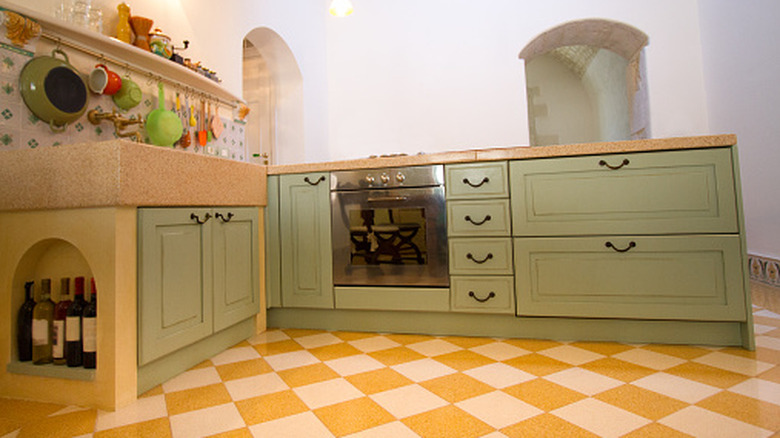
If you're after longer-lasting checkerboard flooring, you can create the same effect with a thoughtfully laid pattern of hard-wearing floor tiles. As tiles are waterproof, stain-resistant, and durable, they make an incredible material for high footfall areas like the kitchen (and if a single one cracks, you can simply remove and replace it with ease). Unfortunately, checkerboard flooring that's made of lino will likely have to be replaced entirely if it tears in one spot. Having said that, lino is warmer and softer underfoot and much easier and faster to lay. Linoleum flooring is one of those retro kitchen trends that younger generations don't understand, but it's a cheap alternative with a wealth of colors to choose from, so you don't have to stick to a classic black and white palette.
For instance, green and cream can lend your kitchen a sophisticated vibe, while soft neutrals like taupe and ivory will bring an understated calm to your space. Of course, if you like to make an impact, opt for playful and vibrant designs with a bold aesthetic, such as teal, yellow, or even red. And why not combine your checkerboard flooring with other vintage kitchen design trends, such as colorful appliances, freestanding furniture, or china cabinets to showcase trinkets, crockery, and beloved cookware?