

How You're Ruining Your Ribeye Steak Before It Even Hits The Grill
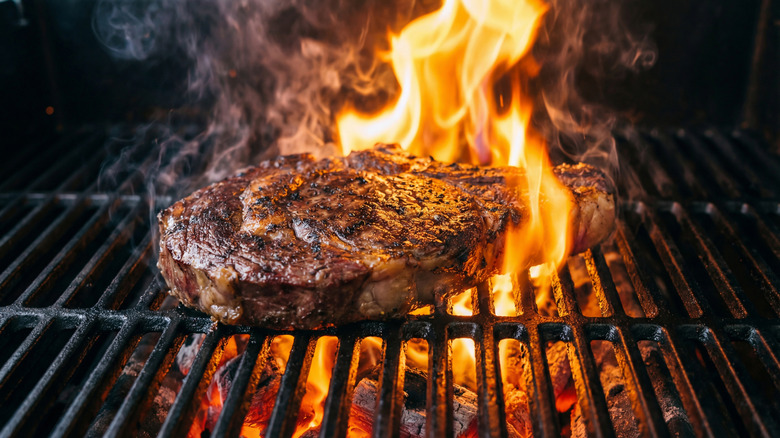
Prime cuts of beef, like sirloin and porterhouse, are delicious when grilled simply and served with a slick of herbed butter, but some would argue that ribeye is the best because it has a higher fat content. This extra marbling helps it to stay juicy, moist, and flavorful when pan-seared or grilled. Ribeye tends to cost more than other varieties of steak, so cooking it well is vital if you want to make a culinary return on your investment. Any grill master will tell you to always let your meat rest after cooking because it gives the muscle fibers time to relax, giving rise to a steak with a succulent texture. However, you might be ruining your ribeye well before this point by failing to rest it on the countertop prior to cooking.
Along with eggs, poultry, and yeast, steak is one of the 12 ingredients that should reach room temperature before cooking. Indeed, be it steak, chicken, or turkey, you should never put meat on the grill straight from the fridge because the center will be at a lower temperature than the exterior. This can result in an uneven finish; instead of a steak that's juicy throughout, the outside can end up overdone and tough.
Resting steak before cooking produces a caramelized exterior and tender middle
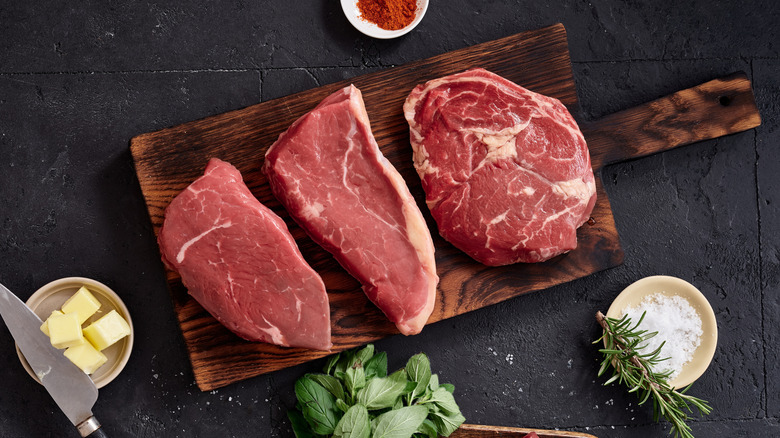
While you can get away with cooking thinner steaks straight from the fridge if you've forgotten to set them out earlier, a ribeye is thicker and benefits more from a short spell on the countertop. A room-temp ribeye will cook faster on a super-hot cooktop without being fridge-cold in the middle; even buttery rare steaks shouldn't be cold in the center after grilling. Taking the chill off your steak and eliminating some of its moisture also encourages the surface to reach a higher temperature faster, producing a richly caramelized and deeply savory surface. If you don't do this, the temperature of the pan will drop faster, causing the steak to steam instead of sear.
Just bear in mind that raw steak shouldn't be left out for more than two hours, as it can become a breeding ground for bacteria. Around 20 minutes to an hour should be plenty to take the chill off. If you simply haven't got the time to let your ribeye rest before cooking, at least take a moment to dry the surface with a paper towel. This technique will soak up some of the moisture and encourage it to develop some color at a faster rate. Once it's cooked, a great tip for perfectly rested meat is to set it on a cooling rack because it allows air to circulate underneath. This ensures the muscle fibers in the entirety of the cut loosen evenly, producing a juicier result.