
The Finger Technique That Makes Seasoning A No-Brainer
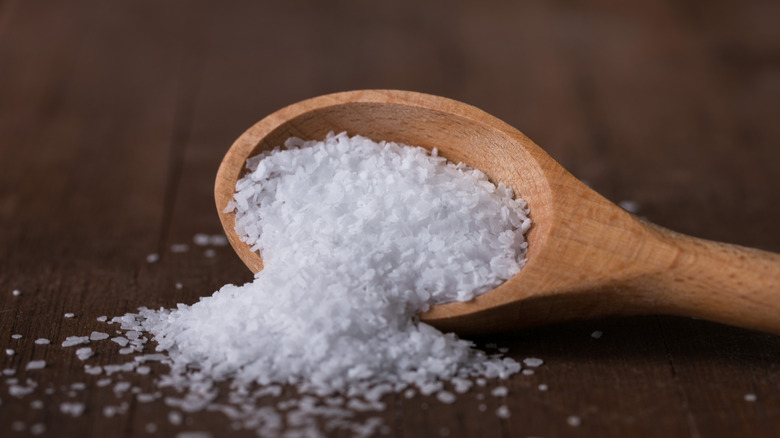
When it comes to seasoning your food, you want to get it just right. Too much, and your family or guests are reaching for a glass of water. However, if it is too bland, everyone can't pass the salt and pepper fast enough. Still, you can't skip this step altogether. There are fruits that require seasoning, and there are foods you need to salt before throwing them on the grill. Both require it to be done properly, and according to famed Chef Daniel Boulud, proper seasoning technique doesn't mindlessly commence with shaking your salt shaker or breaking out measuring spoons. Instead, Boulud demonstrates in an Instagram post that your fingers are the only tools you need for creating layers of mouthwatering flavors.
The Michelin star chef explained to Parisian influencers, Alex Durand and Tom Carles, that you use two fingers to intentionally sprinkle a line of salt on your chosen food, three fingers when you are seasoning something larger, and four fingers when you need more. For a dash, you also want to use two fingers, but it's a quick and small splash to create that smidge of rain when doing so. Why does Boulud recommend this method?
Practice, practice, practice
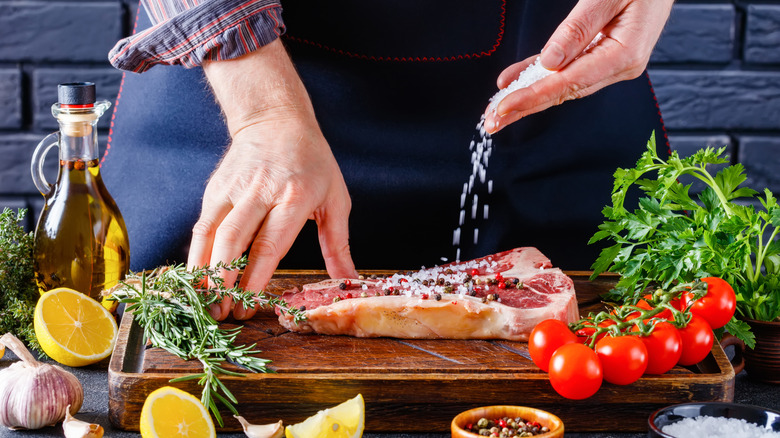
If you've ever seen the classic scene in "Sabrina" where Audrey Hepburn's character Sabrina is making a soufflé for Linus Larrabee, AKA Humphrey Bogart, then you know when she cracks the eggs, she famously quips, "It's all in the wrist." What she is really saying is that hands have muscle memory. That's what Daniel Boulud is explaining to the two influencers. Once your hands get used to the feel of each amount, it becomes rote and instinctive, but you have to practice this salting method for it to become intuitive. However, while eyeballing may work for cooking, baking is about precision. So, don't lose the measuring cups just yet.
Of course, even this technique has its pitfalls. There are a variety of types of salts, and knowing when to use them is key. You need to be mindful of both the size and type of the salt you are reaching for, as well as the thickness of the food you are trying to bring out the flavor of. A fine salt is going to produce a saltier taste. Additionally, remember that fattier foods– think French fries and ribeye steaks — need more salt than a delicate fish or filet mignon. But without the right amount of seasoning, fatty foods just taste meh.