

The Quirky 1910s Nickname For Alcohol That You Don't Hear Anymore
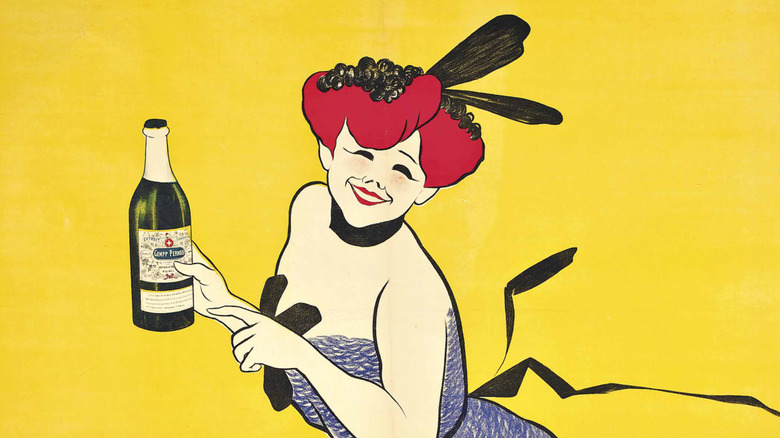
Alcohol prohibition in 1919 was meant to snuff out a perceived moral scourge, but it largely just pushed it underground, turning ordinary people into criminals and fueling the rise of organized crime. With this simple activity now being illegal, consumers leaned on slang terms to safely discuss their activities in polite society. One such term, however potentially obvious the alcohol connection, was "giggle-water."
This slang slightly predated prohibition and was first used in 1911 to specifically refer to champagne. But within a decade, it came to refer to any type of alcoholic beverage, especially one made with whiskey or gin. Perhaps the relatively new popularity of artificially-carbonated sodas gave users of the term enough plausible deniability — though it was also the title of a prohibition-era mixologist book.
The end of prohibition in 1933 also ended a lot of now-unnecessary practices around alcohol, like doctors legally prescribing medicinal booze. And while some prohibition-era slang like "hooch" and "blotto" has survived to some extent, "giggle-water" as a term gradually fell off. Alcohol, of course, remains quite popular.
The enduring legacies of alcohol prohibition
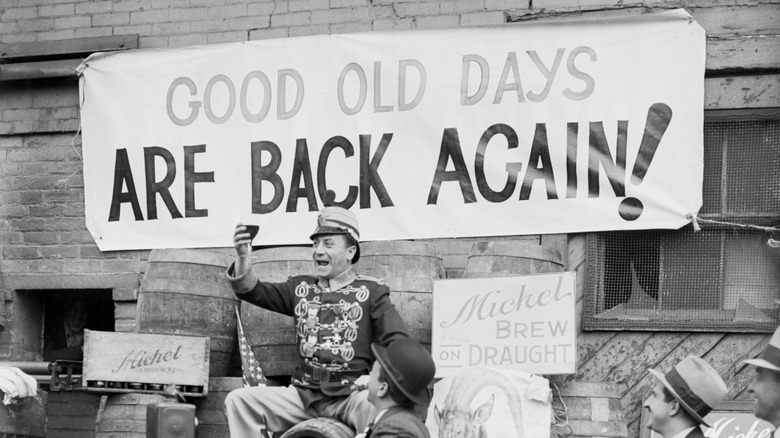
"Giggle-water" and other prohibition-era artifacts may have been left in the past, but that decade-plus of American history has some surprising legacies. When the ban came down, eateries of all kinds lost significant revenue, and needed something to make up for it — this is the surprising origin of kids' menus. Their introduction (and perhaps household savings from drinking less) made families eating out together more common, and helped restaurants financially stay afloat.
Prohibition also played a minor role in the murky origins of vodka. Out-of-work American bartenders sought employment in Europe, which itself was generally new to vodka. Prior to the 1917 Russian Revolution, vodka was primarily a drink for the Russian nobility. A vodka-maker named Rudolph Knett fled the revolution and established the Smirnoff brand in France in 1920, and when prohibition ended, he began making it in Connecticut one year later. And any American bartenders who might have come back already knew how to work with it.
Perhaps the most surprising legacy is that the end of prohibition was the rebirth of 7-Eleven. It began as the Southland Ice Company in 1927, which mostly sold ice but also basic foodstuffs, making it an early convenience store. The Great Depression drove the young company to bankruptcy in 1931, but prohibition's demise two years later became a lifeline in the form of increased ice demand — and also beer, which Southland began to sell as well.