

Loaf Pan Basque Cheesecake Recipe
We may receive a commission on purchases made from links.
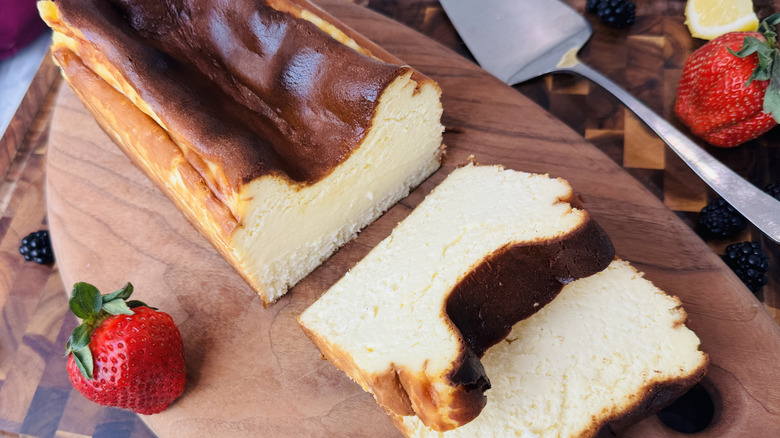
If you haven't had the pleasure of enjoying a slice of Basque cheesecake (whether a loaf pan version or a classic round), you're about to fall in love. Rich, creamy, and beautifully simple, Basque cheesecake is perhaps best known for its "burnt" looking top, which is really just a caramelized crust that forms as the cheesecake bakes (and a delicious one, at that). It's the ultimate dessert to serve for any occasion — light enough for pairing with brunch or afternoon tea, but special enough to put out at a holiday gathering. A final touch of fresh berries or seasonal fruits can make it even more festive to serve, but Basque cheesecake really is perfectly delicious all on its own.
Another perk to Basque cheesecake is that it has an impressively easy preparation, and this loaf pan Basque cheesecake recipe makes things even easier. While classic cheesecake can be quite the undertaking to make, requiring water baths and ultra-precise temperatures, this loaf pan Basque cheesecake together in minutes in a food processor, and bakes up without any complicated assembly or water bath. It's rustic yet elegant, and it's the perfect dessert for a special occasion or for a weeknight treat.
Gather the ingredients for loaf pan Basque cheesecake
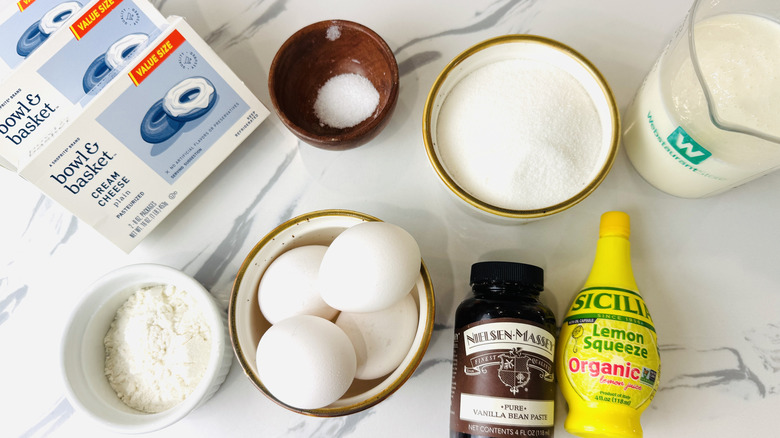
Not only does the loaf pan make this cheesecake easy and quick to prepare, but it has a short ingredient list as well. The base of the cake is, of course, cream cheese. You'll want it to be softened for about an hour before using for a smooth blend. Granulated sugar is added to sweeten the cheesecake and help create that golden, caramelized top. Vanilla bean paste or extract adds depth of flavor, although you can change it up with other extracts as desired.
To balance the sweetness, kosher salt is added. All-purpose flour helps give this loaf pan cheesecake a little structure (although it will always deflate after baking, which is part of its charm). Eggs bind the batter and keep the texture soft and airy.
Another thing that makes Basque cheesecake unique is a heavy dose of heavy cream. It gives it an ultra-smooth and luscious mouthfeel that takes it over the top. An optional addition of lemon juice or zest will add a citrusy, acidic touch that cuts through the richness of the cream cheese. Top with fresh berries or a dusting of confectioners' sugar before serving for a final flourish.
Step 1: Preheat the oven
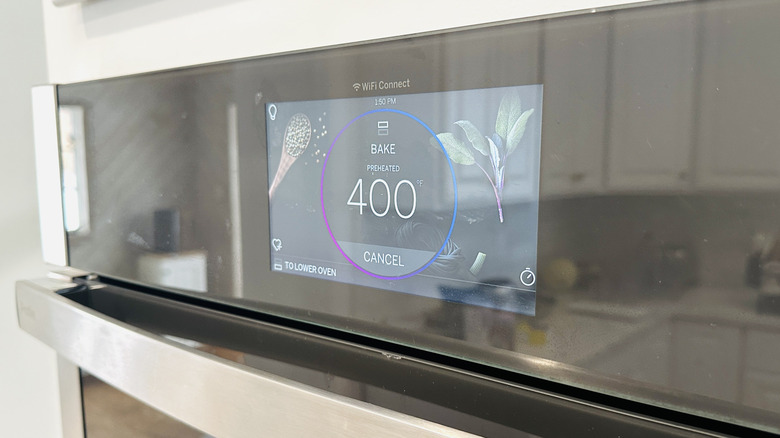
Preheat the oven to 400 F.
Step 2: Line a loaf pan
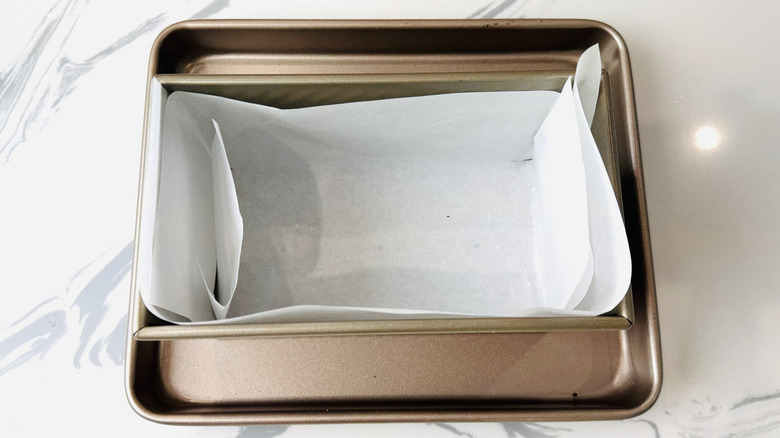
Line an 8x4-inch loaf pan with parchment paper. (If using a 9x5-inch pan, you'll need to reduce the baking time slightly.)
Step 3: Process cream cheese and sugar
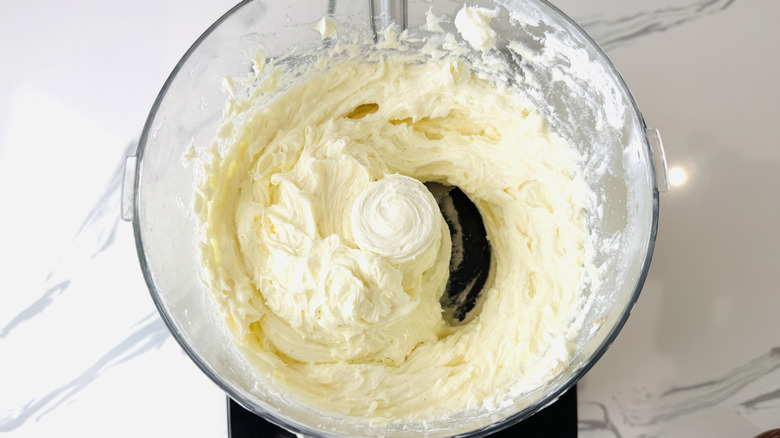
In a food processor, pulse to combine the cream cheese and sugar until smooth.
Step 4: Add vanilla and flour
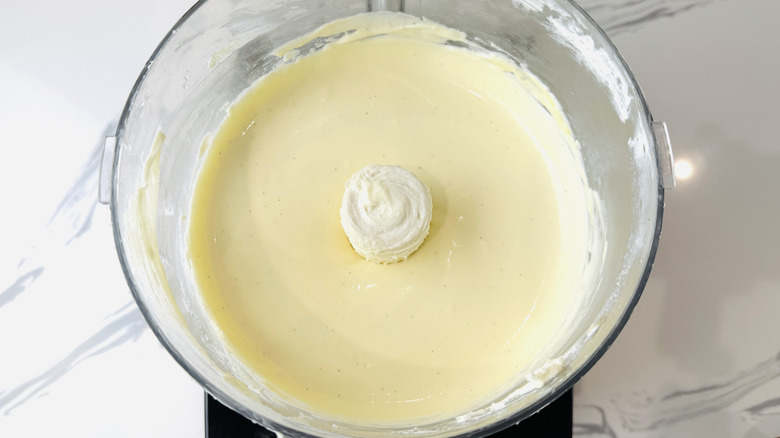
Add vanilla, salt, flour, and one egg. Pulse to combine.
Step 5: Add remaining eggs
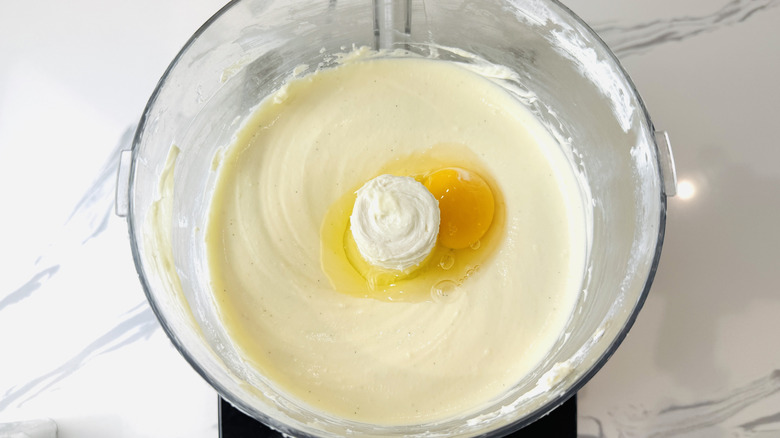
Add the remaining eggs one at a time, pulsing between each addition.
Step 6: Add heavy cream and lemon
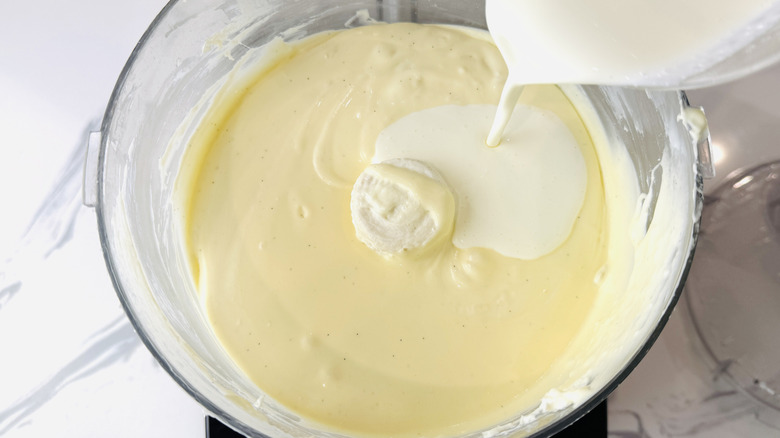
Add heavy cream and lemon juice or zest if using, and process until smooth.
Step 7: Pour batter into pan
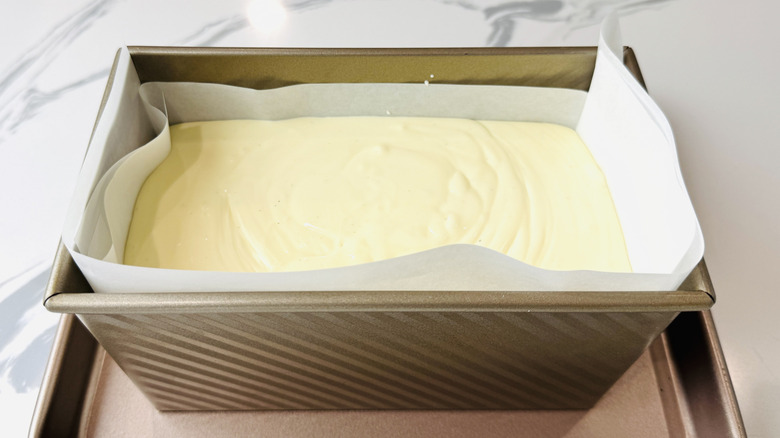
Pour batter into prepared loaf pan.
Step 8: Bake the cheesecake
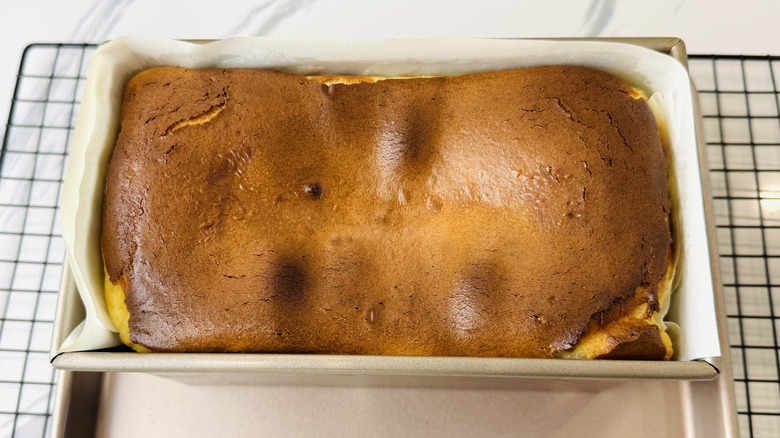
Bake for 50-55 minutes, until the top is golden brown and the cheesecake jiggles slightly.
Step 9: Chill the cheesecake
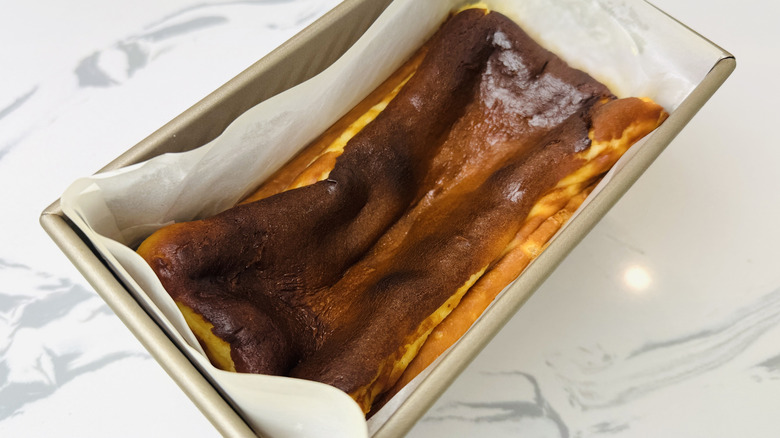
Cool the cheesecake to room temperature on a cooling rack, then transfer to the refrigerator to chill for at least 2 hours or overnight. (The cheesecake will deflate during this time.)
Step 10: Unmold the cheesecake
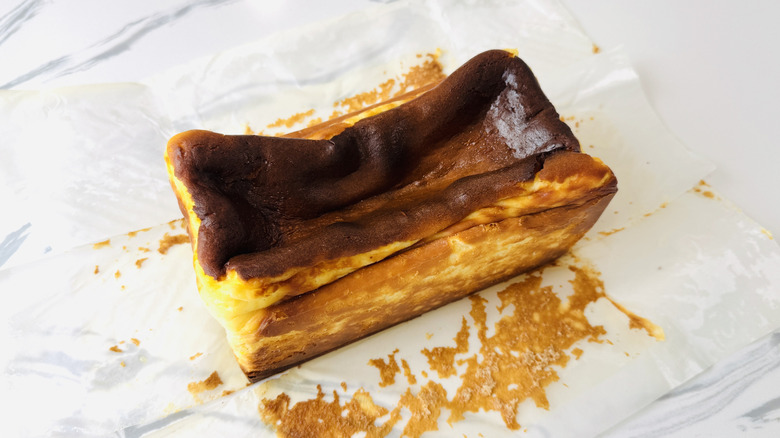
Use the parchment paper overhang to unmold the cheesecake from the pan, then remove the parchment paper.
Step 11: Serve the loaf pan Basque cheesecake
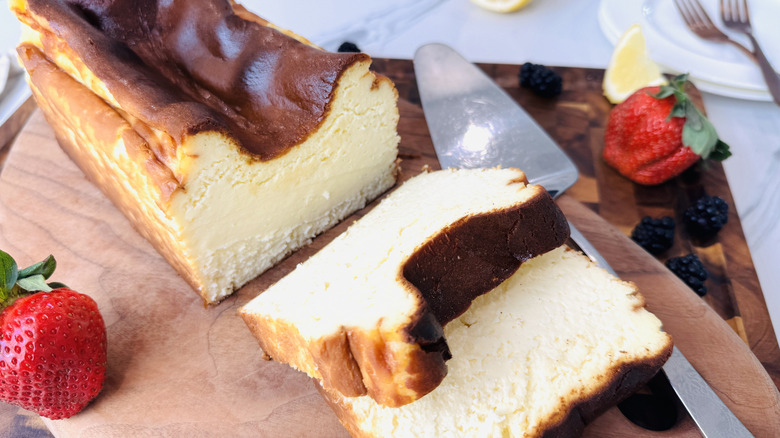
Transfer the cheesecake to a serving platter and serve chilled with fresh berries, if desired.
Drinks to enjoy with loaf pan Basque cheesecake
Loaf Pan Basque Cheesecake Recipe
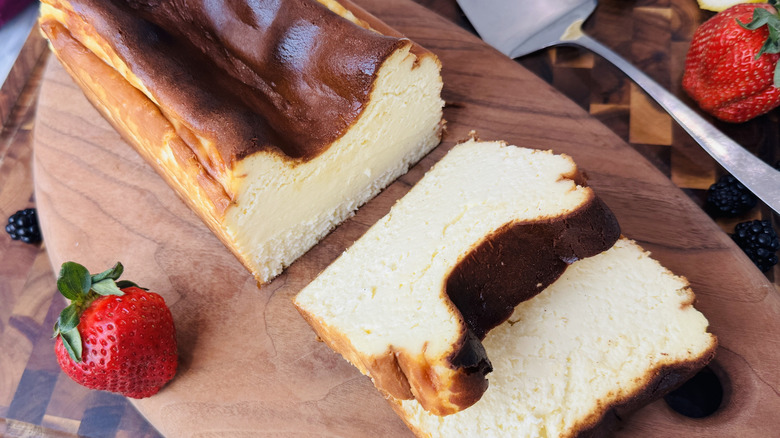
This loaf pan Basque cheesecake recipe yields an impressive, creamy dessert (with that essential caramelized top!) without the hassle -- no water bath required.
Ingredients
- 3 (8-ounce) blocks cream cheese, softened
- 1 cup granulated sugar
- 2 teaspoons vanilla bean paste or extract
- ¾ teaspoon kosher salt
- ¼ cup all-purpose flour
- 4 large eggs, divided
- 1 ½ cups heavy cream
Optional Ingredients
- 1 tablespoon lemon juice or 1 teaspoon lemon zest
- Fresh berries, for serving
Directions
- Preheat the oven to 400 F.
- Line an 8x4-inch loaf pan with parchment paper. (If using a 9x5-inch pan, you’ll need to reduce the baking time slightly.)
- In a food processor, pulse to combine the cream cheese and sugar until smooth.
- Add vanilla, salt, flour, and one egg. Pulse to combine.
- Add the remaining eggs one at a time, pulsing between each addition.
- Add heavy cream and lemon juice or zest if using, and process until smooth.
- Pour batter into prepared loaf pan.
- Bake for 50-55 minutes, until the top is golden brown and the cheesecake jiggles slightly.
- Cool the cheesecake to room temperature on a cooling rack, then transfer to the refrigerator to chill for at least 2 hours or overnight. (The cheesecake will deflate during this time.)
- Use the parchment paper overhang to unmold the cheesecake from the pan, then remove the parchment paper.
- Transfer the cheesecake to a serving platter and serve chilled with fresh berries, if desired.
Nutrition
| Calories per Serving | 599 |
| Total Fat | 47.9 g |
| Saturated Fat | 28.2 g |
| Trans Fat | 1.6 g |
| Cholesterol | 229.3 mg |
| Total Carbohydrates | 34.5 g |
| Dietary Fiber | 0.2 g |
| Total Sugars | 29.6 g |
| Sodium | 430.2 mg |
| Protein | 10.2 g |

What makes Basque cheesecake different from other types of cheesecake?
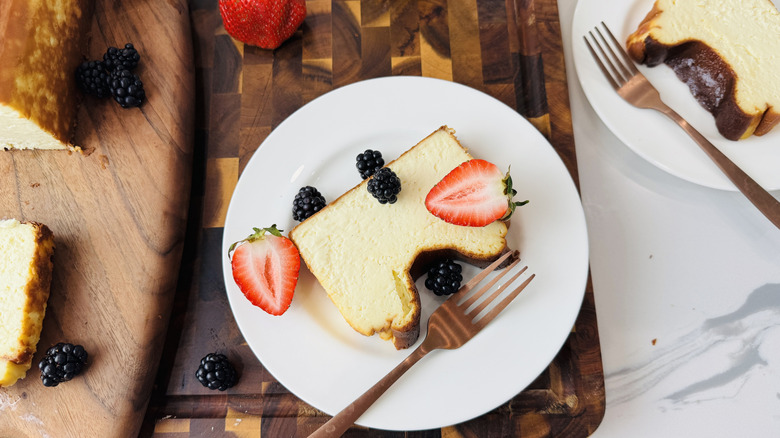
Basque cheesecake breaks a lot of the rules of traditional cheesecake. For starters, Basque cheesecake differs from other cheesecakes in that it doesn't have any sort of graham cracker or cookie crust, doesn't require any toppings or fruity glazes, and develops a deeply caramelized top as it bakes that adds great complexity and texture to each slice. Compared to a more time-consuming New York-style cheesecake, Basque cheesecake is less fussy and more rustic — no matter what type of pan you choose to bake it in. It's quick enough to whip up for any occasion, from brunch gatherings to holiday get-togethers. Its texture is creamy and indulgent, like American-style versions, but noticeably more airy in texture and not weighed down by a sweet crust or overly decadent toppings.
Another key difference is how the cake is baked. Instead of being baked low and slow in a water bath, Basque cheesecake is baked at 400 F (a pretty high temperature for cheesecake), without any water bath or other protection needed. The intentional dark, caramelized topping adds a deep complexity, and it's served simply sliced without any additional adornments needed.
How should I store Basque cheesecake, and how long will it last?
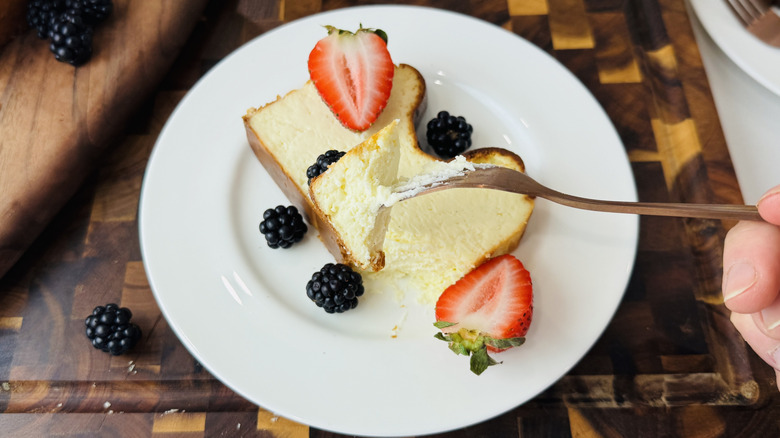
Cheesecake should always be refrigerated to keep it fresh. Make sure to allow the cheesecake to sit at room temperature for no longer than 2 hours after baking, then don't skip the chilling part (this helps the cheesecake set and establishes that luscious texture). From there, you'll want to return any uneaten cheesecake to the fridge to stay chilled in-between servings. Refrigerate leftover slices for up to five days. If you do want to make this cake ahead, you can bake and cool as directed, then wrap and store in the refrigerator for up to three days before serving for the freshest flavor and texture. Serve and slice straight from the fridge, or let stand at room temperature for 15-20 minutes for the creamiest mouthfeel.
For longer storage, you can freeze the whole cake or leftover slices, individually wrapped and placed into an airtight container or zip-top bag. Thaw in the refrigerator before serving. The whole cake will need to thaw overnight. While freezing works well for cheesecake, note that the texture may be slightly affected, becoming a little grainier (but still delicious).