

8 Of The Worst Boomer Food Storage Habits
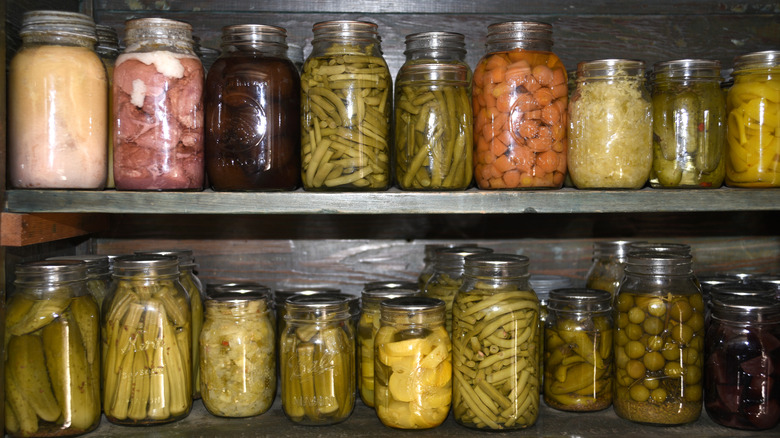
Sometimes, generational differences make themselves apparent in surprising ways. One intriguing source of this is in how habits have changed over the years for buying, consuming, and storing food. Growing up with parents who lived through world wars and the Great Depression, many boomers were exposed to a mindset of frugality and thriftiness that has stayed with them throughout their lives. The reflex to hold onto things and consider items reusable rather than disposable is a habit that many of us might do well to adopt in this contemporary world, where overconsumption and food waste are issues that are increasingly on our minds. It's simply the extent to which boomer relatives do this that has bewildered their children and grandchildren.
A "waste not, want not" attitude, combined with an ambivalence towards expiration dates, has led to many boomers never throwing anything away in the kitchen and stocking up for just-in-case scenarios. The result is some very crowded refrigerators, freezers, pantries, and cupboards. From overstocking to keeping goods for decades beyond their best-before dates, here are some boomer food storage habits that continue to confuse their family members.
1. Choosing canned food over fresh
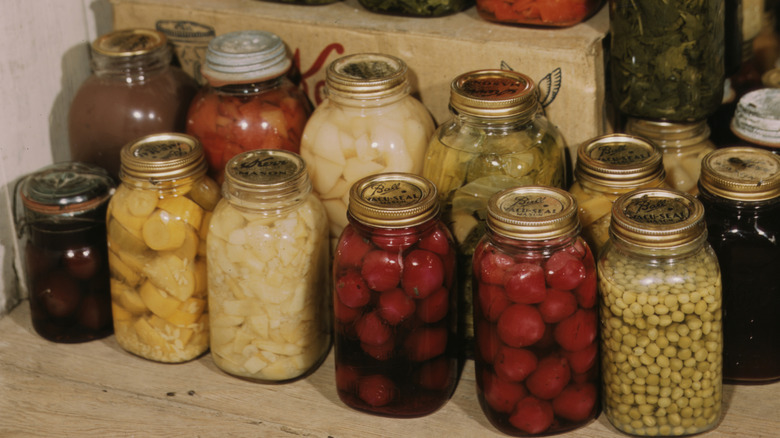
Canned goods are something often regarded as convenience foods these days — a means of cutting corners to avoid time-consuming food prep while still ensuring a well-balanced meal with protein and vegetables. Back when boomers were growing up, canned food was still something families might have produced themselves. Preserving produce from the garden would keep a stock of fruits and veggies on hand to last through the winter.
Although industrially canned food dates back to Napoleon's time, it was just after WWII when it became all the rage, representing a new era of convenience and modernity. Buying canned foods during this era became a sort of status symbol, as proof that a family could afford to purchase things pre-prepared rather than going through the laborious process of harvesting (and possibly canning) produce for themselves. Considering canned foods as a form of status has stuck with many boomers who might have grown up with this mindset.
Paired with the mentality of avoiding waste at all costs, as some of their family members have lamented, boomers often stock up on shelf-stable items and cook with more canned food than fresh. While it certainly is handy to have a pantry stockpile, in case of emergencies or for days when more elaborate cooking isn't possible, boomers' children and grandchildren sometimes find themselves scrounging to combine the abundance of canned foods with a balance of fresh fruits and veggies, too.
2. A decorative spice collection
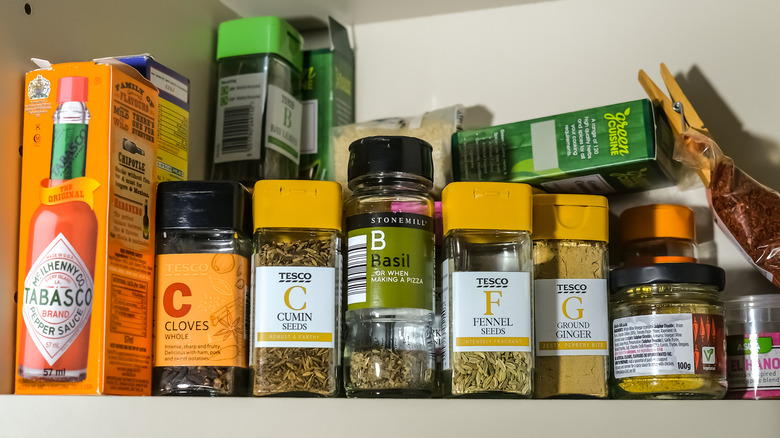
Another common trend in boomer kitchens seems to be a widely varied spice cupboard, and many adults have lamented their boomer parents and grandparents chaotic seasoning archive. While these might be filled with an impressive variety, the paradox is that these spices never seem to get used, while the jars stick around well after they've expired.
With plenty of myths about expiration dates, boomers are often of the mindset that these are somewhat arbitrary. It's true that many foods are still safe to use after their "best buy" date — something the USDA confirms, explaining that these stamps are more intended as timeframes for when a product is at its peak quality. But even the authority on U.S. food safety gives only vague advice as to when something is past being safe to consume.
In general, a change in color or odor can be a clear indication, but when it comes to dried items like spices and seasonings, it can be hard to tell and agree on when they're no longer good. Typically, most ground spices have a shelf life of 2-4 years, though there's a caveat that spices stored in plastic won't last as long. Not letting things go to waste is an important principle, but ignoring expiration dates for years, even decades, is something boomers are infamous for. With some of their spice collections dating back to the '90s, boomers are frequently encouraged to clear these out.
3. Freezer surplus and surplus freezers
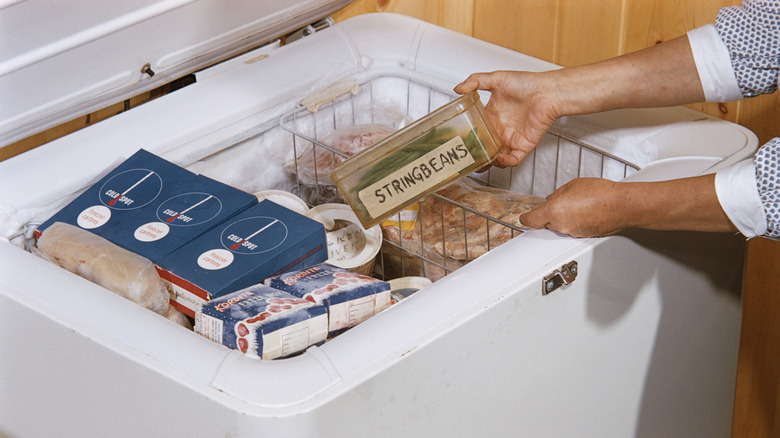
The freezer is one kitchen appliance that gets a lot of use in boomer households, as a convenient way to stockpile all kinds of non-shelf-stable foods. Freezing food is a generally good habit to ensure it doesn't spoil before it can be eaten. But there seems to be a trend of boomers relying on the freezer so much they might need more than one to suit their stockpiling habits. Those deep freezers, camped out in the garage or basement, are a fixture in many boomer households, but once foods go into these freezers, they don't always come out. As one Reddit commenter revealed, "My mom recently cleaned out my grandpa's freezer. He had salmon from his last Alaska fishing trip... from 20 years ago."
While a surplus of frozen foods might not be harming anyone, it does often mean there's more food in the house than can possibly be eaten. When some things stay buried for too long, they start to diminish in quality as well. Though it's not an end-all be-all for food safety, there are some things to be aware of about freezer burn — something which has exasperated many boomers' family members, who find their relatives' insistent freezing habits unusual. Voicing their own grievance, another Reddit commenter wrote, "My [mother-in-law] doesn't drink coffee but she has some 11 year old freezer burned coffee grounds in her freezer she will make for you... She firmly believes it cannot go bad in the freezer."
4. Keeping leftovers ... in jello
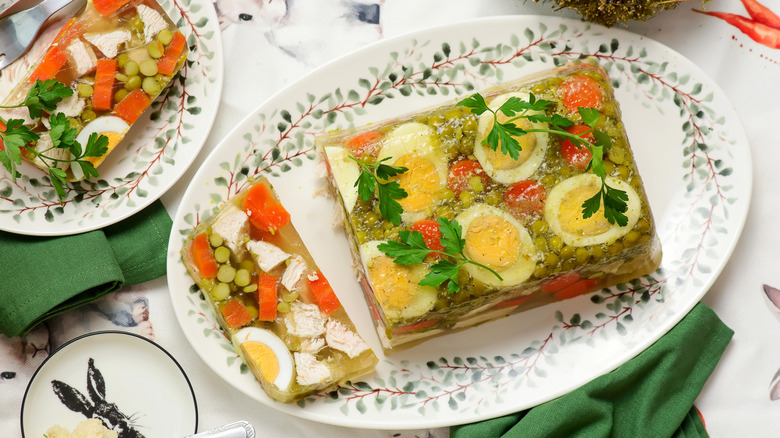
Though gelatin was a trending ingredient in the days when boomers were kids growing up, some carried on their parents' traditions of using it in recipes that are a tad unusual. Before the jello salad of the 1950s, serving meat and vegetables in gelatin was a convenient way to preserve leftovers and stretch them further. This thrifty and economical method might have been more out of necessity than anything else, but the midcentury jello trend was all about excess. Another product of the post-war obsession with processed foods and modern technology, jello creations were considered another symbol of affluence. Though some may make the argument that gelatinous foods, melding sweet and savory, were often concocted with presentation in mind, rather than flavor, it's still hard to believe some of those gelatin dishes existed.
Boomers' children have recalled less-than-fond memories of lime jello and cottage cheese salad, and many other childhood foods with jello as a base, combining fruits and veggies and sometimes finishing off the ensemble with unexpected toppings, like Miracle Whip. These elaborately unusual jello salads may be a thing of the past, but boomer resourcefulness has kept the occasional gelatin dish alive. As one Reddit commenter lamented, "my [mother-in-law] ... prefers to put shredded carrots in Jello 'to make it go further.'" Layering meat or vegetables in gelatin remains a creative way to stretch ingredients in the kitchen, but this is not something younger palates have taken a liking to.
5. A designated drawer for take-out sauces
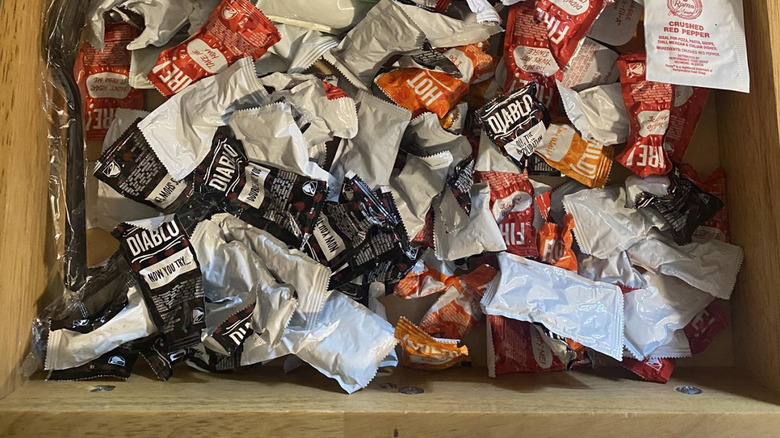
Takeout was a less common phenomenon when boomers were growing up, but in today's world, it's something everyone can enjoy much more regularly. Ordering in means bags full of takeout containers and likely some sauce packets and plastic utensils to go with them. In many a boomer kitchen, these disposable accoutrements never get tossed out. Instead, they find their way to a designated drawer in the kitchen. The takeout drawer can be useful — if ever there's a shortage of napkins or the ketchup bottle's run out, there may be a substitute among the growing pile of provisions. But if no one ever taps into the takeout sauce reserve, these packets just sit around and expire. "The thing you have [to] watch out for when hoarding condiments is forgetting about those packets buried on the bottom," one Reddit commenter quipped, "the ones now old enough to go to college."
Sometimes expiration dates aren't too much of a concern. Some sauce packet collectors keep these as a collection more than an edible reserve. But if the intention is to consume these condiments someday, it's important to consider that sauce packets are typically marked with a best-before date. While they might seem invincible, most take-out condiments aren't meant to be kept for more than a year, with many having best-before dates closer to six months from the time of distribution. It's worth going through the takeout drawer at least once a year and tossing out any that are past their prime.
6. Reusing containers
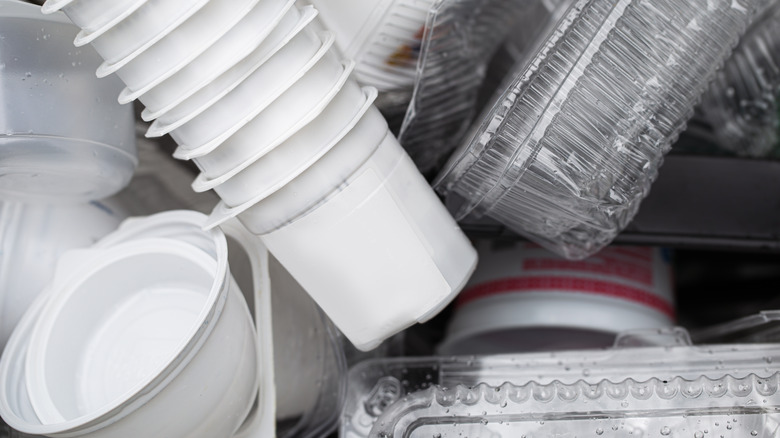
While it's a good principle to reuse things whenever possible, boomers' children and grandchildren have expressed some good-humored frustration towards the rate at which their boomer family members confuse them with containers. While it's true that repurposed plastic dairy tubs might be ideal for storing leftovers, if they're unlabeled, it can be exasperating to open the fridge and find an army of sour cream tubs lined up. "The fun part is that you go into the fridge and never know what you are gonna get," joked one Reddit commenter. "Sour cream, left over pork fried rice... who knows! It's like a game."
This thrifty approach to keeping containers that are perfectly reusable is certainly more economical than the trendy glass, bamboo, or metal food containers that have become more prevalent in recent years. While today, we remain more aware of the potential health risks from exposure to microplastics, the boomer tendency of holding on to plastic containers can be convenient. Another Reddit user made the case for picking up this habit, pointing out that these disposable containers are great for "sending folks home with leftovers." They highlighted the advantage, saying, "I never have to worry about getting my containers back from forgetful family or friends."
7. Very old ziplock bags
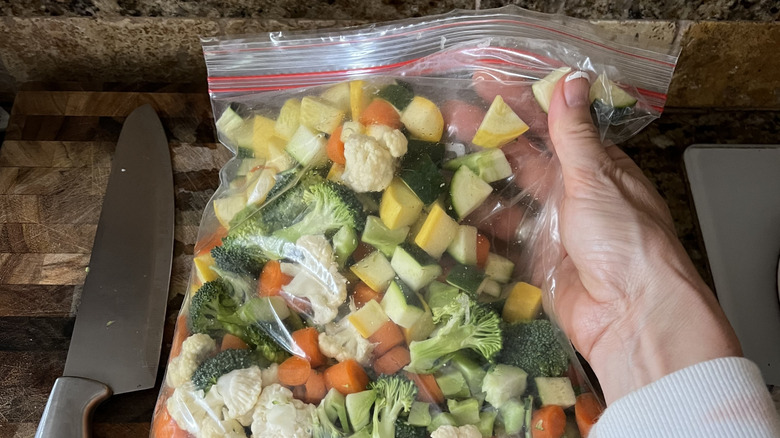
It's true that we tend to forget something the boomers are keeping alive — anything with the potential to be reused gets reused. Ziplock bags are another item not every generation has the reflex to use more than once, but they get an extended lifespan thanks to boomers' overall resourcefulness. Certainly, it may be less convenient to wash out a plastic bag and hang it up somewhere reachable to dry, but this is a hack boomers have been practicing for a long time, and something everyone could adopt.
Perhaps where the generations tend to disagree is when exactly a ziplock bag is past its prime. It's true that there are some safety limits to this frugality, and many individuals have voiced that they draw their limits when there's any possibility of bacteria being involved. While there isn't a set number of times a ziplock bag remains good to keep in circulation, it's best to take them out of rotation once they've been used to store meat or fish. Otherwise, these bags can theoretically be washed and reused many times, and some boomers have managed to get these to last indefinitely. One entire Reddit thread on the subject has the heading, "Just found out my grandma's been reusing the same Ziploc bag since 1997," elaborating that, "I asked her why she hasn't thrown it out. She said, 'Why would I? It still zips.'"
8. Overstocked pantries
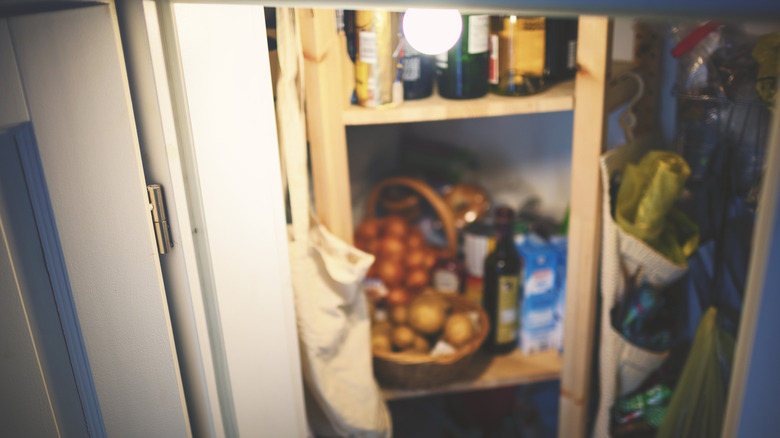
Perhaps one of the most iconic storage habits boomers are known for is the overstocked pantry. Instead of, or in addition to, an amply stocked freezer, a boomer pantry is often well-equipped for any apocalypse, with rations of canned goods and shelf stable items overflowing from pantry shelves, possibly into the nearest available closet. It's never a bad idea to have a reserve of shelf-stable foods for emergencies or busy days, but some boomers take this stockpiling to the extreme.
This makes it easy for older items to be forgotten, and if not paying attention to the expiration dates, there are sure to be some surprises. "Worst we ever did was find salad dressing that expired 12 years prior," said one Reddit commenter, discussing their boomer family members' food reserve. They relayed their relatives' explanation as being, "It was fine because they had only just opened it."
When asked why they hold onto these things that are years past their best-before date, boomers have been known to wave aside any concern and insist that the contents of old bottles and cans are certainly still good. In boomers' defense, there are some foods that don't require an expiration date, and some canned foods do remain perfectly edible for years, because the best-before date is often more of a suggestion. However, it's hard to defend boomers' canned foods sitting around for decades.