

Many Home Cooks Used To Own This Cast-Iron Kitchen Tool — Now It's Rare To Find It Anywhere

Contemporary kitchens are home to all sorts of modern tools like sleek silicone-coated spatulas, slinky meat thermometers, and slimline immersion blenders that make cooking faster, easier, and perhaps even a little more fun. However, back in the day, a cook's tools had a rough-and-ready quality that made them less attractive to the eye. While these unrefined gadgets had a no-nonsense aesthetic, they served their purpose well. One such tool was the cast-iron meat grinder, which gave home cooks heaps more flexibility when creating quick-cook dishes, such as burgers, casseroles, and Sloppy Joes. It's rare to find these gizmos in a present-day kitchen, but they did earn their keep during their tenure.
Cast-iron meat grinders were heavy-duty tools that were sturdy and tough. One of the retro appliances that time forgot, they were secured to kitchen countertops with a clamp and had a handle or crank at the back and a funnel at the top. Cooks would put chunks of meat inside the funnel, manually turn the crank, and watch as the ground meat would be forced through a grinding plate and reappear through a round aperture at the front. Made by businesses like the Enterprise Manufacturing Company and Spong back in the mid-19th century, they allowed people to grind meat to their liking and add in extras, like herbs and seasonings, at the same time. It also gave them control over the quality of the final product because they could introduce some flavorful fat into the blend. You can still find some of these antique models online.
Cast-iron meat grinders lost their popularity with the rise of industrialization
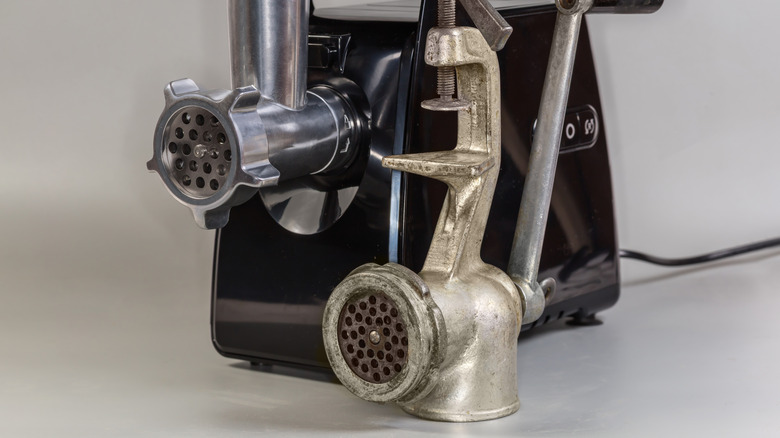
With the rise of industrialized food production, cast-iron meat grinders lost their appeal. It was simply far more convenient to purchase pre-minced packages of meat from the grocery store that could be prepared quickly (before electric meat grinding machines, butchers would use mincing knives or cleavers to chop beef and pork by hand, or use a hand-cranked grinder, which was time-consuming and tiring).
Nowadays, it's rare to find a manual cast-iron meat grinder in a modern kitchen. That said, you can find ones made of plastic or other varieties of metal that are easier to keep clean and run on electricity. For instance, Kitchen Aid carries a grinder attachment that can be fixed to a stand mixer, which chops raw meat, fruit, nuts, vegetables, and fish, providing cooks with plenty of bandwidth for experimentation when preparing anything from burgers to falafel. Grinding your own meat actually saves you money, too, as you can select cheaper cuts, like chuck roast, pork shoulder, or chicken leg quarters, and add a measure of fat to lend it more flavor. However, one of the mistakes you need to avoid when grinding your own meat is failing to check the cuts for gristle or silver skin first. You should always inspect the meat to achieve a consistent texture. Chilling your meat first will also prevent it from becoming sticky or gummy inside the grinder and getting stuck.