

Stop Storing Bread In This Common Kitchen Spot To Avoid A Moldy Mess
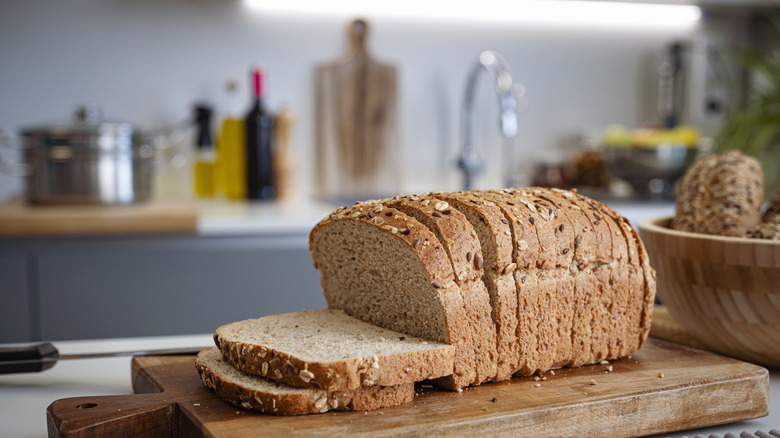
There are few things worse than going to make a classic grilled cheese sandwich or PB&J only to find the bread is moldy. It ruins the whole vibe. Where you store your loaf matters, and believe it or not, the countertop near the stove or the dishwasher is not a place where you should park your bag of Wonder Bread, sourdough, or whatever you like to eat. Bread doesn't like extremes, and when the appliances warm up, that heat affects the ecosystem of the bag that is housing your loaf.
If the countertop where you are storing your bread is too warm, two things can happen, and quickly. First, you may notice that your bread is prematurely dry and a little stale. But that's not the only concern. As your stove or dishwasher gets hot, it can also make your loaf sweat. This creates moisture that leads to condensation and ultimately mold. So what is a sandwich lover to do when the best sandwich requires bread with the perfect texture?
Keep it cool, dark, and dry
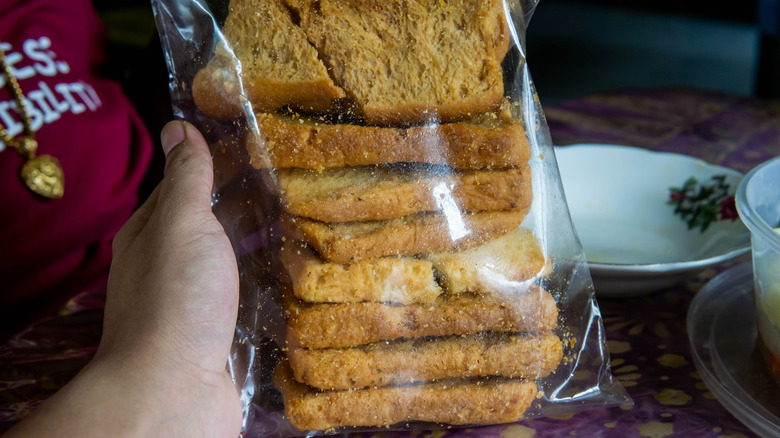
Bread likes a dark, cool, and dry space. This is why you also want to avoid the refrigerator, which can cause your bread to go stale even more quickly. This is because a fridge has a cool, slightly humid climate with little airflow, which draws out the moisture that keeps the bread nice and soft. But as high-maintenance as all this makes bread sound, it really isn't.
It wants to stay in its original packaging and be stored at room temperature. A cabinet or breadbox is a simple place that it can call home. What if you baked your bread? Use some food wrapping and then place it in a Ziplock bag.
If you're wondering how long bread lasts, it depends on the type. Homemade bread should stay fresh for between two and four days. You will be able to tell it is drying out when you cut into it. Fresh bread takes some effort to slice through because it has moisture. Bread that is drying out is much easier to cut through, unless it has turned rock hard, that is. And of course, store-bought bread can last anywhere from five to seven days when stored properly.