

These 14 Grocery Stores Actually Donate Unsold Food
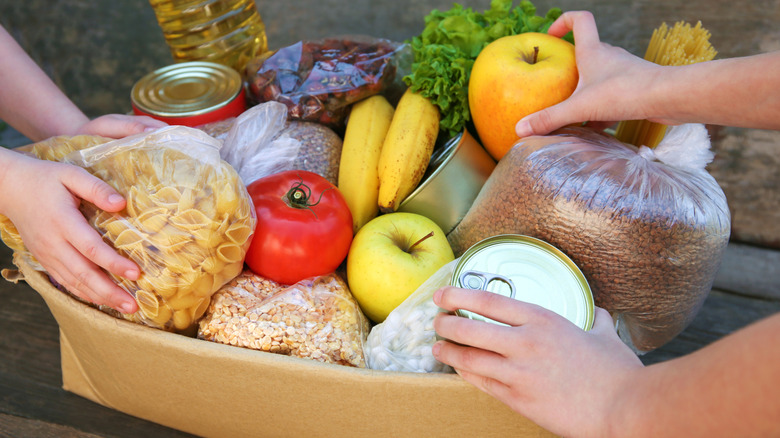
It should come as no surprise that supermarkets in the United States take a lot in total sales each year (about a trillion dollars, to be precise), and a large proportion of that is from food sales. But what happens to the food that doesn't sell? Unfortunately, a lot of it ends up in the trash. Almost a third of all food in supermarkets is thrown out, according to Recycle Track Systems, due to a combination of human error, product development, and simple surplus. The frustrating part is that so much of that waste could be avoided by repurposing the food the supermarkets don't sell, and diverting it to people who actually need it.
Thankfully, in recent years, a lot of supermarket chains have tightened up their processes around food waste — as a result, plenty of them do donate unsold food. Food waste is an increasing concern for many of us, and large companies are taking action too. Some of the biggest names out there, like Walmart, Target, and Kroger, have robust protocols and systems for donating usable food, while others, like Sprouts Farmers Market, work to be zero-waste businesses that repurpose everything they can. Ready to see what the supermarket you shop at does with its unsold food? We've got them all right here.
1. Walmart
As the biggest supermarket chain in the U.S., it would cause a lot of uproar if Walmart didn't donate its mammoth amount of branded and private-label food items. Thankfully, it does. Walmart has been working towards being a zero-waste retailer since 2005, and it started donating unsold food the year after that. Along with its sister store Sam's Club, it has donated more than 7 billion pounds of food in two decades, all coming from its stores and distribution centers.
Walmart partners with Feeding America to fulfil its donations, and unsold food from its stores and centers is distributed to food banks and agencies, who then ensure it reaches the right people. More broadly, it also works to prevent food loss across its supply chains by constantly refining its processes and examining where waste is taking place. Additionally, Walmart addresses waste elsewhere: It doesn't just donate unsold food, but non-food products too, and it attempts to reduce landfill impact as much as possible. In 2022, it managed to divert four-fifths of its total waste from said landfills and from incineration, and as time goes on, it looks as though it will push for an even higher ratio.
2. Trader Joe's
With hundreds upon hundreds of stores nationwide, you should definitely visit multiple locations to make the most of Trader Joe's — but it still frames itself as a neighborhood, community-focused outfit. Luckily, this image isn't backed up by mere lip service, but by genuine action, especially when it comes to its unsold food. Trader Joe's runs its Neighborhood Shares program, which sees it donate all (yes, all) of its unsold but still usable products. Almost 80% of these products are food, which comes from its deli, produce, dairy, meat, and bakery sections. These donations then go to both local and national organizations, like Feed the Children.
Trader Joe's' Neighborhood Shares program is managed store-by-store, and within each supermarket is a Donation Coordinator who manages its food distribution. The Donation Coordinator also manages donations that come from Trader Joe's customers and requests from organizations. The guidelines for groups looking for donations are fairly stringent, to ensure the food it's donating reaches the people who need it most and is distributed prudently and in line with regulations.
3. Kroger
Kroger, which was originally called the Great Western Tea Company, has a pretty good handle on what it does with its unsold food. All of its stores donate their unsold items, rescuing them from the landfill and instead ensuring they make it to local food banks and agencies through its Zero Hunger | Zero Waste Foundation. It's especially invested in reducing childhood hunger and disparities across the United States through the platform, and the amount of food it's donated over the years has been noteworthy: Almost four billion meals have been given away by the supermarket, in the form of unsold food and through monetary donations.
A lot of Kroger's donations go through Feeding America, an organization with which it has a longstanding relationship. In 2023, the supermarket donated well over a hundred million pounds of surplus food to Feeding America's agency partners and food banks, while Zero Hunger | Zero Waste actively bolstered the efforts of individual entities and organizations alike, who are working to reduce nationwide hunger with funding. Kroger also actively encourages its customers to donate to the Zero Hunger | Zero Waste Foundation, which further increases the amount of food that can reach those who need it.
4. Aldi
Aldi's not shy about telling its customers what it does with unsold food, and nor is it shy about admitting where it's fallen short. The Aldi website says clearly, "We strive to never let good food go to waste," before explaining that its "stores and warehouses are partnered with a local food bank to redistribute unsaleable products still safe for consumption, to limit food waste and address food insecurity in our communities." In 2024, it managed to donate more than 44 million pounds of unsold food to individuals and communities who need it from its stores — and when the unsold food isn't edible, it strives, where possible, to recycle it.
Aldi also endeavors to reduce food waste across its operations, and it originally aimed to achieve zero-waste status by the end of 2025. It subsequently admitted it was unlikely to do so, but is still pushing in all areas to try to improve its sustainability. Aldi is also a signatory of the U.S. Food Waste Pact, which increases its accountability. It also gives it more participation with other groups and in projects to continue minimizing how many items end up in landfills.
5. Whole Foods
Whole Foods has a lot of avenues through which it donates and repurposes unsold food. On the donation front, it works with organizations like Food Donation Collection to ensure its nonperishable unsold food gets redistributed to food banks and agencies nationwide. This partnership has seen a lot of its unsold food reach new homes: In 2024, nearly 35 million pounds of food were donated. Whole Foods also partners with third-party apps like Too Good To Go and Enjoy Today, which allow it to redistribute unsold food to individuals.
Alongside these two strands, Whole Foods also donates vans — yes, vans — through its Nourishing Our Neighborhoods program. These refrigerated vans are given to food rescue programs, which can then use them to transport food to those in need. So far, Whole Foods has given away 54 of these vans, which can carry hundreds of thousands of pounds of food total per week. All of this is after Whole Foods addresses food waste in-house, too: It's honed its reuse protocols carefully, repurposing its own produce and seafood for use in prepared dishes, which it then sells in its stores.
6. Albertsons

Albertsons donates a lot of its unsold food: Millions of pounds worth of it each year, in fact. In 2022, the retailer donated 80 million pounds of its unsold food items to those who need it most (although this seems to be across all of its stores, not just those operating with the Albertsons name), and ensured way more of it didn't end up in landfills across the country. Albertsons also runs in-store programs that encourage food donations, which have resulted in a huge amount of food being given away.
To fully understand how best to repurpose and donate unsold food, as well as how to reduce leftover food in the first place, Albertsons, which has quite a story concerning its first store, leans on several information avenues, including some supplied by artificial intelligence. However, it also seeks out knowledge from the people who actually deal with this food on a day-to-day basis — the folks who work in its stores. Albertsons' Food Donation and Food Waste Diversion manager, John Bernardo, in a discussion with Food Systems Collaborative, said, "Frontline supermarket employees are the true experts: they have a depth of experience and expertise related to unsold food and determine what food is donated or discarded daily." This was in reference to a study the retailer did with Johns Hopkins University on food waste. By listening to its store associates, Albertsons can better understand where waste occurs and what to do with it.
7. Safeway
Like many other supermarkets out there, Safeway works continuously to reduce its food waste and ensure unsold food items don't end up in landfills. Safeway operates under the Albertsons banner, and as a result, much of its repurposing efforts are lumped in with its parent company. The supermarket states it donated 80 million pounds of unsold food in 2022, but that seems to be the case across all Albertsons stores.
That said, it has made its own advancements in food donation through partnerships with companies like Divert, through which it has increased its food donations significantly. By working with Divert, Safeway has refined its unsold food processes and created systems through which employees can sort food more effectively, which helps with both redistribution and overall waste reduction.
Safeway's partnership with Divert has also allowed it to convert more unsellable food to renewable energy. Divert does all of these things, it says, through constant analysis of customer behavior. "Our feedback loop with customers is critical," says Divert's vice president and general manager, Ben Kuethe Oaks, to Pack World. "By analyzing what's going into the Divert bins at each store, we help retailers like Safeway identify inefficiencies, improve inventory management, and boost donation efforts."
8. Publix
Publix has been in the unsold food donation game for a while. Its Good Together food donation program has been in operation since 2009, and it followed a pilot scheme that ran in 2007, which sought to recover perishable food where possible and redistribute it. "At Publix, we believe our greatest opportunity to give back is by helping to address food insecurity," says Publix's director of community relations, Dwaine Stevens. "That's why we continue our efforts to ensure millions of pounds of food reach people in need in the communities we serve."
This isn't just lip service — Publix really does do this. Since its Good Together scheme first started, it's donated over a billion pounds of food. It sources this food from the fresh areas in its stores, like its bakery, meat, and produce sections, pulling out items that may no longer be sellable to customers but which are still perfectly edible, before sending them to local organizations and food banks. Publix's ultimate goal through all of this is not just to reduce its own food waste, but to ultimately help to tackle hunger imbalances in the U.S.
9. Wegmans
Wegmans is both open and loud about its food donation efforts. Like others, the retailer donates excess and unsold food from its stores, giving it to food banks and farms that can repurpose it in various ways. The store has partnered with certain food distribution services for decades, like Foodlink, a Rochester-based organization it's worked with since 1979. Wegmans' partnerships are primarily local, but that doesn't mean its impact is small: In 2024, the supermarket donated just shy of 37 million pounds of food, equivalent to more than 30 million individual meals.
It's also recently run the Check Out Hunger campaign, which allows its customers to donate small (or larger) amounts of cash when paying for their food, which will then go to their store's local food bank. Pleasingly, all of Wegmans' donation efforts don't just seem to be lip service. People online speaking as employees have confirmed their stores do indeed redistribute unsold food to local services and banks. It's nice to see this isn't just mere talk from the company.
10. Target
Target's been donating unsold food on a national, partnership-led level for a long time — since 2001, in fact. It's worked with Feeding America for 25 years now, which has given it plenty of time to refine its processes for repurposing its leftover stock and sending it on to food banks and agencies.
Target also works with other, more local organizations like Community Food Share, and its in-store teams work constantly to examine whether their products are eligible for donation, which the retailer, in turn, makes easier for them. Target has recently revised its policies to allow eligible and safe food to be redistributed up to a week after it's past its expiry date, which means now, it can donate 97% of items that are worthy of being passed on.
The cumulative impact of all of this has been rather impressive. In 2024, Target donated almost 162 million pounds' worth of food, beating its previous records. It's also donated almost $400 million to community-led organizations, and on a wider level, as so many other stores do, it strives to reduce waste across its supply chain. As a major retailer, you likely wouldn't expect any less — but it's still good to see.
11. Meijer
On the Meijer website, it says that it "partners with numerous food banks in the communities we serve that work tirelessly each day to get perfectly good food that goes unsold in our stores into the hands of people who need it through our food rescue program." In our opinion, "numerous" is a bit of an understatement. In truth, Meijer, with its fascinating role in retail history, works with and supports over 500 food banks and pantries throughout the Midwest as part of its hunger relief efforts. Furthermore, when it can't repurpose or redistribute unsold food, or when it has leftovers or food scraps it can't donate, it recycles them into animal food or turns them into compost — which can then, of course, be used to grow more produce.
The cornerstone of Meijer's food donation aims is its Simply Give program, which it has operated since late 2008. Simply Give works with food banks to donate unsold food, as well as with customers, to encourage donations. Meijer shoppers can donate cash at the checkout by purchasing a Simply Give voucher, which is then converted into a food-only gift card of the same value, which food pantries can then use to purchase food for their services. Overall, the Simply Give program has generated more than $100 million.
12. Costco
As a bulk retailer, Costco's potential to produce unnecessary amounts of food waste is very high, and the prospect of its stores throwing out huge bags of unsold raw chicken or produce is far from attractive. The good news is, it works hard to avoid this. Costco partners with Feeding America to ensure its unsold food makes it to local food banks wherever possible, donating produce, bread, meat, and dairy, as well as making financial contributions.
Costco employees (or at least, people claiming to be employees) have confirmed this anecdotally, saying that the leftover food in their stores and food courts is donated to food banks and shelters. Costco also operates similar donation food programs in its international stores. Across the globe, it works with World Vision, a humanitarian aid organization that operates in multiple countries (and through which it also donates non-food items). It also partners with smaller, more local food donation programs.
13. Food Lion
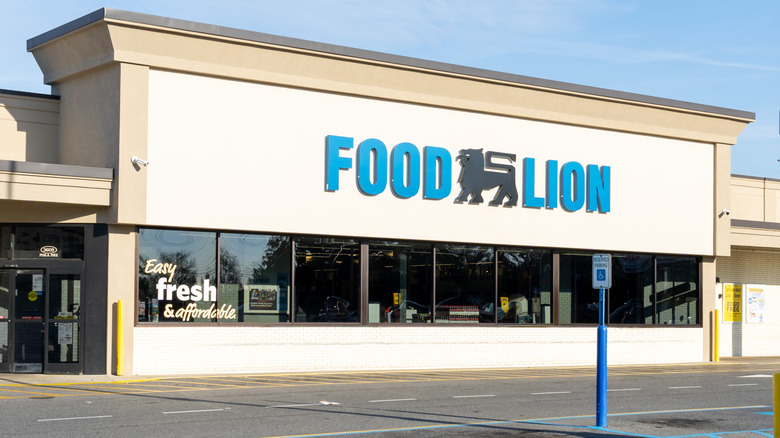
Food Lion's got a good legacy when it comes to donating unsold food (and a slightly worse one when it comes to Food Lion's troubling food recalls). In 2000, it partnered with Feeding America, becoming the first grocery store to do so, and kicking off a domino effect that would see countless other retailers work with the organization. This began what would be a multi-decade effort for Food Lion, which subsequently established Food Lion Feeds in 2014, its donation program. Upon its creation, Food Lion Feeds set a goal of donating 500 million meals. It promptly met this target, and subsequently increased it to 1.5 billion meals, before increasing it yet again, aiming to hit 3 billion meals by 2032. In 2025, it donated nearly 240 million of these.
Food Lion Feeds doesn't just work to donate food, but it also creates opportunities for education and training, which can, in turn, reduce food waste. For the grocery store, it all comes back to its role in the communities it operates in. "Being a good neighbor means more than providing groceries, it means ensuring everyone has access to fresh, affordable food and the support they need to thrive," said Food Lion's president, Greg Finchum, in a statement from the Food Lion Newsroom. "We're proud to be a neighbor our communities can count on, whether that means keeping prices affordable, partnering with local food banks or lending a helping hand in times of need."
14. Sprouts Farmers Market
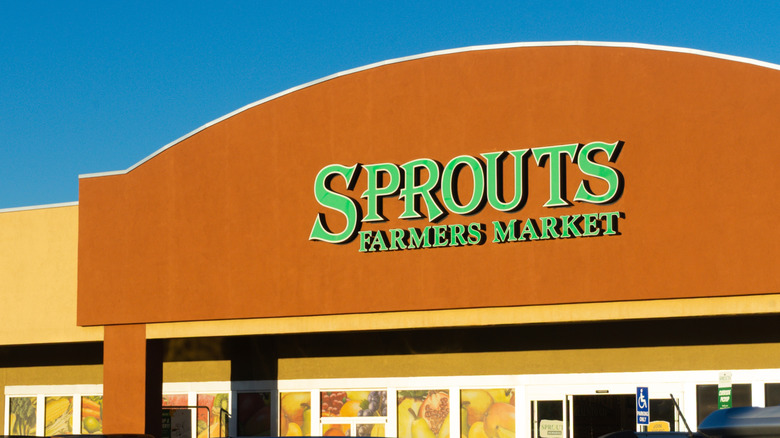
Of all of the grocery stores out there, you could reasonably expect Sprouts Farmers Market to be pretty hot on food waste and repurposing its unsold items. This wholesome supermarket has built its reputation on taking a zero-waste approach, after all. The good news is, it comes through on that front, constantly donating unsold food through various partnerships, most notably with food donation app Careit, which it's worked with since 2022. In that time, Sprouts has been able to redistribute more than 30 million pounds of its unsold food to various grassroots organizations.
Sprouts Farmers Market also joined the U.S. Food Waste Pact in mid-2025, which will see it redouble its efforts to reduce food waste and unsold food ending up in landfills. Its combination of addressing waste on both a local store level and a business level has been effective for the grocery store: Since 2013, it's donated almost 250 million pounds of food, and it will doubtless continue to build on this in the years to come.