

Turn Old Teacups Into Whimsical Kitchen Herb Planters
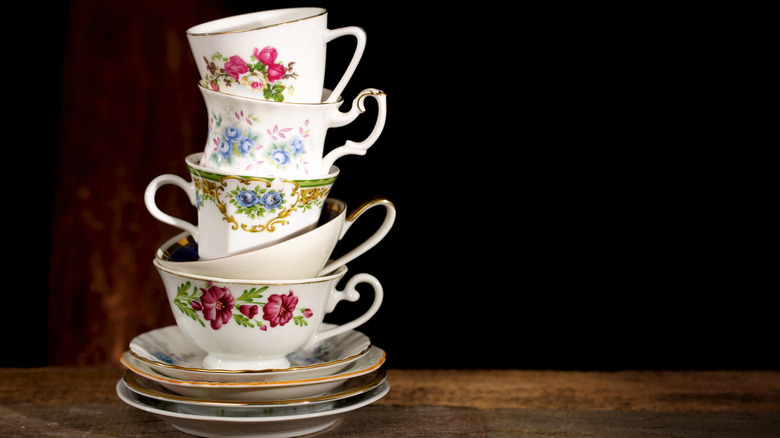
Repurposing leftovers, using the freezer, and meal planning are all useful ways to reduce food waste. However, there's also plenty of bandwidth to be consumer conscious with much more than the food in your kitchen. For instance, you can turn old teacups into whimsical kitchen herb planters with a dash of know-how, making use of those odd pieces of tableware that have lost their luster and would otherwise end up in the trash.
Now, this trick isn't as simple as sowing seeds or plantlets straight into a teacup packed with soil because herbs need drainage. If you can find small plastic plant pots that fit inside your teacups that already have drainage holes at the bottom, go ahead and use those. Then you can simply take the pots out when it's time to water them and allow them to drain in your sink before putting them back in. However, if your teacups have an unusual shape or are wide-brimmed, you can solve the drainage problem by placing small rocks, gravel, or stones at the very bottom before potting your herbs on top. This technique will allow any extra water to drain down, preventing the herbs from becoming swampy and waterlogged (to grow the best rosemary plants, you must avoid overwatering them). Any leftover gravel can be placed over the potted herbs to give them a fancier aesthetic and considered look, but this isn't a necessary move. The result? Charming little herb planters that have a winsome mix-and-match character to grace your windowsill.
Growing herbs in the kitchen will instantly benefit your cooking
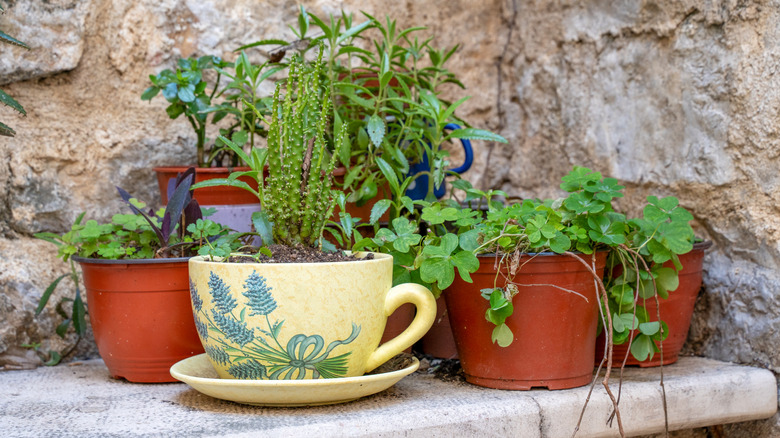
Some herbs, like rosemary, sage, and thyme, can be planted together (if you have particularly wide-mouthed latte-style cups) because they are companion plants; they support each other's growth and grow well in the same conditions. Meanwhile, herbs that grow vigorously and quickly, such as mint, are better off on their own. If your windowsill doesn't receive much light, consider growing herbs like basil, mint, and chives that grow well in low-light spaces. These herbs also have shallow roots, so they can grow well in squat teacups.
Cultivating fresh herbs in the kitchen is such a convenient move because it puts them in your eye line, guaranteeing that you'll remember to use them in your cooking. For instance, a little fresh basil will instantly elevate a homemade pasta sauce, while woodier herbs like rosemary are ideal for giving marinated lamb chops a scrumptious aroma. You can even add a sprig of fresh herbs to beverages, like this hazel and basil cocktail. While growing herbs in the garden offers more space for fast-spreading perennials like mint, keeping them on your windowsill will lend your kitchen some attractive greenery that brings the outside in. Better yet, using pretty teacups will give your space a playful vibe and create an eye-catching focal point in an otherwise underutilized area.