

6 Common Habits Of Boomers In Coffee Shops
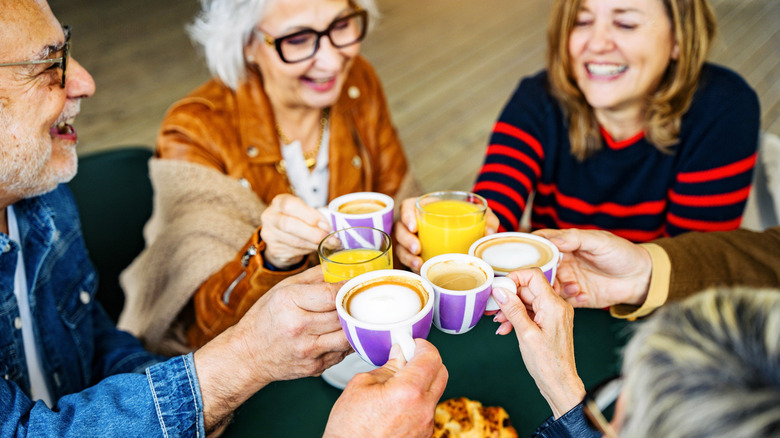
The tired punchline "okay, boomer" comes with the implication that boomers are yesterday's news — set in their ways, uninterested in chasing trends, and thus no longer relevant in the worlds of business or marketing. This, however, is a costly misconception: Smart coffee shop owners know they ignore boomers at their own risk. They're not only still the most affluent generation, but the most likely to stay loyal to businesses they like and trust.
And while some of their habits when frequenting coffee shops may seem quaint or downright baffling to some of their younger cohorts, there's usually a good reason for them. So if you want to ensure your older friends or relatives have a good experience the next time you visit a coffee shop together –- or if you're a coffee shop owner who'd appreciate more customers with the disposable income and time for frequent visits — here are some common habits to expect and accommodate.
Paying with debit cards
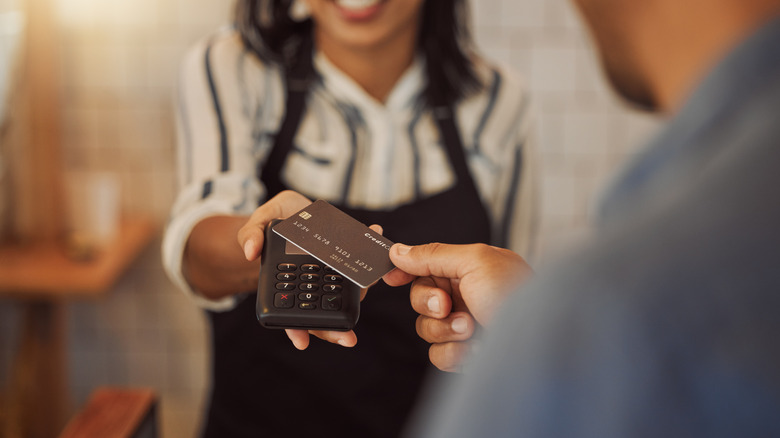
Contrary to popular belief, boomers aren't total Luddites. In fact, many use online services such as Amazon regularly. And while the old cliché of seniors paying for everything with cash may have been accurate for their Greatest Generation parents, it doesn't hold for Boomers themselves –- only 11% still use cash on a daily basis, and most choose to pay for meals with debit cards and prefer to use credit cards for larger purchases.
Their embrace of fintech, however, only goes so far. Boomers prioritize the security of payment methods more than any other generation and tend to distrust newer online payment options such as mobile wallets or apps such as Venmo or Cashapp. While younger diners embrace the convenience of these options for potentially complicated transactions such as paying for their portion of a group meal, boomers prefer to revert to the tried and true in such cases; they'll pull out their wallet and pay their share in cash.
Tipping modestly
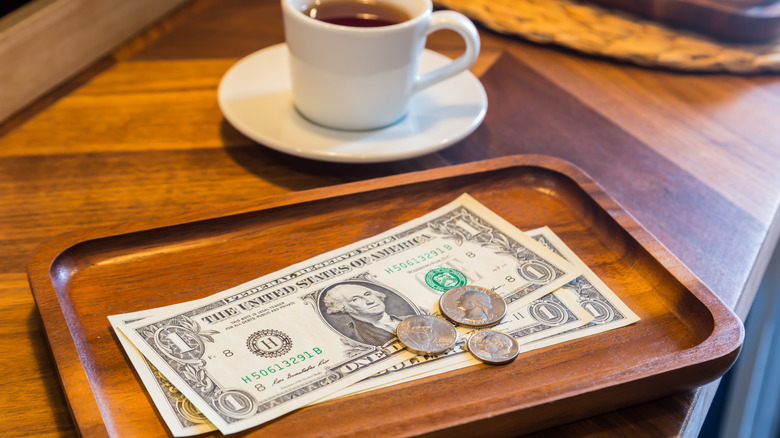
OId habits die hard. Boomers grew up learning that 10% to 15% was the standard tip range for food and beverage service, and most older adults have developed their own strategies for calculating tip amounts on the fly. After decades of including that extra 15% into their restaurant and coffee shop budgets, they're not falling for the social pressure to pay more than that –- especially since many of them are focused only on paying for necessities and saving anything extra.
Restaurant servers definitely notice this. A survey conducted by Spot On, a point-of-sale company, found that servers considered Boomers among the stingiest generations when it comes to tipping. The generations they perceived to be slightly cheaper were the even more senior Silent Generation and the youngest among us, Gen Z, with Millennials and Gen X seen as the most generous. Boomers in general are less likely to tip for newer services like grocery store delivery or when they're ordering restaurant take-out. As a consolation to servers, however, when boomers do tip, they often do so in cash, even if they used a debit or credit card for the rest of the bill. Some of them do this to ensure their server gets to pocket the whole amount without their colleagues or Uncle Sam getting a cut.
Making small talk with servers and baristas

For boomers, a coffee shop experience isn't just about coffee, food, or the clout of being seen in a trendy new place –- it's about social connection. Older diners enjoy visiting businesses where they know the staff, and the staff knows them and their preferences. For them, a restaurant's atmosphere is a big part of its appeal, and an important part of a restaurant's atmosphere is the vibe of the people who frequent it.
Older diners willing to do their part to cultivate a welcoming vibe do so by making friendly small talk with their servers. For them, servers and baristas aren't there just to deliver food and drinks –- they're part of the social experience of eating out. So if you're a server waiting on older customers, don't be surprised or put off if they ask you what your major is if you prefer a latte, cappuccino, or macchiato. They're not trying to be invasive or creepy –- just neighborly.
Avoiding QR codes like the plague
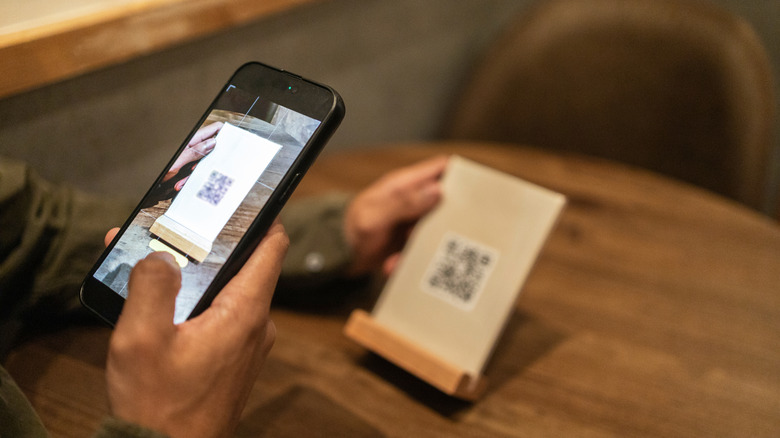
Boomers aren't as tech-averse as some may think. A majority of them own smartphones and use them regularly, but just because they can use smartphones doesn't mean they always want to. A major pet peeve for boomers are menus accessible only by QR codes. In fact, according to Toast, 90% of people over 55 prefer printed menus. And QR menus are not much more popular with younger diners, either; according to that same survey, 81% of all diners prefer ordering from something they can hold.
Different generations have different reasons for hating QR code menus. Younger diners may miss the sensation of holding and studying a tangible menu. But for older diners, QR code menus present additional logistical obstacles. Reading tiny type on a phone is a pain if you're farsighted (which most older adults are), and nobody wants to hunt for their reading glasses with one hand while trying to scroll through the menu on their phone with the other. And for the less tech savvy, just getting the menu to open on their phones is a needless battle. For many boomers, nothing on that menu will be worth this level of annoyance.
Sticking to basic coffee preparations
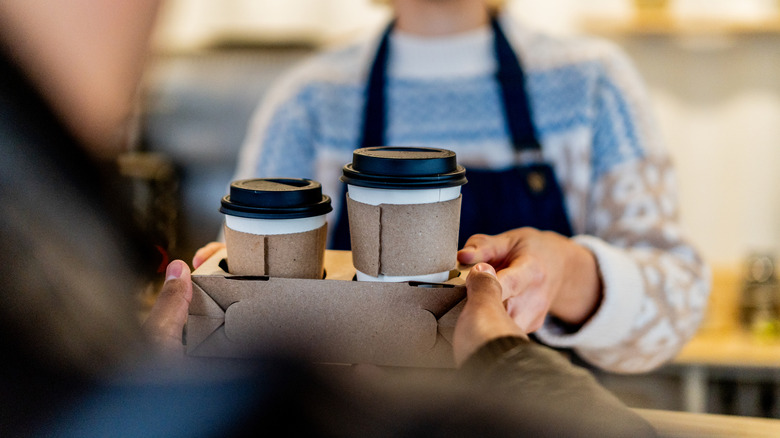
If you're in a long line at a coffee shop and find yourself running late, consider yourself lucky if the person in front of you is a baby boomer –- chances are, they will order a basic cup of the house blend and be on their way. For their generation, coffee is primarily a functional beverage to jump-start the day or something to sip on while chatting with friends or coworkers, not a vehicle for personal expression.
Boomers' preference for basic coffee has a simple explanation: It's all that was available when they reached coffee-drinking age. In fact, espresso didn't become popular in the U.S. until the late 80s, when most boomers were already well into adulthood. They grew up thinking of coffee as something to make and drink at home, not a treat worthy of a special outing. They also value affordability, which makes them less likely to splurge on more elaborate coffee drinks –- so a good, simple pour-over feels like a more comfortable choice for many boomers than a nitro cold brew. And if your basic coffee order has worked for you for several decades, why mess with it?
Voicing complaints in person rather than online

Not all coffee shop experiences go well. Your barista may lose your order, make your latte with regular milk instead of your favorite oat or almond milk, or even worse, be rude to you for no good reason. Many of us would fume silently, then slink home and leave a nasty review on Yelp. Many boomers, however, would choose more direct action: They'd tell the barista to their face what went wrong and ask for a redo.
While this may seem counterintuitive or uncomfortably confrontational for many of us, to older generations, it's just common sense. In the days before Yelp (that is, for most of human history), direct complaints were the most practical way to let servers, baristas, or cooks know about problems. Thus, some seniors never adopted the habit of making online reviews, though they know they're an option. More importantly, however, this habit reflects their old-school belief in relationships and personal accountability –- give someone who screwed up the opportunity to make things right, and chances are, they will. And repairing a broken relationship feels more satisfying to them than trashing a business with an anonymous review.