

8 Types Of Tortillas And The Best Ways To Use Them
We may receive a commission on purchases made from links.
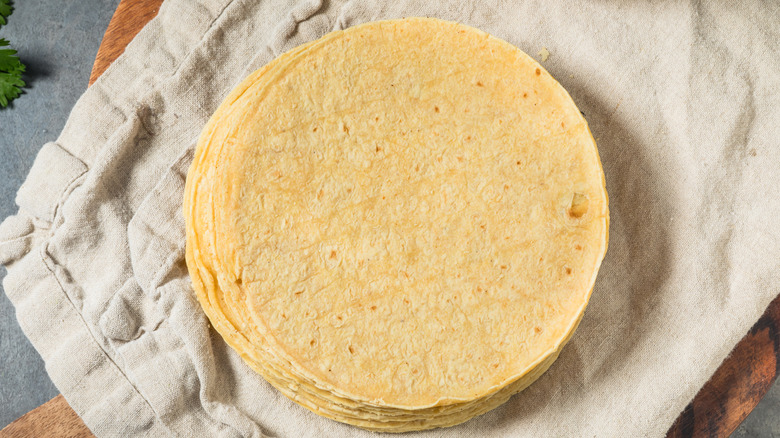
Few foods are as emblematic of Mexican culture as the tortilla. Forms of these thin, round flatbreads have existed in indigenous Mexican cultures for at least 10,000 years, and today, tortillas continue to be an essential staple of the Mexican table, where they still appear at every meal in many households. Tortillas not only shaped menus, but the contours of daily life. For centuries, the labor-intensive tasks of preparing and grinding grain and shaping and cooking tortillas fell mostly to women, who dedicated much of their workday to tortilla production.
This started to change in the 19th century, when new technology made mass commercial production of tortillas possible. This also made them more readily available outside Mexican households, paving the way for the mainstream popularization of tacos and burritos. But hints of the old ways remain even in mass-produced, store-bought tortillas. Different regions of Mexico developed their own styles of tortillas, which vary according to local ingredients and tastes. Today, the wide variety of tortillas available in Mexican markets reflects these traditions. To explain some of these different styles and the best ways to enjoy them, we've enlisted the help of Yvette Marquez-Sharpnack, author of the cookbook Muy Bueno: Three Generations of Authentic Mexican Flavor and creator of an award-winning blog focused on family stories and traditional Mexican recipes.
Corn tortillas
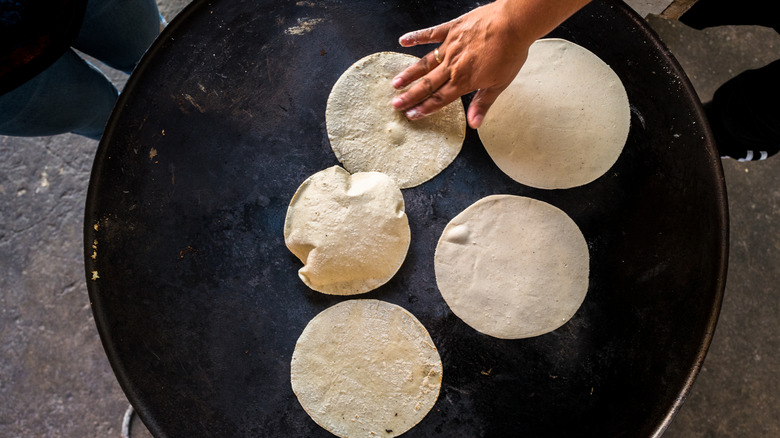
Corn tortillas are the oldest variety of Mexican tortilla. Typically smaller, thicker, and heartier in flavor than flour tortillas, they get their distinctive flavor from corn that has undergone nixtamalization –- a process in which dried kernels are soaked in water and lime. This alkaline solution softens the kernels for easier grinding and boosts their nutritional value by making nutrients such as iron and calcium easier for the body to absorb.
Yvette Marquez-Sharpnack notes that you're more likely to find corn tortillas with your meal in southern and central Mexico, where diners there use them to sop up sauces as well as in traditional dishes such as enchiladas. They're so essential and valued by cooks and eaters in Mexico that even broken leftover tortillas are saved and put to tasty use. Should you find yourself with broken corn tortillas, try cooking them up into a quick plate of chilaquiles -– fried corn tortilla strips tossed in sauce. It makes a hearty and flavorful breakfast or late-night dinner.
Tlayudas
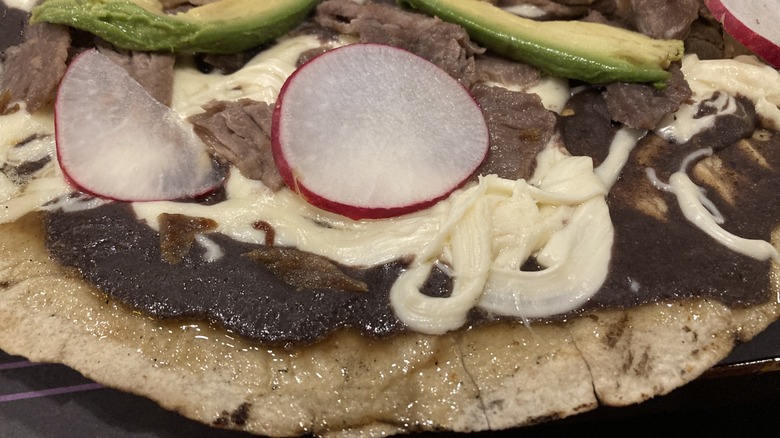
Visitors flock to the Mexican state of Oaxaca to enjoy its stunning archaeological sites and memorable cuisine, some of it quite distinct from that of other regions of Mexico. Oaxaca's demographics may have something to do with this; the state has the largest percentage of indigenous people of any Mexican state, and many continue to live in rural communities in which indigenous languages, culture, and foodways are still part of everyday life. This means traditional regional foods still show up in their original forms on modern tables. One worth seeking out is the tlayuda, a corn tortilla unique to Oaxaca, which Marquez-Sharpnack describes as "large, thin, slightly crisp tortillas that serve as the base for open-faced dishes layered with beans, cheese, meat, and vegetables."
Indeed, their size may surprise you the first time you encounter a tlayuda. Tlayudas are typically about a foot across –- closer in size to a burrito wrapper than a typical corn tortilla. They're also thinner than most corn tortillas, and have a distinct brittle crunch from being toasted rather than fried. In Oaxaca, the term tlayuda refers not only to the tortilla itself, but the popular preparation in which it most often appears; a loaded cross between a Mexican pizza and a tostada. It's typically topped with mashed black beans, cheese, traditional Oaxacan meats such as tasajo (semi-dried beef) or chorizo (which, in Oaxaca, comes in ping-pong-ball-sized rounds), along with shredded cheese, lettuce, and tomatoes.
Blue corn tortillas
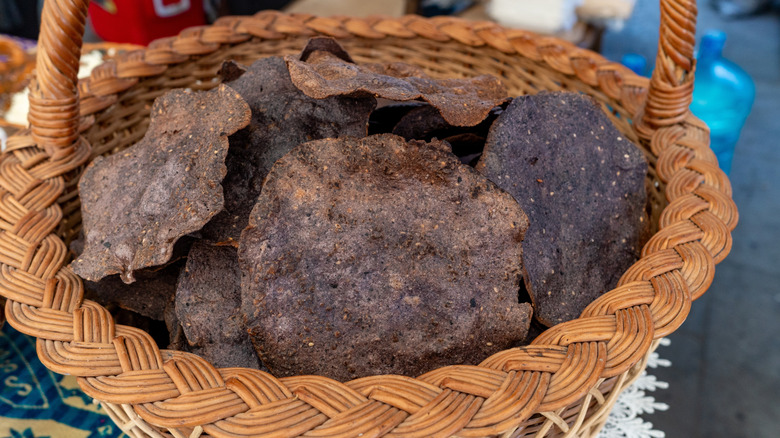
One reason tortillas vary across Mexico is because corn types vary by region, and each contributes a distinctive taste and appearance that reminds locals of home. One variety that has gained mainstream popularity in the U.S., largely because of its striking appearance, is blue corn. Closer to a slatey gray than actual blue when cooked into tortillas and chips, blue corn gets its distinctive color from anthocyanins, the same natural pigment found in blueberries. And like blueberries, blue corn is a good source of antioxidants thanks to this pigment.
Blue corn and blue corn tortillas aren't just part of Mexican culture –- they also have deep cultural resonance for native tribes north of the border. The Hopi of Arizona and New Mexico have grown blue corn for over 4000 years and have found that its resistance to drought makes it an ideal crop for their desert environment. Most importantly, however, it tastes amazing. "Blue corn tortillas made from heirloom maize varieties...have a deeper, more earthy flavor," Marquez-Sharpnack said. Blue corn is also sweeter than regular yellow corn, which makes tortillas made from this vibrant grain a great partner for both sweet and savory dishes.
Flour tortillas
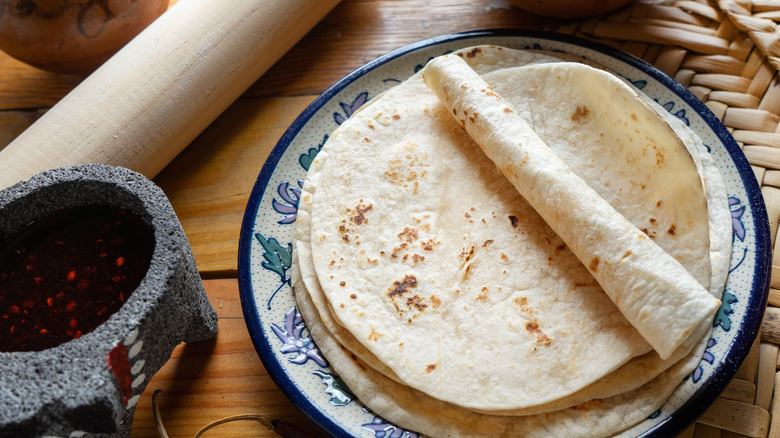
In Mexico, tortillas are more than just food –- they tell part of the story of the region in which they are eaten. Flour tortillas, for instance, have strong ties to the regional cuisines of Northern Mexico. "In northern Mexico, particularly in Sonora and Chihuahua where wheat grows well, large flour tortillas are common and often used for burritos," Yvette Marquez-Sharpnack explained.
They also tell the story of colonialization. While corn has long been a revered staple in Mexico, early Spanish settlers were not fans, preferring to make their tortillas from more familiar wheat flour. Because of wheat's gluten content, flour tortillas are chewier and more elastic than corn tortillas. "Flour tortillas are better for burritos, breakfast tacos, or dishes where you need a larger, more flexible tortilla that won't tear easily," Marquez-Sharpnack said. They also have a neutral flavor, making them more versatile for cross-cultural cooking than corn tortillas. For instance, if you enjoy Chinese moo shu pork but are intimidated by the idea of making the thin pancake wrappers that go with it, use flour tortillas instead. Similarly, you can cut flour tortillas in half and use them as shortcut wrappers for golden, flakey Indian samosas.
Amaranth tortillas
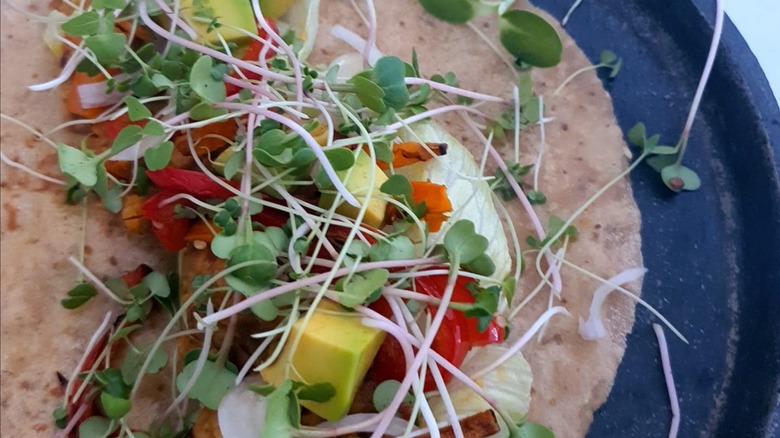
Not all tortillas are made from corn or wheat. "Tortillas can also be made from ingredients like cassava (yuca), plantain, or even cactus (nopales) in certain regions or modern adaptations," Yvette Marquez-Sharpnack said. In recent years, for instance, cooks have experimented with tortillas made with amaranth as a gluten-free alternative to flour tortillas. This, along with amaranth's reputation as a nutritional superfood, might make you think these tortillas are a novelty invention of health food nerds with no real connection to traditional cultures or cuisine. However, foods made from amaranth have deep roots in the Americas.
The grain, a relative of quinoa, has been cultivated by the Olmec and Mayan peoples of Mexico and Central America for over 8000 years, and amaranth is also a staple food among native groups in the American Southwest. Indeed, amaranth had such deep cultural and religious significance for native communities that Spanish colonizers banned its use, considering it sacrilegious. Today, chefs striving to honor native Southwestern traditions make amaranth tortillas not to avoid gluten, but because they taste so satisfying –- dense, malty, and perfect for dipping into a warm plate of stew.
Flavored tortillas
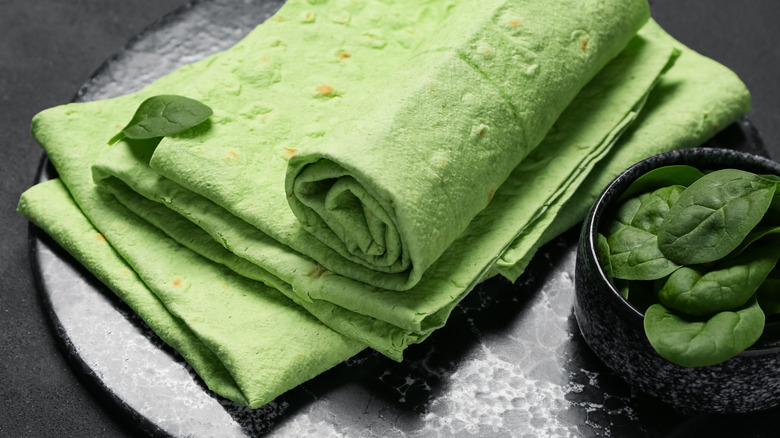
If you explore a well-stocked supermarket or Mexican market, you may find tortillas in a range of striking colors, flavored with ingredients such as beets, chiles, or even chocolate. They're fun and pretty, but far from traditional. This doesn't mean you shouldn't eat them –- it means you should know how to use them. "In traditional Mexican cooking, the tortilla itself is usually meant to complement the filling rather than compete with it," Marquez-Sharpnack explained. "When flavored tortillas are used, they work best in simple dishes like wraps or quesadillas where their color and flavor can stand out."
So what flavor combinations best complement flavored tortillas? This depends on the flavor you choose. Flour tortillas flavored with beets, for example, pair well with goat cheese and arugula to make an easy lunch wrap. Think of it as a handheld beet salad. Pretty green spinach tortillas pair well with hummus, turkey, or cheese.
Pupusas
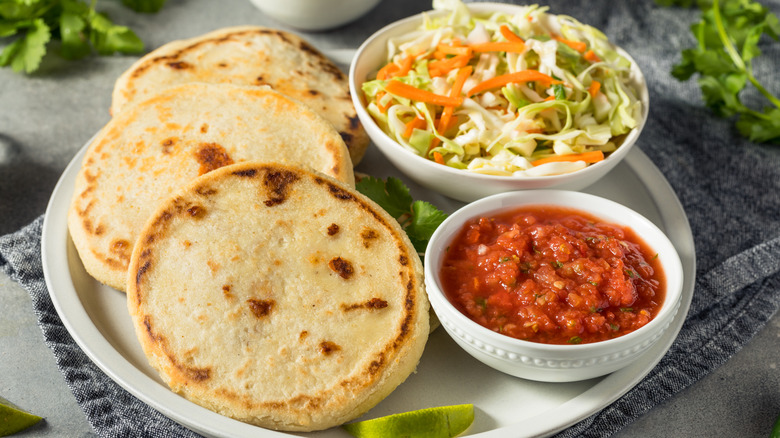
Tortillas aren't limited to Mexican cuisine or even to its north-of-the-border descendants, like Tex-Mex. They're found throughout Central America, too, and like Mexican tortillas, they take a number of forms depending on local ingredients and culinary traditions. In El Salvador, for instance, a point of pride is the pupusa, often confused with an arepa. Pupusas are thick, stuffed tortillas that can contain sweet or savory fillings, depending on who's making it and the time of day. At breakfast, you're more likely to find pupusas with sweet fillings, such as corn, coconut, or ripe plantains and cheese. Savory versions can contain pork, beans, cheese, or other meats. Savory pupusas are typically served with curtido, a tart cabbage relish that's a bit like a cross between coleslaw and kimchi.
While pupusas are a signature dish of El Salvador, they are thought to have Mexican roots. They first emerged in present-day El Salvador in the 10th or 11th century, when members of the Pipil tribe of Central Mexico migrated to the area, bringing their foodways with them. The word "pupusa" is likely derived from the Pipil word for "puff up," which is what these tortillas do when set on a hot griddle to cook.
Spanish tortillas
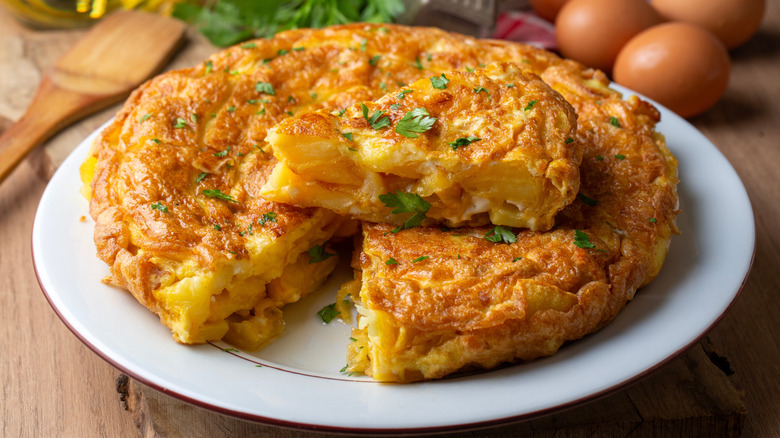
When American tourists dining in Spain see tortillas on the menu and order them, they may be puzzled by what shows up at the table. Instead of floppy rounds of corn or flour, they'll find what looks like a thick frittata stuffed with potatoes, often cut into little squares or wedges. This is not a mistake: As any proud Spaniard can tell you, this is a real tortilla. The word tortilla itself simply means "little cake" in Spanish, and early Spanish settlers in the Americas applied the term to the unfamiliar flat corn rounds favored by the locals.
But while the Spanish proudly claim the potato-filled tortillas (or Española, as they're officially called) as their own, they still have a connection to the Americas. Potatoes, their main ingredient, are a New World vegetable, and only arrived in Spain after Spanish explorers to the Americas returned and introduced them in the 16th century. It's likely no coincidence that the Spanish tortilla originated in Extremadura, the region of Spain that was home to a large proportion of explorers to the Americas. Today, this hearty treat is enjoyed warm or at room temperature as a tapa (small drinking snack), sandwich filling, or side dish.