

Stop Wrecking Sushi Rice And Follow This Advice From Chef Nobu
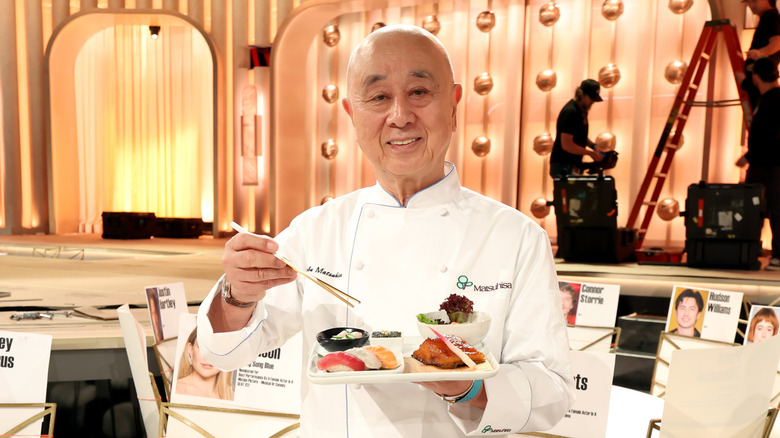
If you love the idea of a sushi night at home but have yet to find success, the problem may be your rice. Daily Meal has some great tips for beginners making sushi, but little of that matters if you aren't getting the right flavor in the rice. Famed chef Nobu Matsuhisa, known for opening the world of sushi by blending it with Peruvian flavors, understands that even with all the excitement of fusion cuisine, you still need to have the basics down. He started with the fundamentals, sharing his tips on how to make the perfect sushi rice.
The process starts before you even cook. If your rice has been too gloopy, washing it in cold water to remove excess starch is step one. Matsuhisa told Food & Wine: "Rinse the raw rice in cold water five to six times, or until the water runs completely clear." This not only results in less glue-like rice, but it has also been shown to remove heavy metals that can be found in the grain. Then, to get evenly cooked rice, soak it in water for 30 minutes: "This allows the grains to absorb moisture and ensures they cook evenly," he said. When you're ready to cook the sushi rice, Chef Matsuhisa recommends a 1:1 ratio of rice to water. He'll go up to 1.2 parts water if the rice is older and drier.
Seasoning Your Sushi Rice
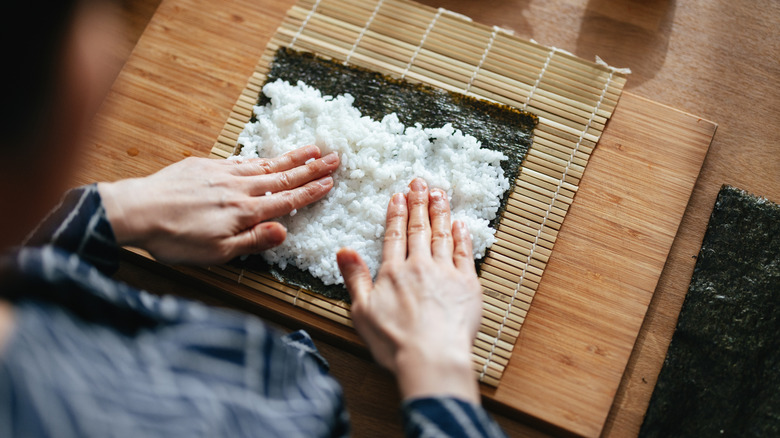
If your rice has been too bland, you need to take a look at how you flavor it. While your rice is cooking, it's time to make the seasoning. Originally used as a way to preserve fish, mixing vinegar with rice dates back to around the eighth century. It wasn't until the Edo period that more modern sushi appeared. Then, adding vinegar to rice became a way to flavor the sushi sold by street vendors.
There are many different recipes for seasoning sushi rice, but most center around vinegar, sugar, and salt. Usually, you'll use rice vinegar, but the Edomae style uses aka-zu — red vinegar — for a more tangy, umami punch. Chef Matsuhisa prefers this style and uses 4 parts red vinegar, 1 part salt, and 2 parts monkfruit (an alternative sweetener): "In my restaurants, we use monkfruit sweetener instead of white sugar. If monkfruit is unavailable, any white granulated sugar works well," he said. He heats up the mixture with a piece of kombu just to the point where the salt and sweetener dissolve. When the rice is done cooking, he immediately puts it in a bowl to mix with this seasoning.
Even lightly seasoned rice will amp up your at-home sushi game and pack it with a ton of flavor. If you follow all of Chef Matsuhisa's tips, you're sure to make some perfect rice for your next sushi night!