

Stop Eating Fake Scallops: Here's How To Tell If They're Real
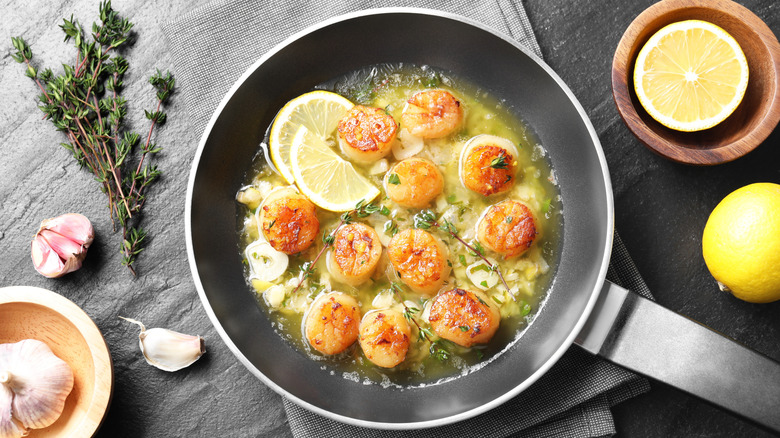
You don't have to be a die-hard seafood lover to enjoy a plate of coquilles Saint-Jacques, but there are mistakes that almost everyone makes with scallops, including falling for fakes. Unless you're a connoisseur who can detect an imposter from a mile away, you're going to want to know how to tell if they're real and why it matters. Don't worry, you don't need to send them out for DNA testing to ensure you're getting genuine scallops. Start your investigation by taking a look at the chunks. If they're identically sized, perfect cylinders, it's almost certain that these coin-shaped fishies are probably a fake that the manufacturer cut out with a mold. Real scallops are naturally irregularly sized and pale pink or creamy beige in color, while fake ones typically look an abnormally bright white.
Aroma also sets real scallops apart from impostors. If you smell a strong fishy or ammonia-like odor, whatever's on your plate isn't sweet, mild scallops. However, if telling real from fake doesn't measure up by sight or smell, the difference becomes pretty obvious once you take a bite. These clam and oyster cousins have been a prized culinary delight for centuries, thanks to their succulent, sweet, buttery flavor — when you've got the real deal, that is. Replicas are fishier on the tongue than the real ones, and that's not where the attempts at deception end, either. These dense, tough, and rubbery copycats lack the consistently tender texture of real scallops, often flaking apart on your plate like processed fish.
Why you should skip the fishy business and stop eating fake scallops
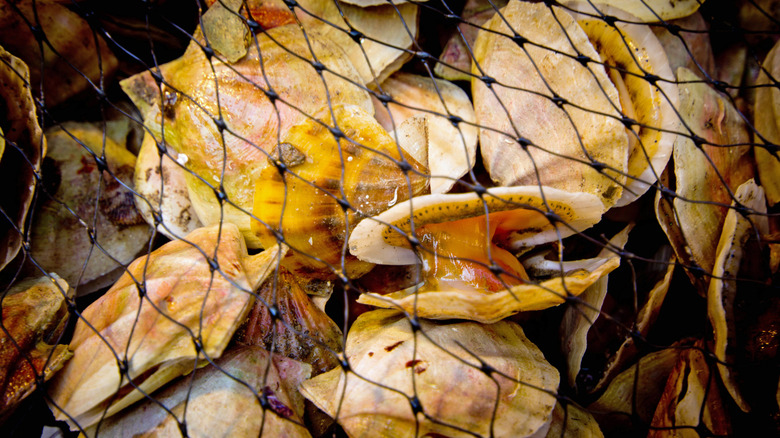
In 2023, nearly 27½ million pounds of sea scallops were harvested for the U.S. market, so you may be a bit confused as to how and why imitation options have appeared in restaurants and grocery aisles. One online steak and seafood company sets a steep $44-per-pound price tag for its jumbo scallops, so sure, they're not the cheapest seafood option at the market. That's probably why some folks in the fishing industry attempt to pass on knockoffs as the real McCoy. It's time to stop paying high prices for cheap phonies that are chopped-up renditions of skate, shark, stingray, or fish paste (surimi) made to look legit to the untrained eye.
Mislabeling ingredients and the country of origin are also major concerns for scallop lovers. Selling these masqueraders without proper labeling can present serious allergy risks. Surimi is often made from finned fish, like Alaska pollock, and can cause hives and wheezing, or something more nefarious for those who are sensitive to its ingredients. Even if the product is real scallops, there could still be a problem. For instance, an astounding 48% of tested samples in Germany indicated that the product was labeled as coveted king scallops, rather than the inferior Japanese variety they turned out to be.