

How George Washington Was A Coffee Connoisseur Of His Time
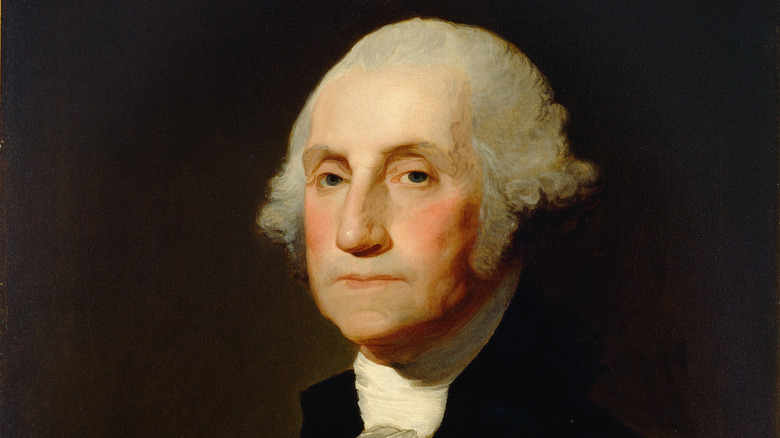
Colonial America did many things to separate itself from the crown, including being intentional about what fueled the morning. While drinking tea and enjoying high tea is a very British tradition, Americans shunned it as an act of patriotism leading up to the Revolutionary War, and instead embraced coffee. Our founding father and first President of the United States was a role model of this movement. George Washington enjoyed his cup of giddy-up. There are reports that the President ordered up a cup of coffee every morning. During his presidency, he served it at the President's home in New York and then in Philadelphia. But he also imported it, and later grew it on his own estate.
President Washington's papers and ledgers show that he imported coffee beans on several occasions, but not just any coffee beans. He went for what was considered "the best," which included the 150 beans from the Red Sea port of Mocha in Yemen. When Washington retired as the Commander-in-Chief and went to live at Mount Vernon, he took coffee plants with him that were a gift from his grandson-in-law, Thomas Law, and included the Kentucky Coffee Tree. The beans from this tree must be roasted before consumed, as they are highly toxic in their raw form. In fact, the Marquis de Lafayette hit Washington up for some of these seeds for the French royal garden.
Martha Washington had rules
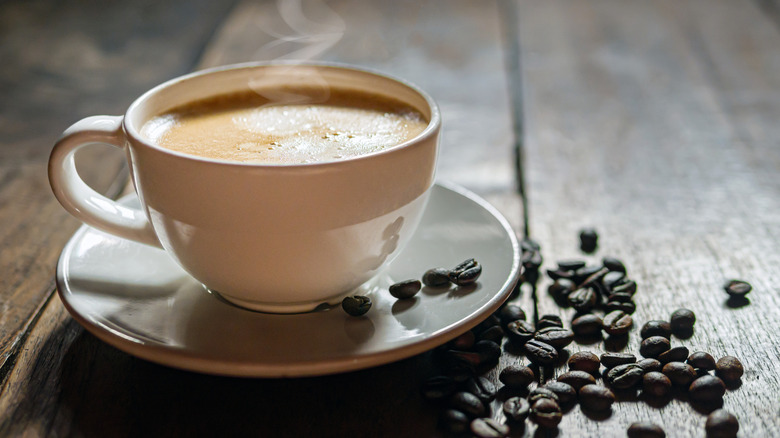
Per the 1968 book, "The Presidents' Cookbook," George Washington's love of coffee was shared by his wife, Martha, and she had rules for what constituted a "good coffee." The First Lady liked to use a 1:1 ratio of water and coffee grounds, which had to be "pulverized as fine as cornmeal." It had to be served with sugar before and after dinner. Her morning coffee got an upgrade. Hot milk was an acceptable addition to her cup of Joe.
Coffee continued to be the drink of choice for Americans long after Washington's presidency. Its popularity and importance to American history continued well past the Civil War. What might be surprising is just how expensive it was. In 1861, coffee rose to $3 per pound, a hefty sum for that time period. By 1864, coffee beans were going for between $12 and $60 a pound. Add this to the things you didn't know about coffee and how this caffeinated drink shaped our country.