

Jackie Kennedy Served This Vintage Casserole At The White House
Today, we may think of casserole as an old-fashioned way for Midwest moms to feed a whole family, but this staple began as a French dish. The original version served a similar purpose to casseroles today — something easily tossed together to feed a crowd — but some of us Americans tend to romanticize anything French.
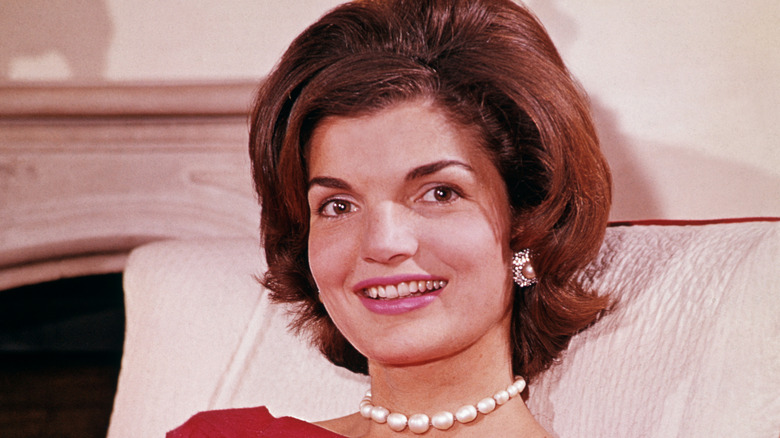
As an overt Francophile, First Lady Jackie Kennedy was just such a person. She studied for a year in Paris in 1949, just four years after the end of WWII, and during this time, she developed a deep love for the country. In 1961, she brought on French chef René Verdon to cook at the White House. Together, they put together a menu for a dinner with Mrs. Kennedy's sister, Lee Radziwill, and her husband, Prince Stanislaw Albrecht Radziwill of Poland, that included Casserole Marie-Blanche.
This casserole is a simple take on the classic French dish and calls for just four ingredients: egg noodles, sour cream, chives, and the popular retro food making a comeback, cottage cheese. Just cook the noodles, mix all the ingredients together, add salt and pepper, and bake. It's a rich, comforting dish that, in the 1960s, had an air of refinement.
Bringing Casserole Marie-Blanche into the modern era
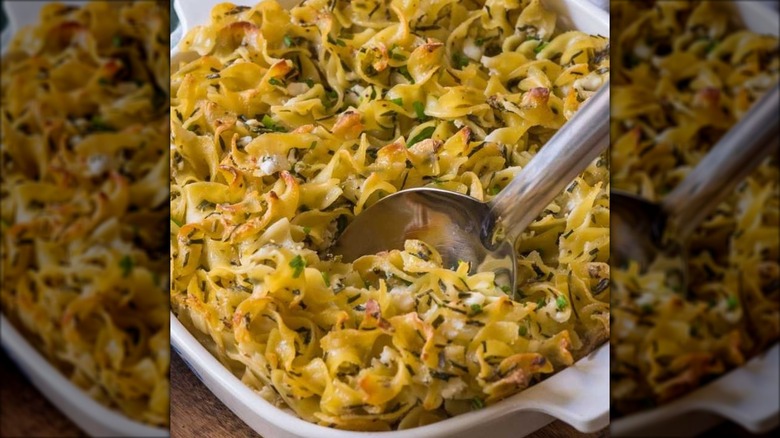
After that 1961 dinner, Casserole Marie-Blanche appeared in a few family cookbooks, but it wasn't the only recipe from the time that involved cottage cheese. From the 1950s through the mid 1970s, cottage cheese was a popular health food for those looking to improve their diets. It has resurfaced in recent years as an easy way to pack protein into practically any meal, even by adding cottage cheese to dessert. Jackie Kennedy kept up a strict (if unhealthy) eating regimen, and this ingredient played a significant role. She would often have cottage cheese for lunch with fresh fruit or broiled beef. It may not melt like other cheeses, but it does turn creamy.
As the popularity of casseroles waned in the 1970s with the rise of fresh food, Kennedy's version likely lost favor as well. What was once its strong suit — its use of simple, affordable ingredients — became its downfall. Gloopy, baked cottage cheese and noodles no longer cut it, as people wanted their food to showcase the quality of their fresh produce. But that doesn't mean this dish has to stay in the past. It lacks an acid, so adding a bit of lemon zest is one way to bring it into the modern era. Adding more veggies is another way to acknowledge our increased access to produce. Blanched broccoli, for example, would add a healthy crunch and a little more color.