

Pastelitos Vs Empanadas: What Sets These Pastries Apart?
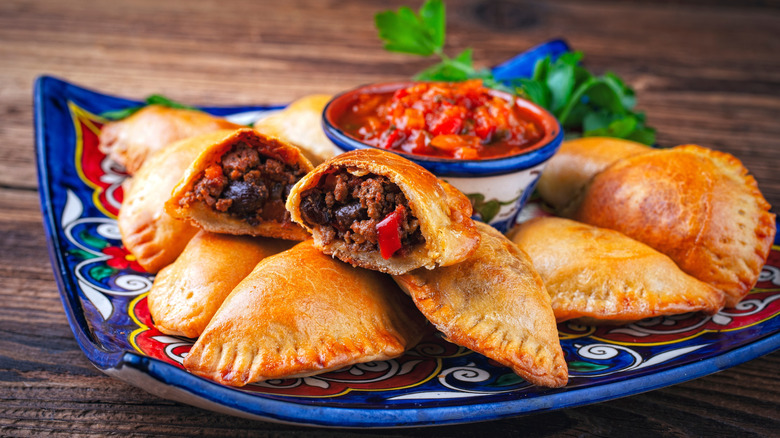
Empanadas and pastelitos are delicious snacks that you can find in the cuisines of most Spanish-speaking countries, but the uninitiated might find themselves wondering what exactly the difference is between the two. The answer to this question is surprisingly complicated, and depends on where you are in the world. In Argentina, for example, you'll find empanadas and pastelitos that look so different that it's hard to get them mixed up. Meanwhile, in Puerto Rican cuisine, the two are so similar that the actual difference between them is an ongoing debate across the island, and you'll almost certainly get a different answer depending on who you ask.
In Latin countries, pasteles (or pastries in English) are a popular staple food, and can have either sweet or savory fillings. Considering how widespread these foods are, it can sometimes be tricky to be definitive about what distinguishes an empanada from a pastelito — or, for that matter, an empanadilla or a pastelillo. That said, there are a couple of guidelines you can use to at least guess at which is which. Empanadas are usually made in a half-moon shape, and often (but not always) contain a savory filling. Pastelitos, on the other hand, vary a lot more, and while some look a lot like empanadas, others include the round, savory pastelitos enjoyed in Venezuela and the guava-filled square pastelitos you'll find in Cuba.
In short, it's complicated. But maybe that's not a bad thing. Whether you're stopping by a Latin American bakery or you're going on vacation to a Spanish-speaking country, trying these different pastries can give you a taste of local cuisine and culture — and quite possibly a generations-long food feud.
Pastelitos
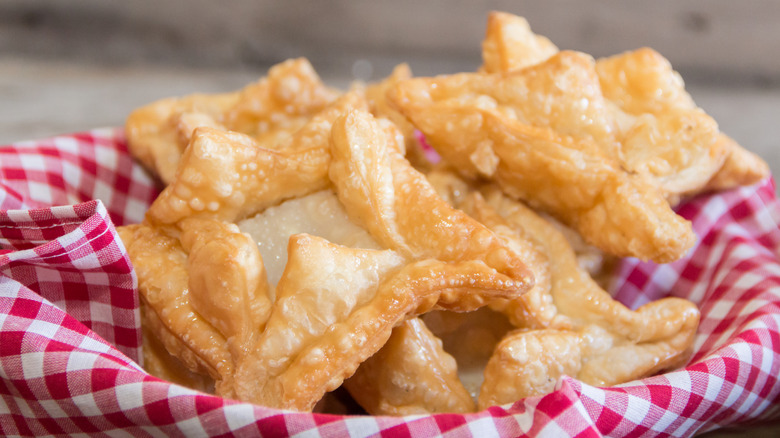
The reason why pastelitos are so varied probably comes down to the name, which simply means "little pastry" in Spanish. You can find these tasty treats in most Latin countries, and while some share the same half-moon shape as empanadas, you may also find them in shapes closer to Pop-Tarts or cannoli, and they may be sweet or savory.
Sweet pastelitos may often be filled with cheese or fruit, like quince. A guava filling is popular in Cuba, though you can just as easily find them filled with beef there. It's the Cuban-style guava and cream cheese pastelitos that you're most likely to find in Floridian bakeries, for much the same reason that you'll find some of the best Cuban sandwiches in the U.S. there.
Elsewhere, pastelitos can take all kinds of forms, with as much variety as the different types of doughnuts eaten around the world. In Venezuela, you'll find short pastry pastelitos andinos, normally filled with a savory mixture of ground meat and rice. Meat fillings are also the norm for Dominican pastelitos, which are deep-fried. At the other end of South America, though, Argentinian pastelitos criollos are made with flaky puff pastry and may have fillings of dulce de leche or sweet potato jelly. These are widely enjoyed as part of Argentina's Independence Day celebrations. If you're a traveling connoisseur, there's a whole world of flavor and culture to enjoy with the many types of pastelito out there.
Empanadas
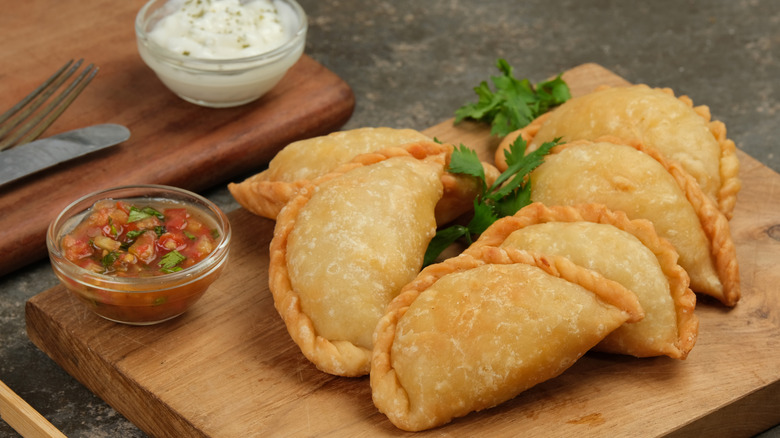
Empanadas are easy to recognize, with their iconic half-moon shape, and often have a savory filling — although dessert empanadas are definitely worth trying too. On their own, they make great snacks (you can often find them sold as street food in Colombia), but they can easily make part of a more filling meal. Empanadas also have a long history, with the oldest written record of them dating back to the 16th century in Catalonia, part of modern-day Spain. The original version, still eaten in northwest Spain, is a large savory pie that's cut into slices, but most empanadas elsewhere are now conveniently hand-sized.
While empanadas may often look very similar, both the filling and pastry can vary a lot depending on where you're eating them. Mexican empanadas may have pastry made with corn, using the same masa flour as tortillas, and can be made with savory fillings like ground meat, squash flowers, or crab, as well as with sweet fillings like pumpkin. In Chile, you can find cheese-filled, fried empanadas, while the beef empanadas eaten in the Philippines are often baked, with a flaky crust. Venezuelan empanadas may be filled with chicken stew, but sometimes contain shark meat near the coast, while sweet empanadas are popular in Ecuador and in El Salvador, where they're popularly filled with ripe plantain.
Overall, though, while both the filling and the pastry itself can vary wildly, empanadas usually have the same shape. They're a reliable snack food, and whatever your tastes, you can certainly find something to suit you.